
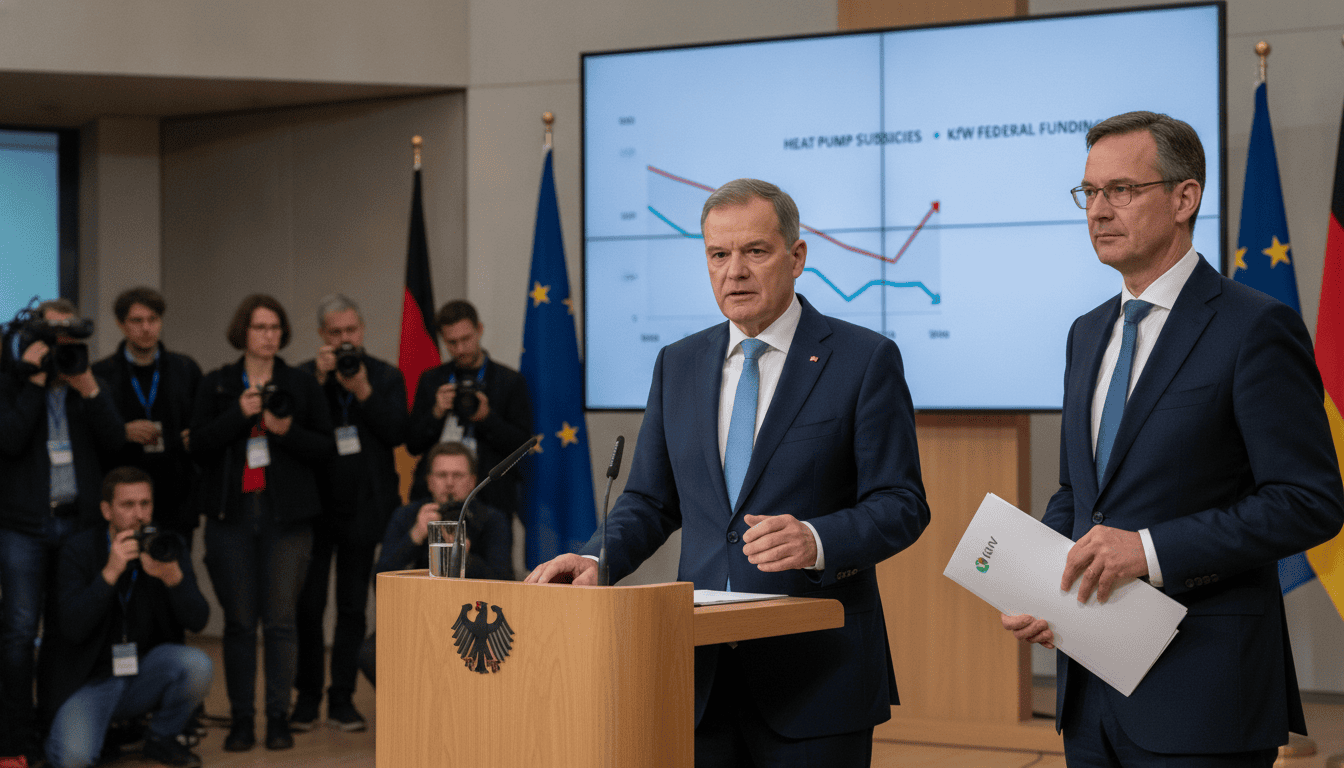
Germany Curtails Heat Pump Subsidy; KfW Confirms New Rules
New KfW rules lower the heat pump subsidy and set phased reductions for eligible costs and bonus rates, with a value-added bonus for EU-made units due in early 2027.
The federal heat pump subsidy has been revised, with the primary grant levels reduced and new phased cuts scheduled, the KfW development bank said in its announcement. The change affects the heat pump subsidy by lowering the maximum eligible installation cost for standard support and trimming the so-called climate speed bonus available to owner-occupiers. Existing KfW commitments remain honored, the bank said, while pending applications will be reviewed under the updated criteria.
KfW confirms new subsidy regime
The KfW development bank said the revamped federal programme for efficient buildings is now in force and that previously granted commitments continue to be valid. Applicants whose funding had already been committed will see no retroactive reductions, KfW added, and applications submitted but not yet approved will be examined against the new rules and approved if they meet the updated conditions. The bank framed the move as a recalibration of incentive levels rather than an abrupt withdrawal of support.
Early changes include a reduction in the maximum eligible costs that qualify for subsidies for heat pump installation, which directly lowers the amount on which grant percentages are applied.
Lower eligible cost cap for heat pump installations
Under the revised terms, the eligible cost cap for many heat pump installations has been cut from €30,000 to €28,000. That change reduces the base value used to calculate subsidy payments, effectively lowering the absolute grant amount even where percentage rates remain unchanged. The reduction is part of a broader effort to tighten the programme’s budget envelope while retaining targeted incentives for building decarbonisation.
For households planning a heat pump, the lower eligible cap means smaller subsidy cheques compared with earlier rules, and prospective applicants should calculate expected grant amounts on the new eligible-cost figures.
Phased cuts from 2027 for eligible costs and bonuses
KfW outlined a schedule of regular, incremental reductions beginning in 2027. From that year onward, the eligible cost thresholds will fall by €750 on each 1 February and 1 August. This automatic cadence will gradually compress the subsidy base over time unless further policy changes intervene.
Simultaneously, the climate speed bonus—an additional percentage uplift intended to accelerate homeowner uptake—was reduced from 20% to 16% under the new rules. That bonus is set to decline by four percentage points every six months thereafter and is scheduled to be phased out entirely in 2029. The twin mechanisms of shrinking cost caps and tapering bonuses are intended to lower public expenditure on the programme while preserving an incentive window for earlier adopters.
Value-added bonus for EU-made heat pumps planned
KfW also signalled a structural shift aimed at supporting domestic and European manufacturing. In the first quarter of 2027 the bank plans to introduce a value-added bonus that separates the base grant rate from an extra payment for equipment produced within the European Union. At that point, the basic subsidy rate for all heat pumps would be set at 15%, and heat pumps manufactured inside the EU would be eligible for an additional 15% value-added bonus.
The combined effect is designed to steer procurement towards units with higher local or regional value content while reducing the overall basic grant level. Industry stakeholders will likely watch the detailed eligibility rules for the value-added bonus closely, as certification and provenance documentation will be decisive for claimants.
Safeguards for vulnerable households and existing commitments
Despite the reductions, KfW indicated that households with low incomes or with children living in the home may still qualify for higher support rates under targeted provisions. Those social-targeting measures are intended to protect affordability for more vulnerable households facing energy transition costs. KfW said these differentiated rates will continue to apply where conditions are met.
The bank reiterated that already-confirmed funding commitments remain reserved and will not be clawed back, a reassurance aimed at reducing uncertainty for families and contractors who had already relied on earlier offers.
The revised federal support package represents a recalibration rather than a cessation of backing for heat pumps, combining gradually tighter budget discipline with a targeted industry incentive for EU-made equipment. Homeowners and installers should recompute expected subsidy amounts using the new eligible-cost ceiling and follow KfW guidance on application processing and any documentation required for future value-added bonus claims.
