
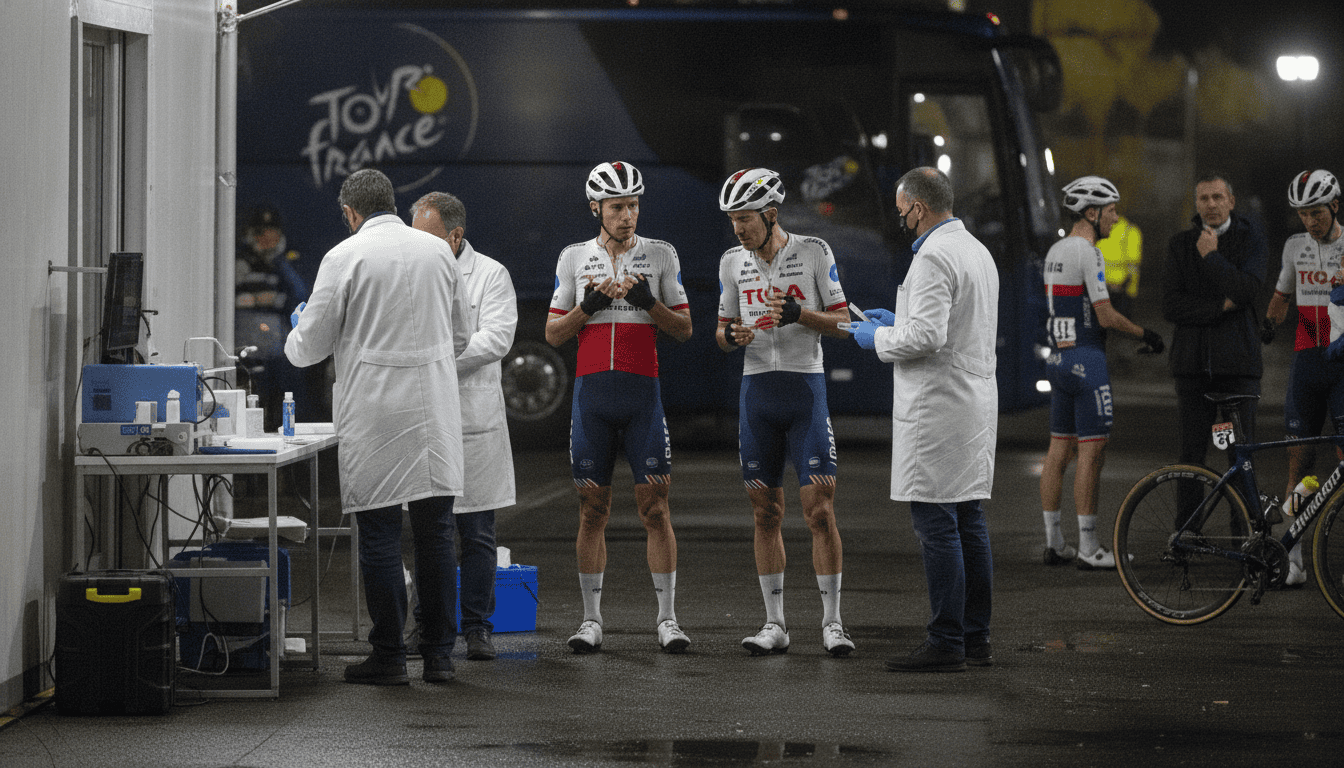
Nighttime Doping Controls Draw Outrage After Pogacar Tested at 2 a.m.
Nighttime doping controls at the Tour de France have sparked sharp criticism after Tadej Pogacar and Jonas Vingegaard were visited by testers in the early hours, prompting riders to call for a review of procedures. The controversy centers on tests conducted around 2 a.m., which some competitors and former champions described as disrespectful and potentially harmful to athletes’ rights. Race organisers say testing is routine, but the backlash has focused attention on how anti-doping enforcement balances detection with rider welfare.
Riders Voice Outrage Over 2 a.m. Visits
Several leading racers publicly condemned the late-night testing, using words such as “shame,” “respectless,” and “inhuman” to describe the practice. Tadej Pogacar, who retained the race lead, and other high-profile figures expressed anger at being summoned to provide samples at an hour many consider disruptive. Former Tour winner Lance Armstrong framed the timing as a human rights concern, saying the practice raised fundamental questions about the treatment of athletes.
The strongest reactions have come from within the peloton, where peers defended Pogacar and Vingegaard and demanded clearer limits on when tests may be carried out. Remco Evenepoel, aligned with several team captains, criticized the approach on principle rather than disputing the need for anti-doping work. The tone suggests growing unease among riders about the proportionality and timing of controls.
Pogacar Remains in Yellow After Testing
Tadej Pogacar, who was tested in the night following his stage performance, remained in the Maillot Jaune and faced the public scrutiny while continuing to lead the race. He acknowledged the test but emphasized concerns about the timing and the effect on recovery and sleep, which are critical during a three-week Grand Tour. Team staff confirmed the sampling was completed without contesting the technical procedures used by testers.
Despite his protests about the late hour, Pogacar’s standing in the general classification was unchanged, and sporting attention quickly pivoted to the wider implications of the incident. For many observers, the optics of the race leader attending a nocturnal inspection have magnified the debate beyond the immediate procedural facts.
Vingegaard Withdraws After Crash and Subsequent Testing
Jonas Vingegaard, who suffered a crash during the stage and later abandoned the race, was also subject to a night-time check, according to accounts from within the race environment. The sequence — crash, medical attention, and then a late testing visit — intensified sympathy for the rider and criticism of the testing timetable. Teams raised concerns about rider safety and recovery after an on-road incident followed by a midnight sampling request.
Vingegaard’s withdrawal removed a principal contender from the sporting contest, but the controversy it generated kept attention on the process rather than purely on the sporting outcome. For rivals and teammates alike, the timing of controls in circumstances of injury or acute fatigue proved an especially sensitive issue.
Anti-Doping Officials Defend Established Procedures
Officials responsible for testing said that anti-doping protocols allow for out-of-competition and in-competition checks at various hours to prevent evasion and ensure the integrity of results. Those defenders argue that the unpredictability of testing is a deterrent to doping and that laboratory and chain-of-custody standards were respected during the night visits. Organisers and testing authorities have urged the public and participants to separate the necessity of rigorous control from isolated complaints about timing.
At the same time, anti-doping bodies acknowledged the need to balance enforcement with athlete welfare and dignity. Several experts noted that most testing regimes include provisions to accommodate medical conditions or exceptional circumstances, but they also emphasized that maintaining a credible, deterrent testing program requires some element of surprise.
Calls Grow for Formal Review of Testing Times
In the wake of the incident, athlete representatives and team management signalled intentions to seek clarification and possibly formal review of when testers may be dispatched to riders. The debate is likely to prompt meetings between rider unions, teams, race organisers, and anti-doping authorities to examine whether existing rules strike the right balance. Proposals under discussion include clear time windows, improved coordination with team medical staff, and minimum-rest considerations after crashes or medical interventions.
Legal and rights-focused commentators suggested the episode could trigger broader scrutiny from human rights and labor advocates if riders press their case. Even if no immediate rule changes follow, the outcry has already forced those in charge of testing to justify practices publicly and consider whether procedural adjustments might reduce conflict without weakening deterrence.
The incident also revived questions about transparency and communication during major events, with several team directors urging more proactive briefings for squads when tests are planned or carried out. Such steps could reduce confusion and apparent affronts while preserving the unpredictability that makes testing effective.
The debate over nighttime doping controls has moved quickly from locker-room grumbling to front-page discussion, exposing a tension at the heart of modern sport: how to enforce anti-doping rigor without compromising athlete welfare. As the Tour progresses, the controversy is likely to prompt formal exchanges between riders’ representatives and anti-doping authorities, and it may lead to clarified guidance on acceptable testing hours and procedures.
