
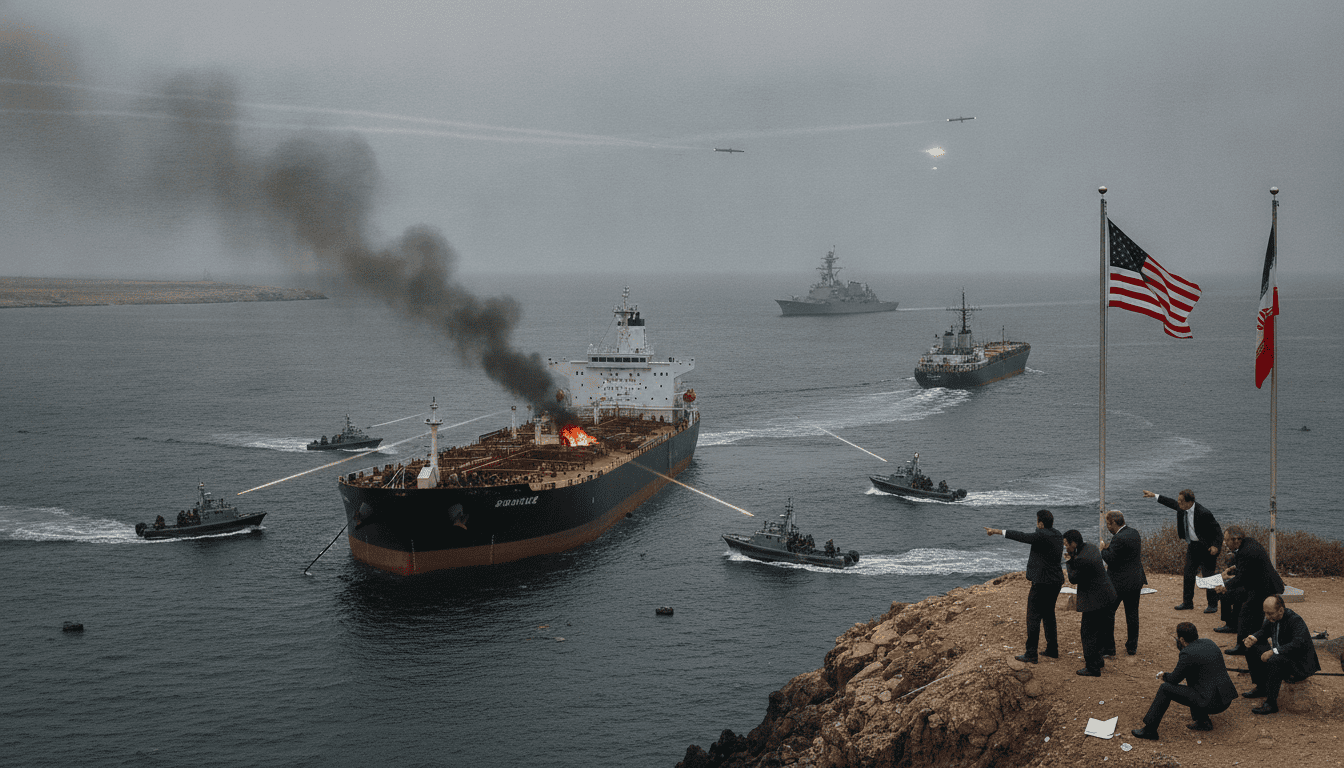
U.S.-Iran tensions escalate as planned peace talks collapse and Strait of Hormuz is blocked
U.S.-Iran tensions spike after a June agreement to pursue peace talks unraveled, leading to renewed attacks, strikes and a blockade that threatens global shipping and regional stability.
The expected negotiations between Washington and Tehran, agreed in June, have broken down and been replaced by a rapid return to violence across the region. For roughly ten days to two weeks, U.S. forces have carried out strikes on targets inside Iran while Tehran has responded with rocket attacks on U.S. bases in neighboring countries. Two U.S. soldiers have been killed in the exchanges, and Iran has moved to block passage through the strategic Strait of Hormuz, raising fears for international trade.
Diplomatic breakthrough announced in June failed to hold
In June both sides appeared to agree to open a path toward talks intended to reduce hostilities, but those plans did not materialize into a durable ceasefire. Initial optimism in diplomatic circles faded as violence resumed, undercutting expectations that a negotiated solution would take hold.
Analysts say the collapse of the tentative accord has exposed deep mistrust and a lack of reliable enforcement mechanisms, leaving both capitals with limited immediate tools to de-escalate. The abrupt return to kinetic operations has intensified pressures on regional partners and global markets.
U.S. strikes resumed after a period of restraint
U.S. forces have returned to striking targets inside Iran after a spell of relative restraint, a move officials say is intended to deter further attacks on American personnel and interests. These strikes mark a clear shift from the de-escalatory posture that accompanied the June outreach.
Officials describe the operations as targeted and limited, but Iran and its proxies have framed them as aggressive acts that justify retaliatory measures. The strikes have not produced a clear pathway back to diplomacy, and they risk drawing regional actors into a broader confrontation.
Iranian rocket attacks on forward bases cause casualties
In response to U.S. military actions, Iran has launched rocket strikes against U.S. bases located in neighboring countries, killing two American service members in separate incidents. The cross-border nature of the attacks has complicated efforts by host nations to manage the fallout and protect bases on their soil.
Casualties have intensified calls in the U.S. for a firm response, while some policymakers warn that escalation could quickly become self-reinforcing. Military planners now face the difficult task of calibrating retaliation without triggering a wider war.
Strait of Hormuz blockade disrupts shipping and energy markets
Iran’s decision to block the Strait of Hormuz has immediately reverberated through global shipping lanes, halting transits through one of the world’s most important maritime chokepoints. The closure threatens oil and gas deliveries from the Gulf, prompting urgent consultations among affected countries and commercial shippers.
Insurers and freight operators are rerouting vessels or delaying sailings as risk assessments are updated, and energy markets have responded to the uncertainty with price volatility. Traders and logistics firms warn that a prolonged disruption would have wider economic consequences beyond the region.
U.S. leadership faces constrained choices, analysts say
Tobias Matern, deputy political editor at the Süddeutsche Zeitung, told a news program that the U.S. president now faces two options, neither of which offers an appealing outcome. According to Matern, policymakers are trapped between deeper military engagement and pursuing concessions that could be politically costly at home.
That assessment reflects a broader debate in Washington over whether to prioritize punitive measures to deter Iran or to reopen negotiations under new terms. Both paths carry risks: further strikes could escalate into a larger conflict, while concessions could be perceived as rewarding aggression.
Regional and international responses remain cautious
Neighboring states and international organizations have called for restraint but offered limited capacity to enforce a ceasefire, underlining the fragmented response to the crisis. Some regional governments are balancing security cooperation with the United States against economic and political ties to Iran.
Multilateral institutions have urged urgent diplomacy, but diplomats acknowledge that trust-building will be difficult after recent hostilities. The combination of military action, retaliatory attacks and strategic chokepoint closures has narrowed the space for immediate, effective mediation.
The collapse of the June initiative and the rapid slide back into violence underscore how fragile attempts at negotiation can be when underlying grievances go unaddressed. With U.S.-Iran tensions high, the coming days will be critical in determining whether the confrontation stabilizes or escalates further.
