
Made for Germany Marks First Year as Siemens and Deutsche Bank Report Progress Amid Calls for Transparency
One year after launch, Made for Germany draws praise from Siemens and Deutsche Bank; economists demand transparent investment figures and faster reforms.
Siemens and Deutsche Bank report a positive interim assessment
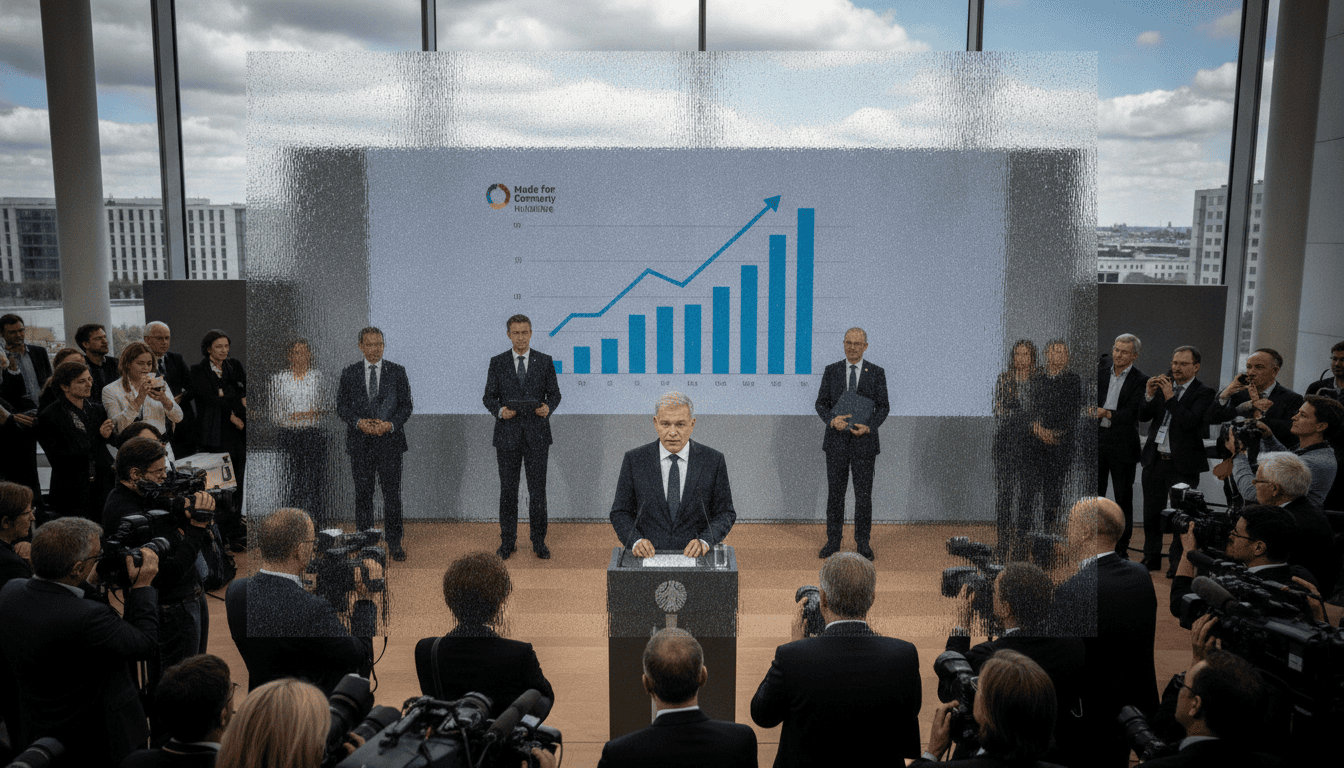
One year after the creation of the Made for Germany initiative, Siemens and Deutsche Bank presented a broadly positive interim review of the campaign’s impact on investor confidence and public debate. Siemens CEO Roland Busch and Deutsche Bank CEO Christian Sewing highlighted early signs of renewed attention on Germany’s industrial strengths. The leaders emphasized the initiative’s role in promoting the country as an attractive place for technology, finance and large-scale investment.
Investment pledges praised but details remain opaque
The two CEOs cited new investment commitments linked to the campaign, but stopped short of providing a full breakdown between previously planned projects and fresh pledges. That lack of detailed allocation — distinguishing long-scheduled investments from newly secured funds — has fueled calls for greater transparency. Analysts and political observers say clearer accounting is necessary to evaluate the initiative’s real economic contribution.
Economists and analysts question headline figures
Economists have welcomed the confidence-building intent behind Made for Germany but warned against relying on headline investment numbers without independent verification. Several macroeconomists note that aggregate commitments can be inflated by including routine corporate spending or projects already in company plans. Their critique centers on the need for standardized disclosure so that policymakers and investors can separate incremental investments from business-as-usual activity.
Reform priorities: digitalization, AI and energy security
Participants and commentators agree on the areas most likely to determine Germany’s competitiveness: digitalization, artificial intelligence and meeting energy demand sustainably. The initiative has spotlighted these sectors as priorities for public-private collaboration to accelerate adoption and infrastructure upgrades. Stakeholders argue that targeted reforms and faster regulatory approval processes will be essential to convert policy ambitions into measurable economic gains.
Government role and policy recommendations
Political leaders and business representatives have been urged to translate the campaign’s momentum into concrete regulatory changes to reduce bureaucratic friction. Proposals under discussion include streamlining planning procedures, incentivizing private R&D, and adjusting labor-market rules to increase flexibility. Proponents say such measures would complement the private-sector push and make Germany more responsive to global investment flows.
Next steps: measuring impact and sustaining momentum
Organizers of Made for Germany say the next phase will focus on turning public endorsements into verifiable projects and follow-through. Independent monitoring, periodic public updates and clearer metrics for progress were recommended by observers as immediate priorities. The initiative’s backers contend that demonstrating tangible, traceable outcomes will be crucial to sustain both domestic and international confidence.
The debate around the first-year review of Made for Germany underscores a broader challenge facing modern industrial economies: aligning corporate advocacy, public policy and measurable outcomes to produce lasting growth.
