
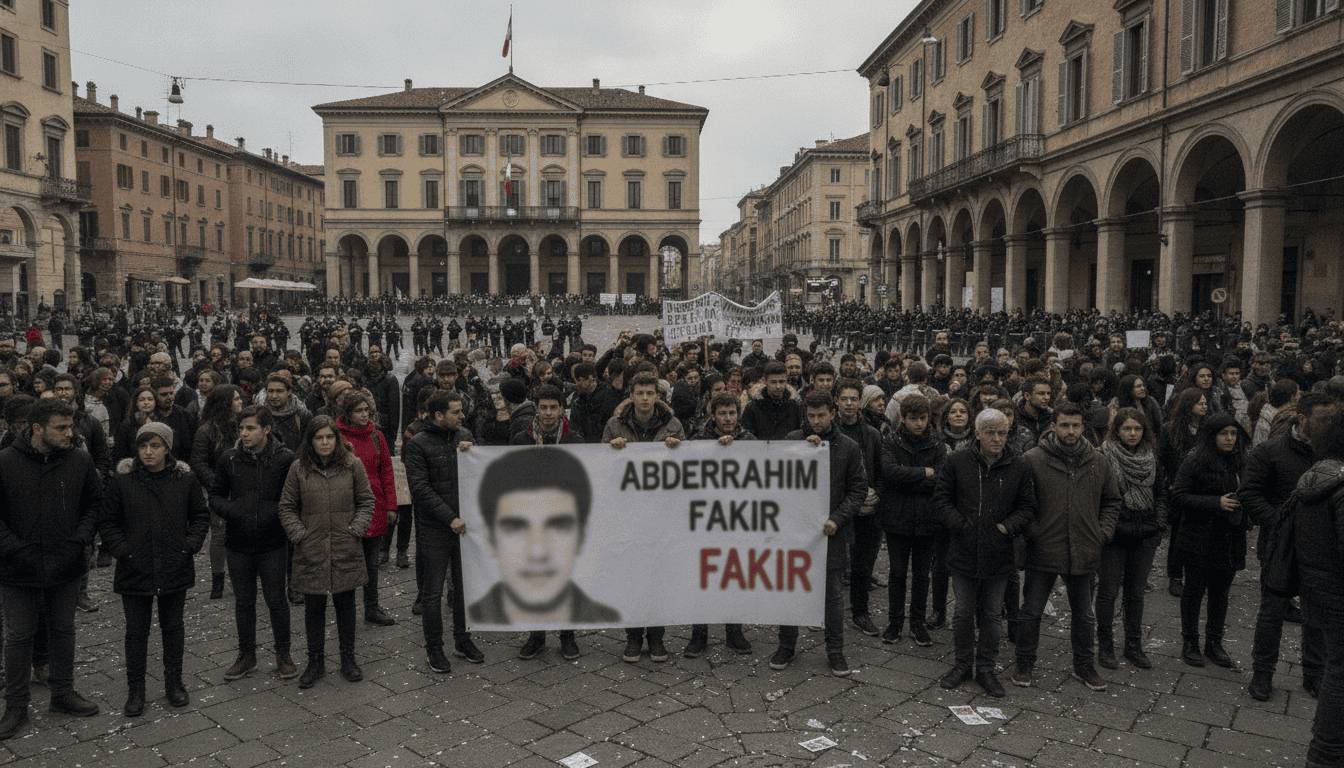
Death of Abderrahim Fakir in Bologna Sparks Protests and Investigations Across Italy
Police killing of Abderrahim Fakir in Bologna—hands bound and pinned—has ignited demonstrations and raised urgent questions about policing and medical response in Italy.
A video showing the death of Abderrahim Fakir while his hands were bound behind his back has prompted protests and clashes in several Italian cities as authorities open preliminary inquiries. The footage, circulated widely on social media, appears to show two police officers holding Fakir on the street as he called for help and later lying motionless after officers only stepped back minutes later. Demonstrations have drawn comparisons to other high-profile cases of restraint-related deaths and intensified debate about racial profiling and use of force by law enforcement in Italy.
Fatal arrest in Bologna and public reaction
A 42-year-old man, identified by local authorities as Abderrahim Fakir, died during a police intervention on Sunday in Bologna, according to officials familiar with the incident. Video evidence posted online shows officers restraining him face-down with his hands tied behind his back; witnesses and activists say the footage raises serious questions about the tactics used. Protesters took to streets in multiple cities, and in some locations demonstrations turned confrontational as police and demonstrators clashed.
The images have galvanized rights groups and community leaders, who demanded swift transparency and accountability from prosecutors and police commanders. Municipal and national politicians issued statements calling for calm while assuring the public that a formal investigation had been launched. The case has become a focal point for broader concerns over policing practices and treatment of minorities in Italy.
Video evidence and timeline of the encounter
The video of the arrest, now central to the investigation, shows Fakir on the ground with his hands secured behind his back as he appears to call for help. It further shows two uniformed officers pressing him to the pavement and remaining at the scene for several minutes before stepping away, by which time Fakir is no longer moving. The sequence has been reviewed by legal experts and medical consultants who note that prolonged restraint in a prone position can pose serious health risks.
Authorities have acknowledged the existence of the footage and confirmed that it is being examined by investigators as part of the preliminary inquiry. Prosecutors are expected to rely on the video, witness statements and forensic findings to determine whether the restraint contributed directly to Fakir’s death and whether procedures were followed.
Investigations opened against officers and medical personnel
Preliminary investigations have been launched against two police officers on suspicion of negligent homicide, according to officials briefed on the case. Prosecutors also named four emergency medical personnel as subjects of inquiry after bystander video appears to show them initially observing the scene rather than intervening. The involvement of medics in the probe reflects scrutiny over the timeliness and nature of the medical response.
Italian law provides for criminal investigation when use of force or professional negligence may have led to death, and authorities say they will pursue all relevant lines of inquiry. Legal analysts note that preliminary proceedings allow investigators to collect evidence, secure additional footage and order autopsy results before deciding whether to file formal charges.
Comparisons to George Floyd and debate on racial policing
Observers and campaigners have drawn parallels between Fakir’s death and past cases abroad, including the 2020 killing of George Floyd in the United States, citing the visual similarity of restraint while calls for help were made. Those comparisons have reanimated discussions in Italy about systemic bias in policing, the treatment of migrants and long-standing concerns raised by anti-racism organizations. Civil society groups argue the case exposes continuing vulnerabilities for ethnic minorities when interacting with law enforcement.
Italian officials have urged caution against premature conclusions while investigators complete their work, but many critics say an independent review of policing practices is overdue. The episode has also prompted renewed calls for clearer rules on restraint, improved training on de-escalation and mandatory accountability measures for emergency responders.
Wider political and social repercussions in Italy
The incident has placed pressure on national and local leaders to respond substantively rather than rhetorically, with political parties offering competing proposals for reform. Some lawmakers have proposed expedited measures on police conduct and oversight, while human rights advocates demand structural changes to reduce discriminatory outcomes. Municipal authorities in affected cities are convening meetings with community representatives to defuse tensions and coordinate peaceful demonstrations.
Police unions have defended officers’ actions in some statements, emphasizing the complexity of field operations and the need for due process in evaluating conduct. At the same time, union representatives acknowledged the emotional impact of the footage and expressed willingness to cooperate with investigators. The divergence of responses reflects the polarized public climate surrounding security, migration and civil liberties.
Related developments and public safety reports in Germany
Separately, German federal data released this year showed an increase in recorded cases of sexualized violence against children and adolescents, with authorities reporting over 20,000 registered incidents in 2025. Federal Interior officials presented the law-enforcement data as the documented “bright field” of crimes known to police, while experts continue to warn of a substantial dark figure of unreported abuse. The statistics have prompted calls for enhanced prevention, victim support services and improved investigative resources.
Authorities in Lower Saxony also announced that a 45-year-old suspect accused of killing six people at a youth welfare facility in Stade died by suicide while in custody, with the justice ministry reporting no signs of third-party involvement at this stage. Advocacy groups reiterated the need for visible mental health and safety measures in detention settings and for rapid communication with victims’ families.
A national hotline in Germany provides immediate support for people with suicidal thoughts: the TelefonSeelsorge helplines at 0800 111 0 111 and 0800 111 0 222 operate around the clock.
The death of Abderrahim Fakir has opened a renewed national conversation about the boundaries of force, the responsibilities of emergency responders and the role of oversight in preventing avoidable deaths. As investigators compile evidence and officials consider policy responses, protesters and civil rights organizations say they will continue to press for accountability and reforms aimed at ensuring such an outcome is never repeated.
