
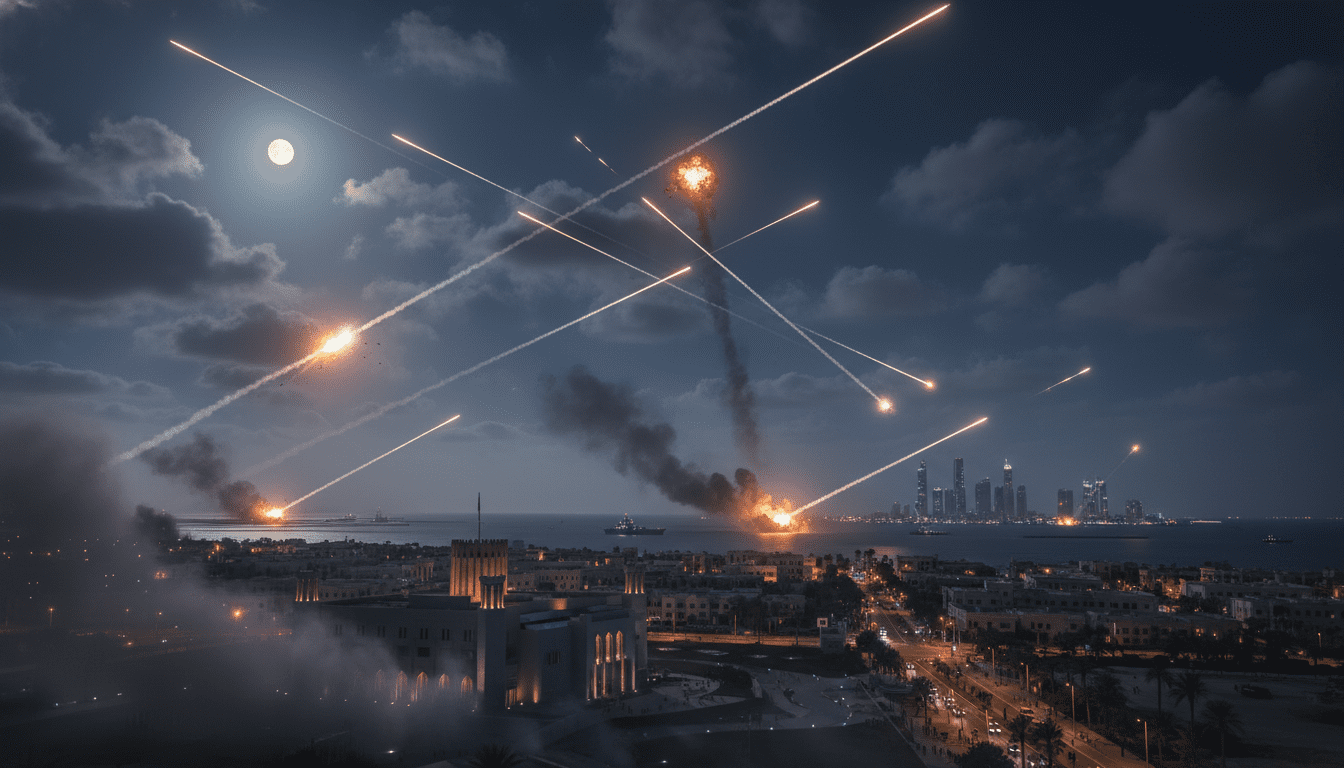
US-Iran escalation: US strikes Iranian radar sites as Iran fires missiles and drones toward Kuwait and Bahrain
US-Iran escalation after US strikes radar sites; Iran retaliates with missiles and drones toward Kuwait and Bahrain, stoking tensions and global oil fears.
A sharp US-Iran escalation overnight sent shockwaves through the Gulf as American forces struck Iranian coastal radar installations and Tehran responded with missile and drone attacks directed at Kuwait and Bahrain. US authorities reported shooting down multiple Iranian drones near the Strait of Hormuz and described the strikes on Qeshm Island and Goruk as acts of self-defence. The exchange has occurred alongside continuing diplomatic talks, even as regional violence and shifting negotiation demands complicate prospects for a durable settlement.
US says it shot down Iranian drones and struck radar sites
US Central Command reported that American forces intercepted four Iranian drones approaching shipping lanes and fired on coastal radar positions it said were linked to hostile action. Officials framed the operations as defensive measures intended to protect naval and commercial traffic in the Strait of Hormuz and nearby waters. US military statements emphasized limited objectives, but analysts cautioned that strikes on fixed Iranian infrastructure risk expanding the confrontation beyond the original incidents.
Iran’s Revolutionary Guard mounts missile and drone attacks on Gulf targets
Iran’s Islamic Revolutionary Guard Corps announced it launched a combination of missiles and drones at what it described as US-linked targets in Kuwait and Bahrain in retaliation for the US strikes. Tehran framed the strikes as a calibrated response to protect its sovereignty after the targeting of coastal radar sites associated with Iranian military facilities. Iranian officials also indicated that parts of the broader negotiation agenda — notably access to frozen assets — remain central to ongoing talks despite the kinetic exchange.
Kuwait and Bahrain report interceptions and civil alerts
Authorities in Kuwait said their air defences intercepted incoming projectiles and drones, and Bahrain issued public alerts as aerial threats were tracked in its airspace. Both Gulf states took heightened security measures around critical infrastructure and diplomatic facilities, and civilian authorities urged residents to follow official guidance. No confirmed ground damage from the incoming strikes has been publicly reported, though officials warned that the risk to ports and energy assets prompted immediate response measures.
Diplomacy continues even as demands shift
Despite the military flare-up, officials on both sides signalled a parallel push to keep talks alive, with statements indicating progress but acknowledging that a final agreement will take time. Negotiators from Tehran have pressed for partial releases of frozen funds as an immediate confidence-building measure while suggesting that complex nuclear and technical issues could be moved to later stages of negotiation. On the US side, comments suggested continued engagement while reserving the right to respond militarily to perceived threats, a posture that keeps both diplomatic and coercive options in play.
Lebanon fighting adds complexity to regional calculations
The Gulf confrontation unfolded against an intensification of violence in southern Lebanon, where Israeli strikes and clashes with Hezbollah have produced civilian casualties and further strained regional diplomacy. Lebanese officials reported deaths including emergency responders, and Hezbollah said it had mounted dozens of attacks on Israeli positions, escalating a confrontational cycle that regional mediators have sought to halt. The spillover of combat into Lebanon complicates any wider de-escalation, as actors across the region weigh local battlefield gains against the risk of broader entanglement.
Markets and governments respond to heightened risk
Financial markets reacted swiftly to the surge in tensions, with Brent crude trading near the psychologically important $100-a-barrel threshold as traders priced in supply and transit risks through the Strait of Hormuz. Several governments in the region tightened security at energy and maritime facilities, and shipping companies reassessed transit plans in the short term to mitigate potential disruptions. Analysts warned that prolonged instability or further attacks on infrastructure could prompt more pronounced price volatility and logistics challenges for global energy markets.
The sequence of strikes and counterstrikes underscores how quickly targeted military actions can inflame broader regional crises even while diplomats pursue parallel tracks. With negotiations ongoing and competing political demands on each side, the immediate horizon looks fragile: security officials across the Gulf have signalled preparedness for further contingencies, while negotiators say substantive compromises remain on the table. International observers and commercial actors will be watching for whether restraint holds or if the situation draws in additional states, a development that could reshape both diplomatic timelines and economic expectations.
