
How to Get from Vienna to Berlin: Trains, Buses, Flights and Practical Tips
How to get from Vienna to Berlin: compare trains, night trains, buses and flights. Practical tips on travel times, prices, reservations and station transfers.
Direct summary of travel options and what to expect
Travelers looking to get from Vienna to Berlin can choose between high-speed trains, overnight sleepers, long-distance buses and short flights. Each mode balances total journey time, cost and convenience differently, so the right choice depends on priorities such as speed, comfort or budget. This guide lays out typical travel times, booking strategies and station-to-station logistics to help readers decide the best way to travel between the two capitals. Practical tips included here reflect common services offered by Deutsche Bahn, ÖBB Railjet/Nightjet, FlixBus and major carriers.
Travel times and routes: Vienna to Berlin by mode
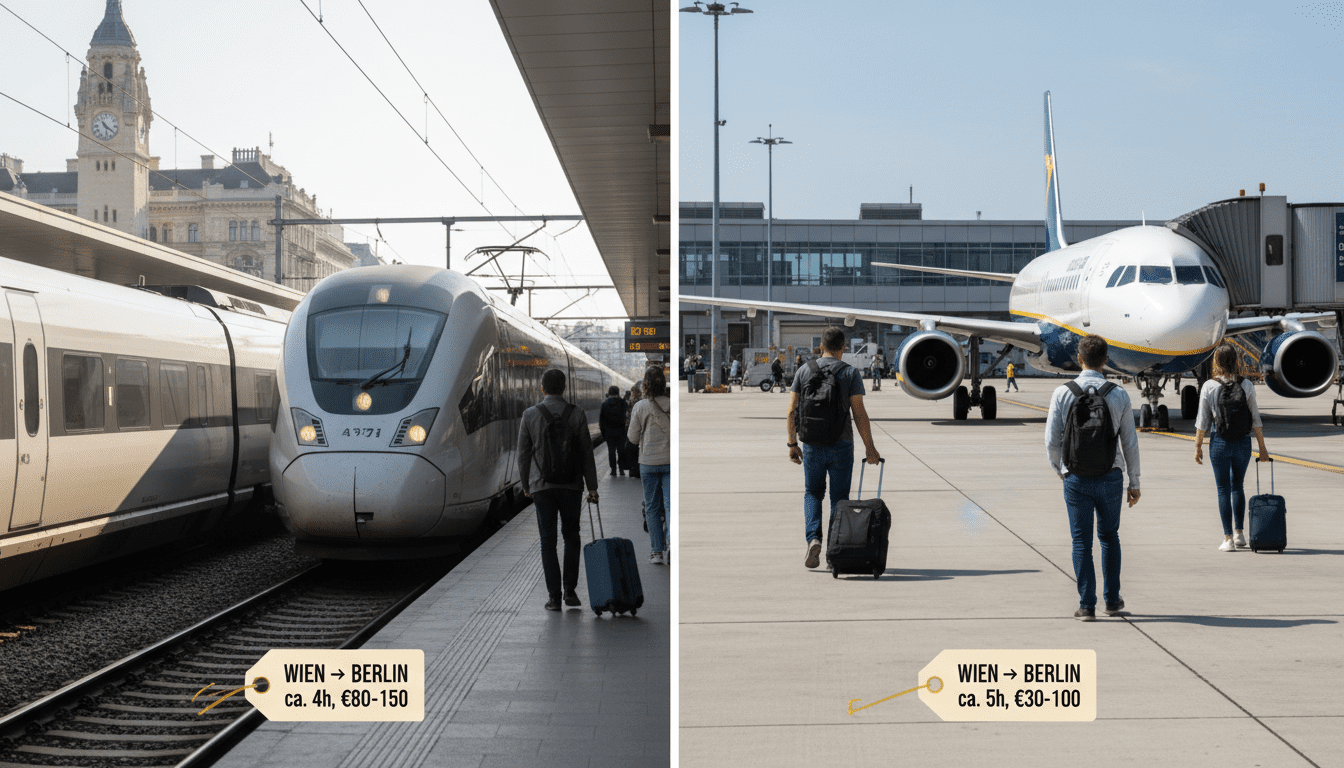
By rail, direct and one-change services typically take between seven and a half and eight and a half hours, depending on whether the connection uses ICE or Railjet services. Night trains on the Vienna–Berlin corridor generally depart in the evening and arrive the following morning after roughly ten hours aboard sleeper or couchette accommodations. Bus journeys run by long-distance operators usually take between eight and a half and nine and a half hours for direct routes, with overnight departures available for budget-conscious travelers. Flights between Vienna and Berlin have a block time of about 75–125 minutes but require additional time for transfer to and from airports, security and bag handling.
Fastest routes: Flights versus high-speed trains
If absolute door-to-door speed is the priority, a nonstop flight can often save two to three hours compared with rail or bus once airport procedures and transfers are included. Airlines operate multiple daily nonstop services, most commonly on Austrian Airlines and Eurowings, and they can be competitive on price when booked well in advance. High-speed trains remain the fastest surface option and tend to deliver a more predictable total travel time, since passengers avoid airport queues and longer urban transfers. For many travelers the train’s combined comfort and central station arrivals in both Vienna and Berlin make the ICE or Railjet the preferred balance of speed and convenience.
Most comfortable and scenic: Day and night trains
Daytime high-speed trains offer spacious seating, onboard power and a smooth ride that allows work or leisure time during the journey. ICE connections often require a single change, usually in a major hub such as Prague or in German border stations, while some Railjet services run direct with slightly longer journey times. Nightjet overnight trains provide an alternative for those who want to sleep en route and maximize daytime hours; options include seated reservations, couchettes and private sleeper cabins with varying levels of comfort. Travelers valuing privacy and rest should weigh the higher price of sleeper cabins against the cost of a hotel night plus daytime travel.
Budget choice: Long-distance buses and typical fares
Long-distance buses are usually the cheapest way to get from Vienna to Berlin, with fares that frequently undercut train prices for last-minute or short-notice bookings. Bus operators run multiple services daily, including overnight departures that combine low cost with the convenience of sleeping on the move. Typical journey times for direct buses range from eight and a half to nine and a half hours but are more vulnerable to road traffic and delays than trains. Buses normally include onboard restrooms and have seat reservation options, and buyers should check arrival terminals since some central bus stations are not as centrally located as major train stations.
Seat reservations, ticket types and how flexibility affects price
On high-speed trains passengers often buy seat reservations for a small additional fee and should consider them during busy travel periods to guarantee a seat. Train fare types vary from tightly restricted advance-saver fares, which lock passengers to a particular train, to flexible fares that permit travel on any suitable train the same day. On night trains, the accommodation type determines the price: seats are cheapest, couchettes are mid-range, and private sleepers cost the most but include greater comfort and sometimes private sanitation. Bus tickets usually guarantee a seat; operators often offer optional paid seat reservations to keep groups together.
How to buy tickets and use mobile apps effectively
Tickets for rail travel can be purchased at station ticket counters, at automated machines, via national rail websites and through mobile apps that store electronic tickets. Deutsche Bahn and ÖBB offer English-language options and apps that allow passengers to present PDF or digital tickets during onboard checks. For buses, operators provide online booking and a mobile app that issues a printable or digital boarding pass. Travelers should buy high-speed rail tickets in advance to access the best prices, and they should print or download confirmation emails and tickets before departure in case of limited connectivity.
Stations, airports and connecting transport in both cities
In Vienna most long-distance services depart from Wien Hauptbahnhof, which connects directly to suburban rail and the city U-Bahn system for swift access to central districts. Berlin’s long-distance services arrive at different stations depending on the specific service; Berlin Hauptbahnhof is the primary destination for many trains and offers broad S-Bahn and regional connections. Bus arrivals vary by operator, with some services using Berlin ZOB on the western side of town while others stop nearer to Südkreuz or Alexanderplatz. Vienna International Airport and Berlin Brandenburg Airport both provide rail or bus links into their respective city centers, so travelers should include transfer time in total journey calculations.
Practical considerations for driving and multi-city itineraries
Driving the roughly 680-kilometre route between Vienna and Berlin can appeal to those seeking flexibility and the chance to add stops such as Prague, but the journey commonly takes more than seven hours and requires familiarity with cross-border traffic regulations. Parking in central Vienna and central Berlin is limited and often expensive, and travelers should account for tolls, vignettes and potential urban restrictions. For multi-city itineraries that include Prague or other Central European destinations, combining rail and road segments can be efficient, but long-distance rail remains the lower-stress option for direct city-to-city transfers.
Price comparisons and when to choose each mode
Ticket prices vary by booking lead time, season and service class; buses often offer the lowest headline fares while trains provide better comfort and central arrivals for a moderate premium. Flights can be cost-effective when booked well ahead, but their final cost must account for airport transfers and potential baggage fees. Night trains can be cost-competitive when factoring in the price of a hotel night saved, while flexible rail fares are best when travel plans are uncertain. Travelers should compare specific itineraries on the operators’ apps or websites shortly after finalizing dates to identify the best balance of time and cost.
Advice for peak periods, holidays and festival weekends
During peak travel periods and national holidays demand on the Vienna–Berlin corridor rises significantly, and fares for high-speed trains and flights can climb sharply. Seat reservations become increasingly valuable at these times to avoid standing or being separated from travel companions. Booking early is the most reliable strategy to lock in lower prices and preferred departure times, particularly for night train sleepers or private couchette compartments. If plans are restricted, travelers might choose buses for cheap last-minute options, while those seeking certainty should secure flexible train fares despite the higher cost.
Accessibility, luggage and onboard services to expect
Long-distance trains typically have generous luggage allowances and provide storage space for oversized items without additional fees, making them attractive for travelers with larger bags. Buses limit luggage to a couple of checked items plus a small carry-on, and operators publish precise allowances and excess-fee rules. Airlines enforce strict checked and cabin baggage rules that can add to the total price if allowances are exceeded, especially on low-cost carriers. Passengers with mobility needs should check operator accessibility policies and reserve any required assistance in advance to ensure accessible boarding and seating.
How to combine modes for an efficient itinerary
Combining modes can yield efficient itineraries: for example, a traveler might fly out early from Vienna to save daytime hours and then use local rail or S-Bahn to reach central Berlin efficiently. Alternatively, pairing a night train arrival with a daytime rail or bus outbound can maximize sightseeing time in both cities. When mixing modes, allow generous buffer time between scheduled connections to accommodate potential delays and to ensure ticket validity across different operators. Use mobile apps to keep all reservations and journey details in one place to simplify transfers.
Final recommendations for most travelers
For travelers prioritizing comfort and predictable timing, high-speed day trains between Vienna and Berlin are the recommended choice, offering a central-to-central experience with limited hassle. Budget travelers focused on price should compare long-distance bus offers and book overnight services to save on accommodation costs. Those who need to minimize daytime travel time may prefer flights if ticket prices are competitive and transfer times are short. Night trains are the best option for combining travel and overnight accommodation when preserving daytime hours is a priority.
Whether you plan to travel by train, bus, night train or plane, confirm departure and arrival stations and allow additional time for transfers, security and luggage handling. Compare direct and single-change rail options and consider seat reservations for busy periods to secure a comfortable journey. Keep tickets and booking confirmations accessible on a connected device or printed copy, and check operator baggage and check-in rules ahead of departure. With the right preparation, getting from Vienna to Berlin can be efficient, economical and even pleasant.
