
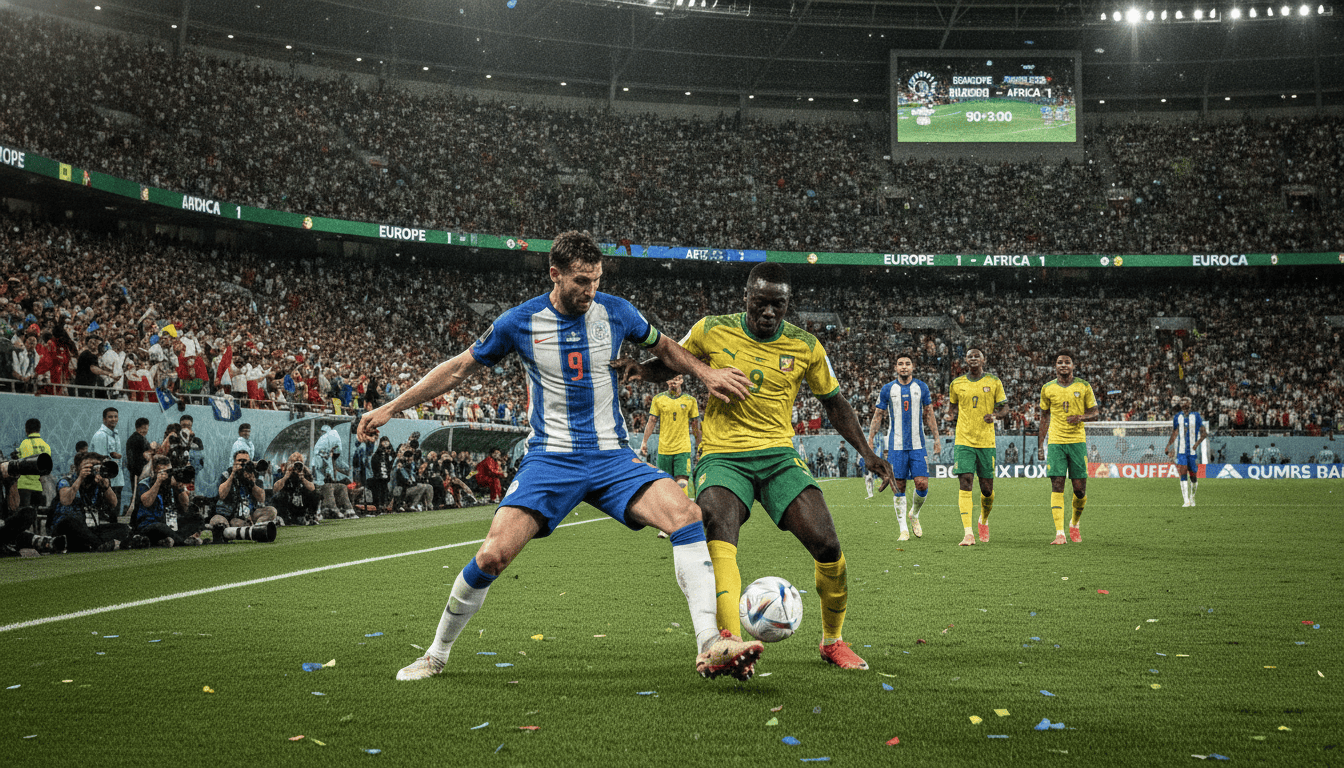
World Cup Quarterfinals Show European Reassertion Amid Globalized Styles
Six European teams, plus Morocco and Argentina, reach the World Cup quarterfinals as club-driven tactics homogenize styles and late drama decides outcomes.
The World Cup has reached a pivotal moment as eight teams prepare for the quarterfinals, six of them from Europe alongside Morocco and Argentina. What began as a tournament promising a shift away from traditional European and South American dominance has instead seen familiar powers reassert themselves. Close finishes, penalties and last-minute goals have helped shape a bracket that highlights both global reach and a renewed European presence.
Quarterfinal Lineup Balances Longstanding Powers and Surprises
The remaining eight teams reflect both continuity and surprise, with heavy representation from Europe yet room for exceptional runs by nations outside that continent. Morocco, the 2022 semifinalist, and Argentina provide the non-European counterpoints amid a field dominated by continental powerhouses. The spread of clubs across top leagues means national identities are blending with players’ club experiences, influencing who advances.
Many of the knockout ties were decided in the final moments or via shootouts, emphasizing how fine the margins have been. A handful of underdog stories and near-misses—notably from African teams and a few South American sides—kept the tournament competitive deep into the knockout stage. The result is a quarterfinal set that feels both familiar in its names and novel in how those teams arrived.
Late Drama and Penalty Shootouts Shaped the Bracket
A significant portion of matches in the knockout rounds were decided by stoppage-time goals or penalty shootouts, underlining the tournament’s fragile balance. Teams that managed composure in high-pressure moments progressed, while others saw promising campaigns end abruptly. Those outcomes reinforced the narrative that luck and timing remain as decisive as tactical preparation in major tournaments.
Off-field issues also played a role in some exits, with internal disputes and unsettled camp dynamics contributing to inconsistent performances. When coaching tensions or federation negotiations leak into the squad environment, the competitive edge can erode quickly, and several nations paid the price in tight contests.
Club Football Influence Narrows Tactical Differences
The influence of elite club competitions, particularly leagues with high international player turnover, has accelerated a convergence in playing styles. Many national stars ply their trade together in the same domestic competitions, which fosters uniform tactical approaches across continents. As a result, possession-oriented, positional systems that were once distinctively European have spread globally.
This cross-pollination has reduced the stark stylistic contrasts that used to define intercontinental matchups. Creative roles have migrated and hybridized, leaving fewer teams relying on singular, regional philosophies and more adopting blended systems shaped by coaches in club football.
South American Creativity Confronts Tactical Evolution
Several South American teams entered the tournament expecting to impose traditional creativity and technical flair, but they encountered organized possession systems that limited space for classic playmakers. Some nations responded by increasing physical intensity and pressing, attempting to disrupt methodical ball circulation. That approach produced mixed results, showing that adaptation is possible but not always sufficient to overturn possession-based dominance.
Argentina remains the notable South American success in the bracket, combining individual brilliance with tactical discipline. Other Latin American sides showed resilience and moments of quality but struggled at times to reconcile their historic strengths with the defensive compactness and control displayed by top European sides.
African Teams Close the Gap but Face Narrow Margins
African teams have emerged as the tournament’s storylines more than in previous editions, with several sides progressing further than expected and pushing marquee opponents to the limit. Morocco’s pace on the wings and well-drilled counterattacking organization proved especially effective against teams that traditionally controlled possession. That performance echoed their deep run from 2022 and underscored Africa’s growing tactical maturity.
Yet the overall outcome also illustrated how easily promising campaigns can be halted by single moments. A mixture of tactical gains and late-game misfortune meant that several African teams exited in tightly contested matches rather than by clear superiority, highlighting both progress and the unforgiving nature of knockout football.
Stars Remain Decisive as Systems Both Constrain and Showcase Talent
Individual forwards stand out in this tournament, with top scorers and elite attackers frequently determining game outcomes. Players who can convert limited chances have been invaluable in an environment where possession is often controlled by organized systems rather than individual flair. The crowd-drawing names continue to tilt close matches and force tactical adjustments from opponents.
At the same time, the prevalence of similar systems has elevated the importance of fine tactical details and depth. Teams that combine a coherent strategic plan with match winners are best positioned to advance, and several quarterfinalists exemplify that balance. The knockouts will test whether individual brilliance can still overcome well-implemented collective strategies.
The quarterfinal draw leaves open questions about whether the apparent European reassertion is a short-term correction or a sign of deeper structural advantages tied to club football and resource concentration. As the tournament moves into its decisive phase, tactical nuance, squad harmony and a measure of fortune will determine which teams can translate globalized styles into ultimate success.
