
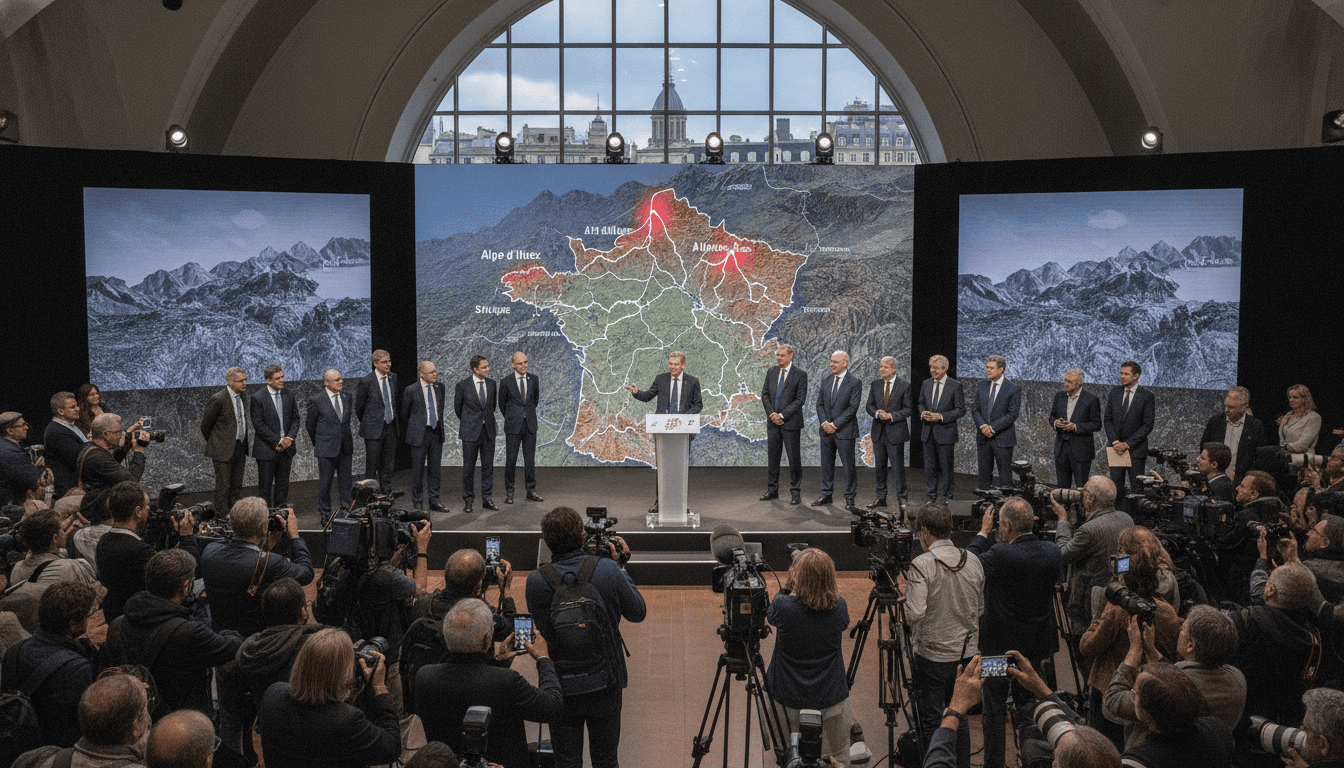
Tour de France 2026 Route Revealed: Barcelona Start, Galibier Challenge and Double Alpe d’Huez Climbs
Tour de France 2026 kicks off in Barcelona on July 4 and closes on the Champs-Élysées in Paris on July 26, featuring 21 stages, two time trials and more than 3,300 kilometres of racing.
The Tour de France 2026 began in Barcelona on July 4 with a 19.6 km team time trial that immediately shaped the standings, and the race will conclude on July 26 with a traditional sprint finale on the Champs-Élysées in Paris. Early stages already produced winners including Team Visma-Lease a Bike in the opening team time trial, Isaac del Toro on stage two, Tadej Pogačar on stage three and Mads Pedersen on stage four. Organizers have designed a route that combines long flat days, multiple summit finishes and a decisive high-mountain “king stage” featuring the Col du Galibier.
Barcelona team time trial establishes early pecking order
The race opened with an uncommon team time trial outside France, a 19.6 km test around Barcelona that put entire squads on the clock. Team Visma-Lease a Bike took the stage win, handing their leader a valuable advantage in the overall picture. That effort underlined the importance of strong team support from the outset and gave several GC hopefuls an early marker to defend.
Midweek Pyrenean battles and first rest day
Following the opening trio of stages the route moves into the Pyrenees with tough mountain and hilly profiles that will test climbers and domestiques alike. The itinerary includes rides from Pau to Gavarnie-Gèdre and other high passes before the race pauses for a scheduled rest day on July 13. Those early summit finishes will be a first opportunity for pure climbers to press attacks and for contenders to probe rivals for weaknesses.
High Alps and the Col du Galibier will shape the GC
The Tour’s most demanding mountain sequence arrives late, with a so-called king stage on July 25 that includes the Col du Galibier at 2,624 metres. That day covers heavy altitude and repeated category climbs, with nearly 5,450 metres of climbing on a single stage. Organizers say the Galibier, together with preceding ascents such as the Croix de Fer and Télégraphe, will be decisive for the general classification.
Alpe d’Huez double summit finish to add drama
Riders face summit finishes on Alpe d’Huez on consecutive stages, with arrivals on July 24 and July 25 that revisit the legendary 21 hairpins. The 19th stage is a shorter, explosive mountain day that sends riders up Alpe d’Huez after roughly 130 kilometres and large vertical gains. The second Alpe d’Huez finish follows a route that climbs via the Col de Sarenne, a twist now being used as an uphill approach rather than the descent featured in past editions.
Vogesen stage near the German border spotlights German riders
On July 18 the race traverses the Vosges with a route that starts in Mulhouse and finishes at Le Markstein Fellering, less than 20 kilometres from the German border. That stage includes three first-category climbs—Grand Ballon, Ballon d’Alsace and Col du Haag—and could be a major opportunity for German riders to shine. Local interest will be heightened by Florian Lipowitz, who rides as a GC contender with Red Bull – Bora-hansgrohe and is expected to attract vocal home support.
Favorites, teams and the fight for yellow
The general classification battle is framed as a rematch between Tadej Pogačar and Jonas Vingegaard, with both riders carrying strong season form into the Tour de France 2026. Pogačar, the 2025 winner, arrives with several classic and stage-race victories, while Vingegaard returns after success at the Giro d’Italia and Paris–Nice. Other podium candidates include Remco Evenepoel, Paul Seixas and Florian Lipowitz, supported by a field of 23 teams and 184 riders that includes established captains and emerging talents.
Logistics, time trials and overall race metrics
The 21 stages cover a total distance of 3,321 kilometres through 29 departments and demand approximately 54,450 metres of climbing across the route. The race schedule contains two time trials: the opening team time trial in Barcelona and a 26.1 km individual time trial near Évian-les-Bains on July 21. There are two official rest days, and parcours designers placed key mountain tests late to ensure the general classification remains contested until the final high-Alpine stages.
Broadcast details and how to follow the race
Television coverage for the Tour de France 2026 is extensive, with national broadcasters and multiple pay and streaming partners carrying live stages. In Germany the race is available on public broadcaster ARD, which begins each day’s televised coverage in the afternoon and offers extended streaming of earlier race action. International viewers can also watch on Eurosport and the Discovery-owned streaming services, alongside subscription platforms that hold regional rights.
The 21-stage route provides a balance of sprint opportunities, breakaway terrain and sustained mountains that should produce a dramatic three-week contest. With the early time trial already causing time splits, the high mountains and two summit finishes at Alpe d’Huez will likely decide the podium, and teams will have to manage tactics, recovery and equipment to the finish in Paris on July 26.
