
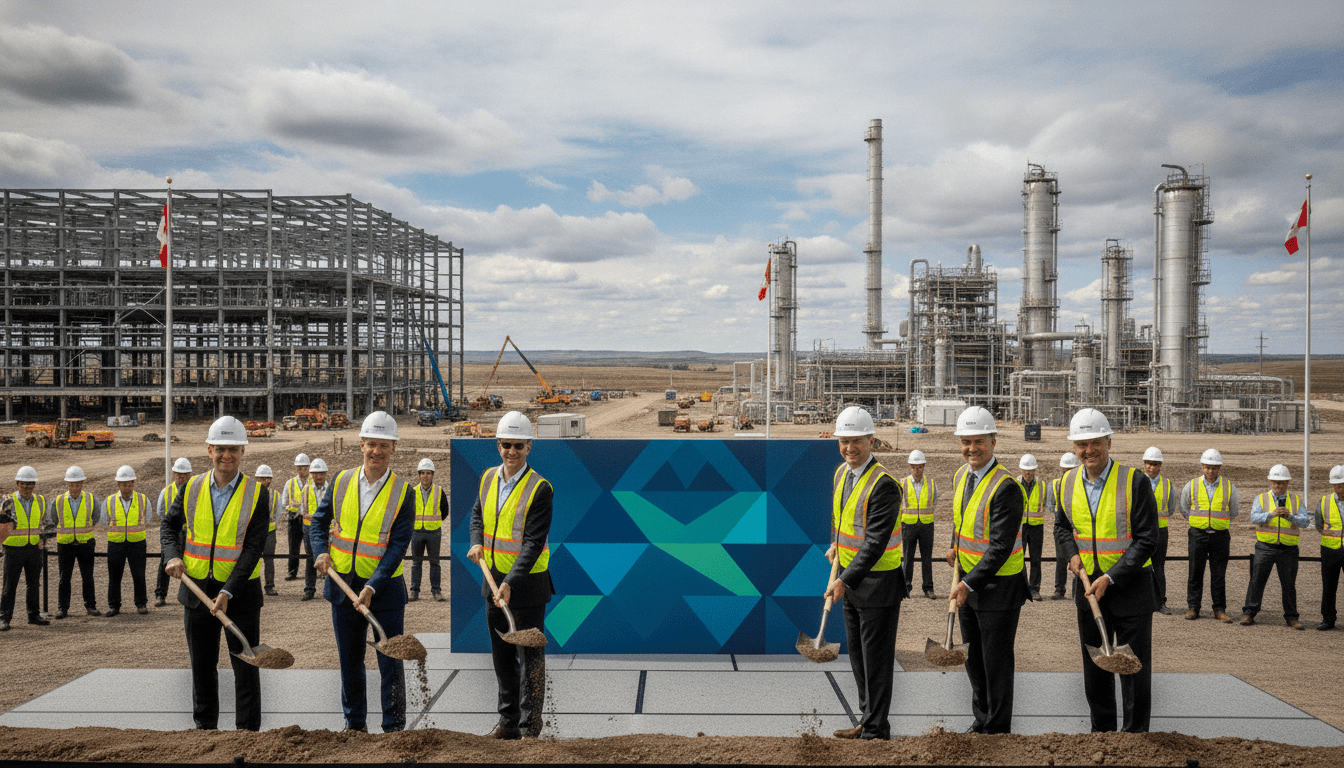
Meta data center in Canada: Meta to build $9.17bn facility in Alberta
Meta will build a $9.17bn data center in Sturgeon County, Alberta, a one-gigawatt facility that Meta says will be powered and financed by the company, raising debate over energy and emissions.
Project announcement and scale
Meta has selected Sturgeon County in Alberta for its first Canadian data center, announcing a capital commitment of roughly $9.17 billion for the facility. The company said the site will deliver about one gigawatt of computing capacity, a scale comparable to the power needs of roughly 800,000 households. Meta already operates dozens of data centers worldwide and says the Alberta project is part of a broader push to expand infrastructure to support artificial intelligence services.
Planned energy supply and Pembina partnership
To meet the center’s large power demand, Meta is partnering with pipeline operator Pembina, which will construct a dedicated gas-fired generation plant near the site. Pembina projects the plant will require about 4.25 million cubic meters of natural gas per day and is scheduled to enter service by the end of 2030. Meta has indicated it will underwrite the necessary generation and network upgrades to ensure continuous supply for the data center’s operations.
Environmental trade-offs and emissions concerns
Alberta’s energy mix is dominated by natural gas, and emissions associated with power generation in the province are significantly higher than the Canadian average. Environmental advocates and some policymakers have pointed to this disparity, noting that relying on gas-fired generation undermines efforts to reduce greenhouse gases even as the company cites energy efficiency measures. Meta and local officials must reconcile the company’s aim to expand AI capacity with growing scrutiny over the climate footprint of large-scale computing facilities.
Technical capacity and AI demand
The one-gigawatt capacity of the Alberta site reflects industry trends in which hyperscalers invest heavily to service AI workloads that require intensive compute and cooling. Meta’s investment follows a pattern of substantial capital spending across the sector as companies race to build the infrastructure needed to train and host large models. The scale of the plant will necessitate complex cooling systems and continuous, high-voltage power delivery, factors that have driven the decision to fund the generation and grid connections directly.
Regional economic impacts and incentives
Local authorities in Alberta have promoted the province’s competitive gas prices and cool climate as advantages for data center siting, arguing the project will bring jobs, construction activity, and long-term tax revenue. Sturgeon County officials expect significant economic benefits during construction and operations, though detailed employment projections from the companies involved remain limited. Critics caution that gains in employment and local spending must be weighed against potential environmental costs and the long-term sustainability of fossil-fuel–dependent power sources.
National AI strategy and infrastructure context
The Canadian government’s recent AI strategy highlighted opportunities for new data centers to access the country’s low-carbon electricity grid in many regions, a claim that has prompted discussion about geographic differences in Canada’s power mix. While some provinces can offer largely emissions-free power, Alberta’s grid currently relies more heavily on natural gas, raising questions about how federal objectives align with provincial realities. The Alberta project underscores the tension between national ambitions for AI capacity and the regional energy profiles that shape where large facilities land.
Meta’s global expansion of data infrastructure
This Canadian facility will join Meta’s global portfolio of data centers as the company accelerates spending to support AI services across its platforms. Meta already operates multiple large-scale centers and continues to invest in both capacity and the systems needed to manage rising compute demands. Observers say the Alberta project illustrates the broader industry trend of vertical integration, where companies finance generation and grid upgrades to secure the continuous, high-density power required for modern AI operations.
The Alberta proposal presents a clear economic opportunity for the region while raising urgent questions about emissions and energy policy as technology companies scale up compute capacity to meet growing AI workloads.
