
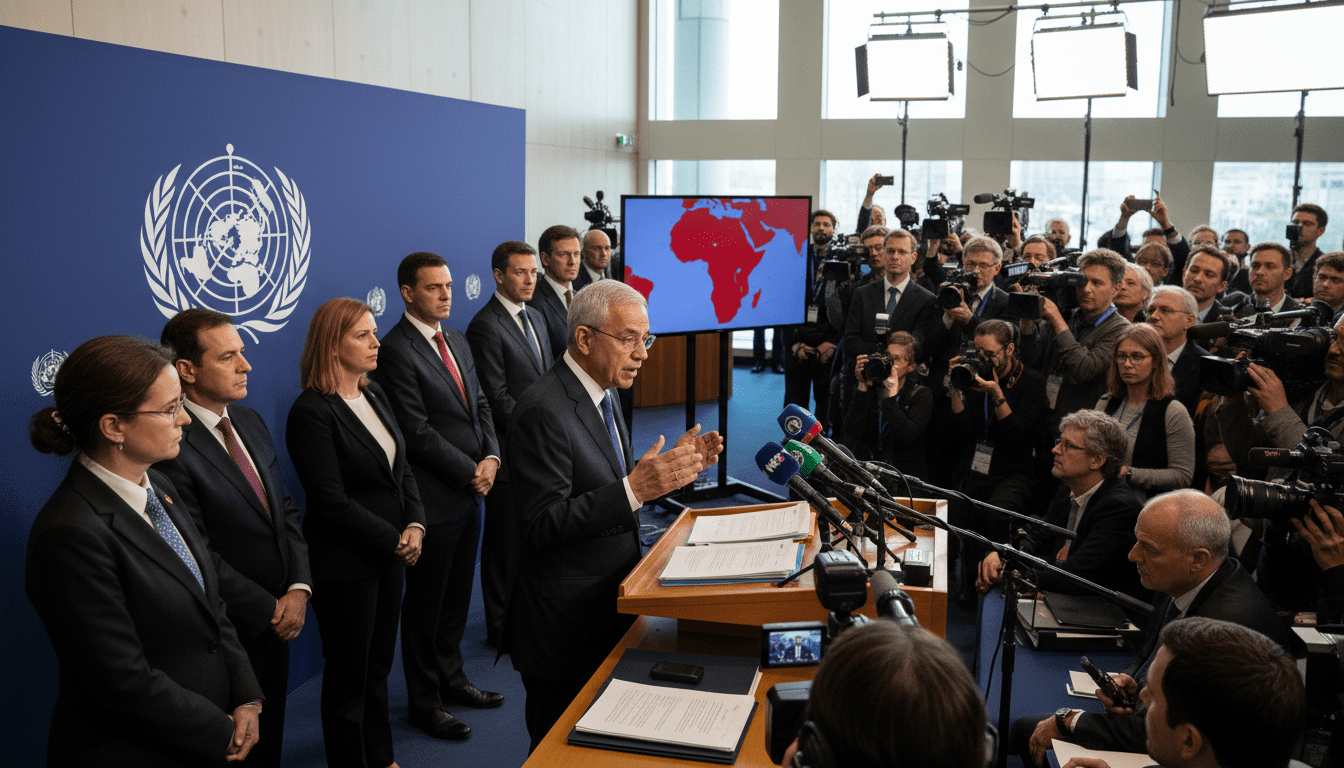
WHO declares international health emergency as Ebola outbreak spreads in DRC and Uganda
WHO declares international health emergency over Ebola outbreak in DRC; cases reported in Uganda amid risk of cross-border spread and limited vaccines now.
The World Health Organization has declared an international public health emergency in response to an Ebola outbreak centered in northeastern Democratic Republic of Congo and linked cases in Uganda. The Ebola outbreak has prompted the UN agency to seek heightened vigilance among neighboring states and to mobilize international support, while stressing the declaration does not amount to a pandemic alert. Health officials are particularly concerned because the outbreak is caused by the Bundibugyo variant, for which no approved vaccine exists.
WHO decision and international implications
The WHO invoked emergency powers to spur cross-border surveillance, resource sharing and coordinated response measures among affected countries and partners. The declaration is intended to raise the political and operational profile of the event and to unlock additional international assistance where needed. WHO officials made clear the measure is aimed at containment and preparedness rather than signalling global pandemic status.
Confirmed and suspected cases in Ituri, Kinshasa and Kampala
Authorities report eight laboratory-confirmed cases and 246 suspected infections in Ituri province in northeastern DRC, along with about 80 suspected deaths linked to the cluster. The virus was also detected in a person who recently returned to Kinshasa, more than 2,500 kilometres from the Ituri hotspot. Two infected individuals travelled from the DRC to Kampala, Uganda; one of those patients subsequently died after arrival.
Bundibugyo variant characteristics and vaccine gaps
The outbreak is attributed to the Bundibugyo lineage of Ebola virus, which differs from the Zaire strain targeted by existing licensed vaccines and most antibody treatments. Public health analyses indicate the Bundibugyo variant has an observed case fatality rate near 30 percent in historical outbreaks, compared with higher rates seen with Zaire strains. Because licensed vaccines and monoclonal antibody therapies are specific to Zaire, there are currently no approved biomedical countermeasures tailored to this variant.
Regional vulnerabilities: mobility, mining and insecurity
Health authorities warn that the affected area is marked by fragile security, active armed groups and high population movement, factors that complicate surveillance and response. Ituri and neighbouring North Kivu contain numerous artisanal gold mining sites that draw mobile populations and intermittent clashes, creating conditions that can mask transmission chains. Cross-border trade and travel increase the risk that undetected infections will be carried into Uganda, South Sudan, Rwanda and beyond.
Challenges to detection and containment
Epidemiologists say there are signs the outbreak may have circulated undetected for weeks or months before detection, limiting the window for effective contact tracing and isolation. The clinical picture of Ebola—sudden fever, severe gastrointestinal symptoms and, in some cases, bleeding—combined with limited access to formal healthcare facilities can delay diagnosis. Transmission occurs through direct contact with bodily fluids or contaminated surfaces; the virus is not airborne, but the constraints on testing and tracing raise the likelihood of wider spread if not rapidly contained.
Action by WHO, national authorities and aid organisations
WHO Director-General Tedros Adhanom Ghebreyesus has said an emergency committee will be convened to advise on further steps, and the agency has urged nations to activate national contingency plans and readiness measures. Médecins Sans Frontières (Doctors Without Borders) is preparing a major operational deployment, citing concern over the rapidly rising numbers of cases and deaths. National ministries of health, regional bodies and international partners are expected to coordinate intensified surveillance at border crossings, expand laboratory testing, and scale up community engagement and infection-prevention measures.
Ebola outbreaks in the DRC have been recurrent since 1976; this is the 17th such event recorded in the country. Historical context underlines the stakes: the 2014–2016 West Africa epidemic caused more than 11,000 deaths, and the DRC experienced a notable outbreak in 2018–2019 across Ituri and North Kivu provinces. More recently, an outbreak in Kasaï between September and December 2025 resulted in dozens of deaths.
Health authorities say immediate priorities are to confirm suspected cases, accelerate contact tracing, and protect frontline health workers and communities with communication and basic infection-control supplies. International partners will also assess options to deploy experimental countermeasures or support clinical management in the absence of a licensed vaccine for this variant.
The situation remains fluid; officials will be watching confirmation of suspected cases, the findings of the WHO emergency committee and the effectiveness of stepped-up surveillance at borders. Rapid case confirmation, clear community engagement and sustained international support will determine whether the outbreak is contained locally or expands regionally.
