
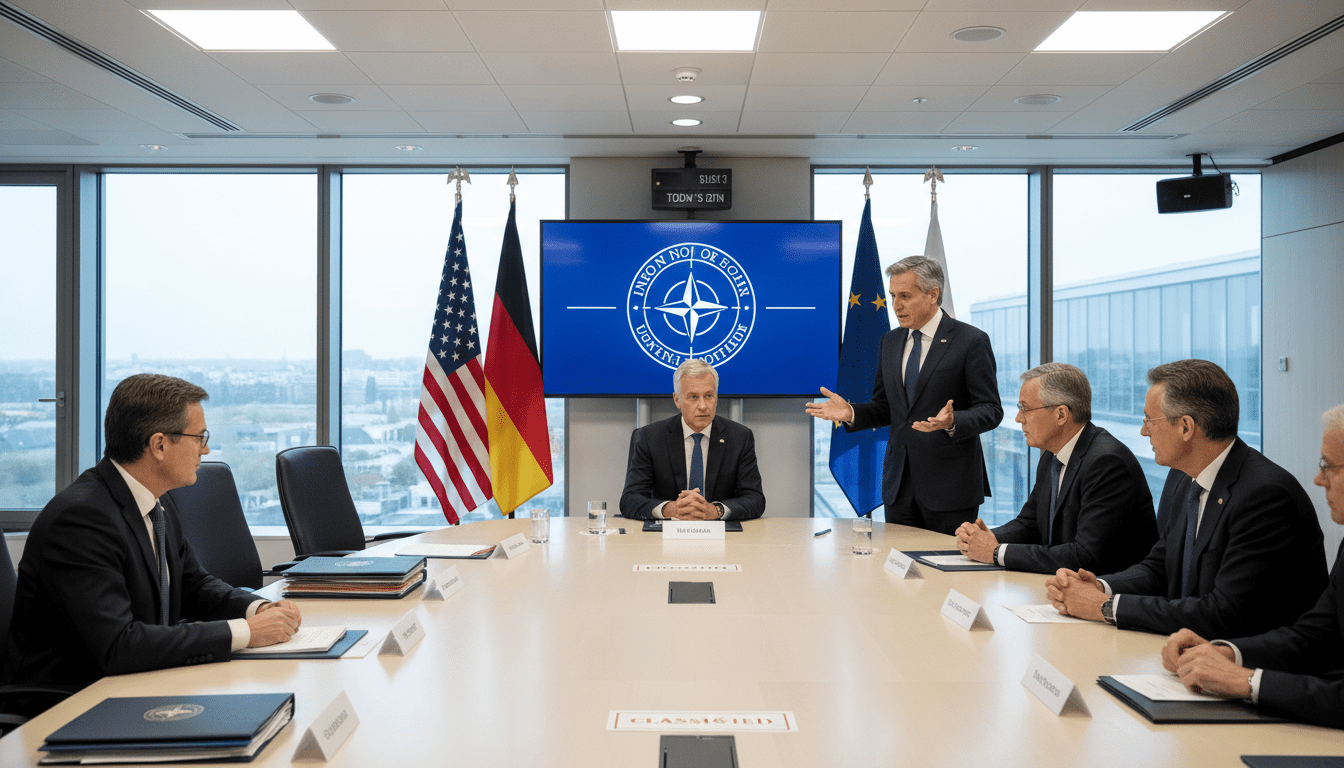
US reversal on stationing missiles in Germany deepens NATO deterrence concerns
Meta description: U.S. reversal on stationing conventionally armed medium-range missiles in Germany raises urgent questions about NATO deterrence, procurement hurdles, and Berlin’s next steps.
The U.S. reversal on stationing conventionally armed medium-range missiles in Germany has prompted immediate alarm in Berlin and among NATO partners, who warn the decision narrows European deterrence options at a critical moment. The announcement, coupled with a separate White House plan to reduce a portion of U.S. forces in Europe, has been interpreted by allies as part of a broader U.S. strategic pivot away from forward-deployed capabilities. German officials and defence analysts say the change undercuts contingency planning and amplifies pressure on European states to develop or procure long‑range strike options.
U.S. decision and allied reactions
The U.S. administration’s decision to rescind its pledge to host conventional medium-range missiles in Germany was described by German security officials as a significant setback for NATO deterrence. Policymakers in Berlin have expressed frustration at the timing, arguing the move leaves a capability gap that was expected to be filled through coordinated allied arrangements.
Allies in NATO have privately warned that the message sent by the U.S. reversal—and the concurrent announcement on troop levels—may embolden adversaries and complicate collective defence planning. Public responses from European capitals have been measured, but diplomatic sources confirm intense behind-the-scenes consultations are underway.
Berlin’s procurement options and logistical hurdles
German defence planners are now assessing whether to acquire long-range cruise missiles independently, but officials caution that procurement is neither quick nor straightforward. Potential options include purchasing U.S.-manufactured Tomahawk-type cruise missiles or deploying existing air- and ground-launched systems, yet delivery schedules, certification processes and basing approvals would take months to years.
Supply-chain constraints and inventory drawdowns cited by U.S. officials in other contexts suggest immediate transfers may be limited, leaving Berlin to balance rapid capability needs against industrial and political realities. German military leaders have flagged that adapting command-and-control, basing, and munitions storage to host new systems will require sustained investment and legal approvals.
NATO deterrence gap and lessons from Ukraine
Security experts argue the decision underscores an urgent European imperative to close long-range strike gaps independently of U.S. basing commitments. Ukrainian forces have demonstrated the battlefield impact of long-range systems in targeting logistics and rear-area infrastructure, reinforcing arguments for NATO members to field complementary capabilities.
Several NATO governments are re-evaluating capability packages that would deter aggression by threatening military-relevant targets beyond frontline positions. For many analysts, the debate now centers on whether a combination of allied national acquisitions and pooled capabilities can replicate the deterrent effect previously expected from U.S. deployments.
Russian deployments in the Baltic and regional threat perceptions
Russia’s long-range missile deployments in the Kaliningrad exclave have been cited repeatedly by German and Polish officials as a proximate threat that necessitates credible counter-capabilities. Systems based in Kaliningrad can reach Berlin and Warsaw in a matter of minutes, a reality that has intensified pressure on NATO to close perceived vulnerabilities.
Regional security assessments emphasize that demonstrable strike and interception capabilities are central to deterrence: the ability to hold adversary assets at risk reduces incentives for escalation. Allied planners note that the removal of a U.S. pledge to host missiles shifts the burden of demonstrating such capabilities toward European states.
Political repercussions and the path forward in Berlin
The decision has already become a domestic political flashpoint in Germany, where coalition partners and opposition parties are debating defence spending, procurement timelines, and the legal framework for hosting foreign munitions. Lawmakers face pressure to present a credible plan that addresses both immediate security needs and longer-term industrial capacity.
Berlin’s likely course includes intensified negotiations with NATO partners, accelerated procurement talks with foreign manufacturers, and proposals for pooled European programs to acquire and deploy long-range systems. Any viable solution will require parliamentary approval, budget allocations, and close coordination with U.S. and allied militaries to ensure interoperability.
The U.S. reversal on stationing conventionally armed medium-range missiles in Germany has exposed an acute strategic dilemma for NATO: allies must now decide whether to compensate solo for a capability once expected from a U.S.-hosted deployment or to pursue joint European initiatives that deliver deterrent effect more quickly. The coming weeks will test political resolve in Berlin, the agility of European procurement mechanisms, and NATO’s ability to present a unified deterrent posture.
