
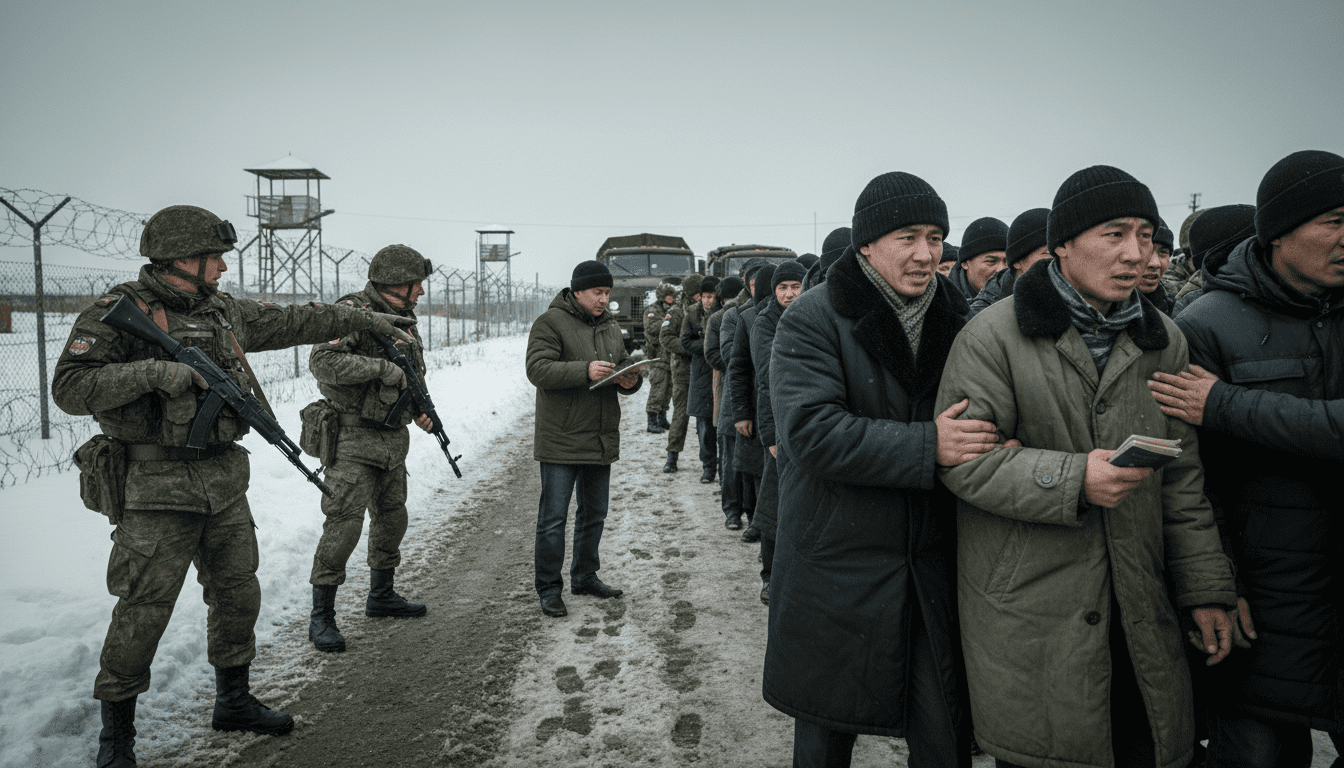
Central Asian migrants forced to fight for Russia recount arrests, threats and frontline survival
Central Asian migrants forced to fight for Russia are reporting systematic coercion, threats and deceptive incentives that pushed thousands from detention cells into frontline service in Ukraine.
The case of 26-year-old Tajik courier Hushruzjon Salohidinov encapsulates a broader pattern in which migrants in Russian cities say they were detained on minor or manufactured charges and then pressured to enlist as a way out of prison. Salohidinov says he was held for months at Kresty-2 near Saint Petersburg before wardens offered amnesty, cash and a salary in exchange for signing up, a tactic human rights groups and analysts say has been used widely since 2023. Reports and lists compiled by groups helping Russian soldiers surrender indicate tens of thousands of Central Asian men have been recruited or coerced into service, often after threats of deportation, abuse or fabricated legal problems.
Arrested while working, then funneled into military service
Salohidinov says he was detained in Saint Petersburg while collecting a parcel and accused of involvement in thefts he denies, then moved to Kresty-2 pre-trial detention where his trial was repeatedly stalled.
Rather than being released after a judge described the evidence as weak, he reports prison staff threatened sexual violence and other humiliations unless he agreed to “volunteer” for the military campaign in Ukraine.
Financial incentives and promises of amnesty as recruitment tools
Prisoners and recruits describe a pattern of offers framed as an escape: large sign-up bonuses, monthly pay and formal amnesty from past charges in return for service on the front line.
Salohidinov says he accepted a promised stipend equal to millions of rubles and monthly wages because he saw no alternative, a decision other migrants reportedly made under similar pressure and deception.
“Catching migrants”: systemic targeting and official rhetoric
Human rights monitors and media reporting say the Kremlin’s campaign to fill ranks has included rounding up migrants for registration infractions, expired permits or alleged document flaws and directing them toward conscription offices.
Senior Russian law-enforcement statements in 2025 boasting large numbers of Central Asians sent to the front line have reinforced what migrants and analysts call a climate of institutionalized targeting and xenophobic rhetoric.
Training shortfalls, abuse and cultural insensitivity in units
Multiple recruits describe cursory training in places such as Voronezh, where drills focused on repetitive running rather than realistic battlefield preparation and where commanders pressured conscripts to pay for safer equipment.
Religious and cultural needs were routinely ignored, with Muslim recruits reporting forced consumption of prohibited foods and repeated verbal abuse from officers, according to interviews and corroborating accounts from others detained before being sent east.
Suicidal missions, capture and the choice to surrender
New battlefield tactics that send small groups across exposed terrain have left many conscripts in deadly situations, and several recruits report choosing to surrender rather than face near-certain death.
Salohidinov says after being wounded by an explosion and seeing comrades killed, he and his commander laid down arms and surrendered; he describes being treated humanely by Ukrainian forces and expresses relief at not having to fight.
Governments in Central Asia have so far avoided open confrontation with Moscow over the issue, and while some officials have said nationals will not be prosecuted for fighting in Ukraine, many migrants remain fearful of being returned to Russia and repressed. Observers note that the migrants’ limited political leverage, plus economic dependence on Russia, has constrained pushback from their home states.
This unfolding pattern of detention, coercion and frontline deployment has prompted calls from rights groups and analysts for greater scrutiny and for mechanisms that would allow coerced fighters safe return and protection. Survivors like Salohidinov say what they most urgently need is a formal extradition pathway that would guarantee they are not reinserted into Russian units or punished after leaving.
For now, thousands remain in limbo between pressure in Russian detention systems, the danger of the battlefield and uncertainty over whether their home countries will secure their safe repatriation.
