
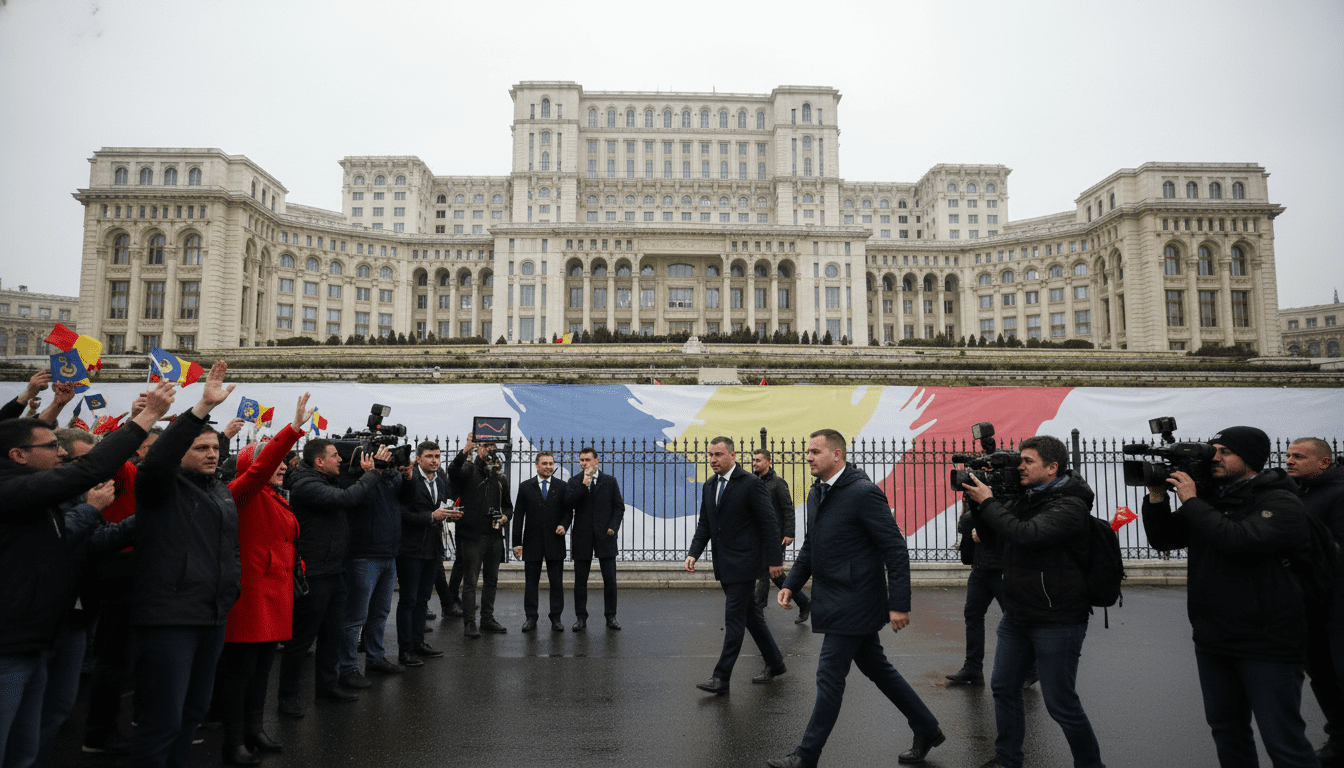
Romania’s Ilie Bolojan ousted as PSD and AUR unite to topple reformist government
Romania’s reformist prime minister Ilie Bolojan was removed from office after an unlikely alliance between the Social Democratic Party (PSD) and the far-right Alliance for the Union of Romanians (AUR) moved to bring down his government. The vote marks a setback for Bolojan’s short-lived agenda of administrative reform and closer cooperation with the European Commission on unlocking stalled EU recovery funds. Political analysts say the coalition that toppled him reflects pragmatic power plays rather than shared ideology.
PSD and AUR unite to remove Ilie Bolojan
Romania’s governing shift came when the PSD and AUR combined forces to bring down Bolojan’s cabinet, citing opposition to his reform measures. Observers see the move as motivated less by principle than by the threat that Bolojan’s changes posed to established political networks and distribution of resources. The alliance exposed deep fissures in Bucharest’s party system where electoral competition coexists with clientelistic practices.
How PSD’s provincial machine shaped the crisis
For decades the PSD built influence through local mayors and regional networks that control public contracts and social transfers. Scholar Oliver Jens Schmitt notes the party’s strength derives from inheriting administrative structures after 1989 and from providing tangible benefits to voters at the local level. That system becomes vulnerable when reformers move to centralize procurement, increase transparency or curb patronage, because such measures directly undercut the party’s core instruments of power.
AUR’s anti-system appeal and rising support
The AUR’s participation surprised many because it sits far to the right of the PSD on cultural and ideological issues. Yet the party’s popularity has been driven in part by its image as an anti-system alternative that has never held government responsibility. In a political climate where many voters distrust mainstream parties, AUR’s outsider status and nationalist rhetoric have allowed it to siphon support from traditional PSD constituencies.
Brussels ties and the question of EU funds
Bolojan had prioritized cooperation with the European Commission to unlock Romania’s remaining recovery funds, a step Brussels viewed as linked to governance reforms. MEP Siegfried Mureșan and other pro-reform voices warned that the collapse of Bolojan’s government could jeopardize future disbursements under the National Recovery and Resilience Plan. Officials in Brussels monitor both political stability and reform continuity when approving tranche payments, making domestic developments in Bucharest consequential for the timing of EU aid.
Rifts within the European left over PSD’s alliances
The PSD’s willingness to partner with AUR has strained ties with social-democratic partners in the European Parliament, who face a dilemma balancing seat counts against normative red lines. Some European socialists have refrained from condemning the PSD’s tactics, in part because of the transfers of representation the PSD provides in parliamentary groups. Critics argue that realpolitik in Brussels has at times allowed member parties to escape scrutiny over domestic alliances that contradict European platform commitments.
Immediate policy implications and risks to reform momentum
Bolojan’s removal interrupts an ambitious agenda to reform procurement, reduce patronage and accelerate absorption of EU recovery money left unspent. Supporters of his program say that without continued implementation the remaining funding — officials have repeatedly linked tens of billions in delayed payments to concrete governance reforms — could be at risk. Domestic opponents, by contrast, frame the reforms as disruptive to regional distribution networks and to short-term local benefits that voters rely upon.
Outlook for Romania’s political landscape
Political analysts expect a period of uncertainty as parties reposition ahead of potential early elections or negotiations to form a new government. The PSD’s traditional voter base is aging and shrinking, and AUR’s growing appeal complicates long-term forecasts for both parties. Reform advocates warn that the next administration’s stance toward Brussels will determine whether Romania secures remaining recovery funds and reverses delays incurred under past governments.
The fall of Ilie Bolojan highlights the tension between reformist impulses tied to EU cooperation and entrenched domestic networks that profit from the status quo. Romania now faces a critical window in which the choices of political actors at home will have direct consequences for the country’s access to European funds and its broader reform trajectory.
