
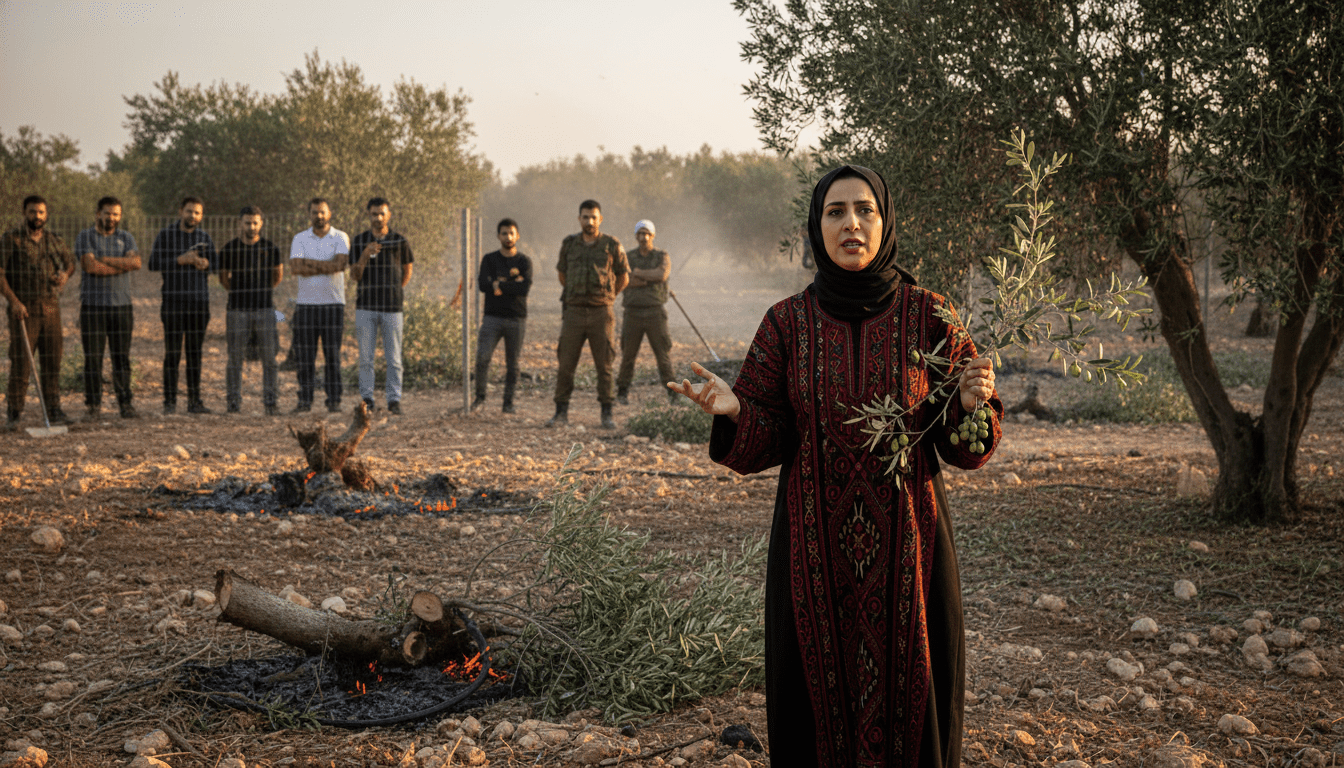
Meead Abu al-Rub on L’Espresso Cover: Harassment During October 2025 Olive Harvest
Meead Abu al-Rub draws attention after a L’Espresso cover highlighted her harassment by settlers during an October 2025 olive harvest in Idna al-Khalil.
Bold photograph brings woman into international spotlight
Meead Abu al-Rub, a 35-year-old Palestinian who works with the Wall and Settlement Authority, has become the subject of international attention after a widely circulated L’Espresso magazine cover featured a scene from an olive harvest in October 2025. The image and accompanying coverage followed video footage that allegedly showed her being harassed by Israeli settlers while documenting a peaceful land-related activity. The publication of the photo prompted renewed scrutiny of the incident and of tensions at harvest time in the occupied West Bank.
Account of the October 2025 harvest in Idna al-Khalil
According to an interview conducted by Middle East Eye, Abu al-Rub said she was present in the Soba area of Idna al-Khalil to document a community land event when the situation escalated. Organisers had scheduled a peaceful harvest and land-related activity when settlers and Israeli forces moved in, she told reporters, creating a climate of intimidation. Within minutes, the presence of armed settlers and soldiers changed the atmosphere and forced participants to withdraw for safety.
Description of intimidation and crowd control measures
Abu al-Rub described confrontations marked by verbal threats and physical intimidation aimed at disrupting the harvest. She and others reported the use of tear gas and a heavy security presence that, in her account, left landowners and organisers no choice but to halt the event. Those on the ground said they retreated to avoid injuries and further escalation, prioritising the safety of families and harvest workers.
Role of the Wall and Settlement Authority and documentation efforts
Abu al-Rub’s work with the Wall and Settlement Authority placed her in a documentation role at the harvest, where she was recording land-related activities for legal and administrative purposes. She told Middle East Eye that documenting peaceful community actions has become increasingly difficult amid confrontations with settlers and security forces. Her presence, she said, was intended to provide an official record of the activity and any incidents that followed.
Magazine cover amplifies the incident internationally
The L’Espresso cover carrying the image of the October encounter has amplified public attention beyond local and regional media, prompting international reaction and commentary. The photograph’s circulation on social platforms and in print has driven renewed calls for clarity about what occurred during the harvest and who bears responsibility for the escalation. Advocacy organisations and observers have raised questions about the protection of civilians during agricultural seasons and the rights of landowners to tend olive groves.
Local consequences and community responses
Community members and local organisers who withdrew from the harvest said the incident disrupted a routine agricultural practice and heightened fear for future gatherings. Landowners reported lost income and damaged arrangements for the seasonal olive harvest, which communities often rely on economically. Neighbours and local officials expressed concern about the presence of armed groups near civilian agricultural activities and the implications for access to land.
Calls for investigation and demands for accountability
Following the publication and the subsequent media attention, several voices have urged impartial investigations into the October events and into reports of intimidation at olive harvests more broadly. Abu al-Rub’s account, as relayed to Middle East Eye, has been cited by those calling for transparent inquiries and measures to safeguard civilians during farming activities. At the same time, the circulation of the magazine image has sparked debate over media representation and the role of photography in shaping international perceptions.
Wider implications for harvests and land access
The incident in Idna al-Khalil underscores wider tensions that can surface during the olive harvest season, when access to groves and land ownership questions often come to the fore. For many rural communities, harvest time is both an economic necessity and a cultural practice, making interference by third parties a source of significant disruption. Observers say protecting access to farmland and ensuring the safety of harvesters remain critical issues for local authorities and international monitors.
Final paragraph
Meead Abu al-Rub’s account, now amplified by the L’Espresso cover and media attention, has focused new scrutiny on a single October 2025 incident that local participants say halted a peaceful land-related harvest in Idna al-Khalil; her statements to Middle East Eye and the image’s circulation have prompted calls for investigation, clarified questions about safety at agricultural events, and renewed discussion about the protection of civilians during seasonal harvests.
