
Myanmar amnesty: Min Aung Hlaing pardons Win Myint and reduces sentences for thousands
Myanmar amnesty: Coup leader Min Aung Hlaing pardons former president Win Myint and orders sentence cuts for more than 4,300 inmates, while Aung San Suu Kyi’s jail term is reduced.
The new Myanmar amnesty announced on April 17, 2026, granted pardons and sentence reductions to thousands of inmates, including a formal pardon for former president Win Myint and a reduction to the sentence of detained leader Aung San Suu Kyi. The decree, issued by President Min Aung Hlaing shortly after his inauguration, commuted death sentences and shortened terms for many prisoners but left key questions about political detainees unresolved.
Presidential order and immediate effects
The pardon order approved by Min Aung Hlaing covered 4,335 prisoners, according to state media reporting on the decree. It commuted death sentences to life imprisonment, reduced life terms to 40 years, and cut other prison terms by one-sixth.
The presidency issued a separate statement confirming that Win Myint was granted a pardon and a reduction of his remaining sentences under specified conditions. Officials did not immediately disclose the precise legal terms or the conditions attached to his release.
Aung San Suu Kyi’s sentence reduction
A lawyer for Aung San Suu Kyi said her 27-year sentence was reduced by one-sixth as part of the amnesty, a move that trims the time she faces behind bars but stops short of the unconditional release demanded by rights groups. It remains unclear whether the Nobel laureate will be permitted to serve any remaining time under house arrest or be returned to detention facilities.
Suu Kyi has been held since the 2021 coup and has not been seen in public following her trials. Her family and supporters have expressed concern about her health and access to independent medical care.
Scope of releases and foreign nationals
Among those eligible for release under the decree were 179 foreign nationals who will be deported after being freed, the announcements said. The amnesty applied unevenly across different categories of prisoners, with specific commutations and percentage reductions set out for death, life and term sentences.
The release figures follow a familiar pattern in Myanmar where mass amnesties are often announced around national holidays, with authorities framing such measures as gestures of clemency while retaining broad powers to detain protesters, journalists and political opponents.
Reaction from families and rights groups
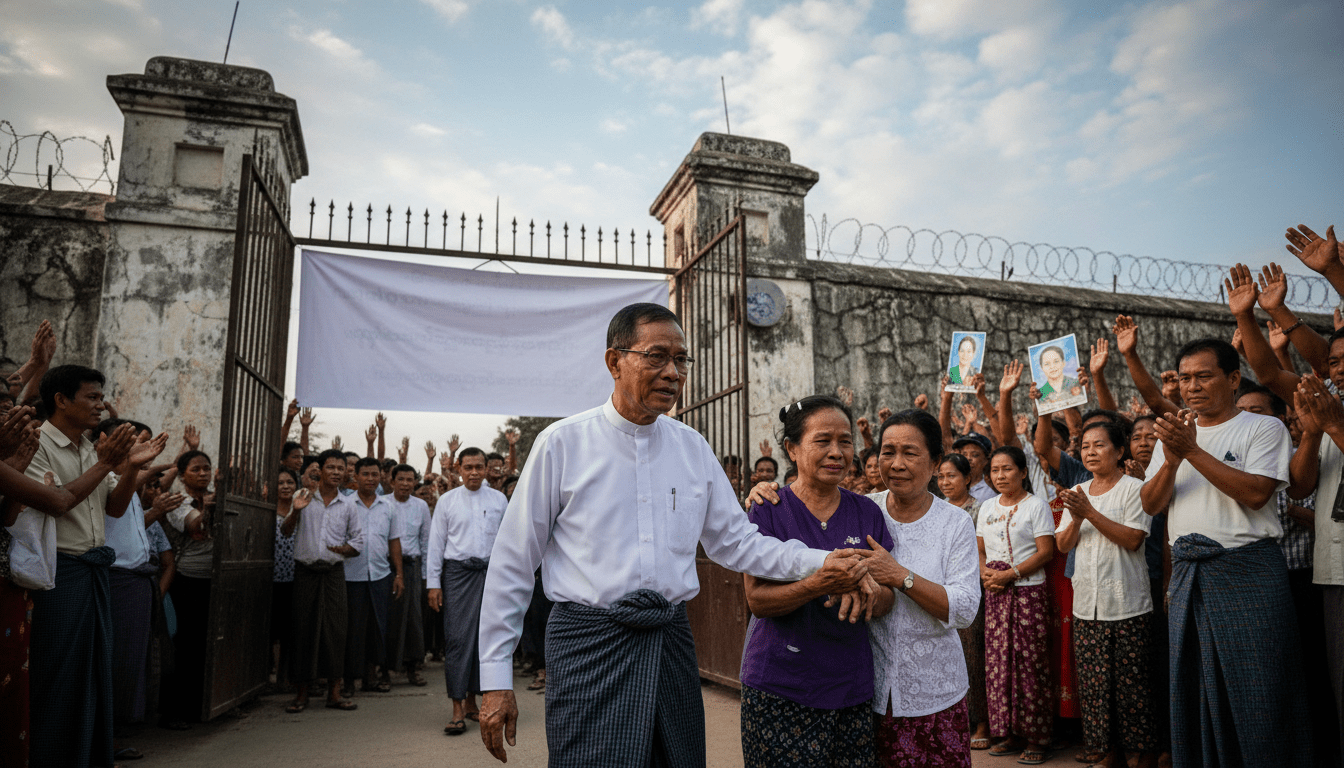
Outside major prisons such as Insein in Yangon, hopeful relatives gathered as news of the amnesty spread, but many expressed caution about who would actually be freed. Families said past pardons since the coup have released relatively few people who had been detained on political grounds, prompting skepticism that this amnesty would mark a meaningful change for political prisoners.
Human rights organizations have long documented large-scale detentions since the 2021 coup, estimating tens of thousands of people arrested on politically motivated charges. Those groups quickly called for the unconditional release of political detainees and argued that sentence reductions do not address deeper accountability concerns.
Political context and presidential rhetoric
The amnesty order came just days after Min Aung Hlaing’s formal swearing-in as president, a transition that consolidated power under the military leadership that seized control in 2021. In his inauguration remarks he claimed Myanmar had “returned to the path of democracy,” while acknowledging ongoing national challenges.
Analysts say the administration’s use of high-profile pardons and sentence adjustments functions as both domestic messaging and international signaling. By sparing some figures and adjusting sentences, the presidency may be seeking to ease sanctions pressure and present a softer image without relinquishing its hold on political space.
Legal and human rights implications
Despite the numerical scope of the amnesty, legal experts note that commutations and reductions do not equate to legal exoneration for many detainees. Those convicted in trials widely criticized as politically motivated remain burdened by criminal records and subject to future legal restrictions or surveillance.
Rights groups have emphasized that a genuine resolution would require transparent judicial reviews and the annulment of charges brought on weak or politically driven grounds. Until that occurs, pardons are likely to be seen as provisional, conditional measures rather than a restoration of full civil or political rights.
The amnesty has altered the immediate legal status of several high-profile detainees, but many observers say it falls short of addressing the broader crisis of mass detention that has followed the coup.
