
Pete Hegseth Compares Journalists to Pharisees at Pentagon Briefing, Prompting Vatican Rebuke
Pentagon remarks by Pete Hegseth drew sharp attention after he likened critical journalists to the Pharisees, drawing a quick rebuke from Pope Leo and intensifying debate about religious rhetoric in U.S. wartime messaging.
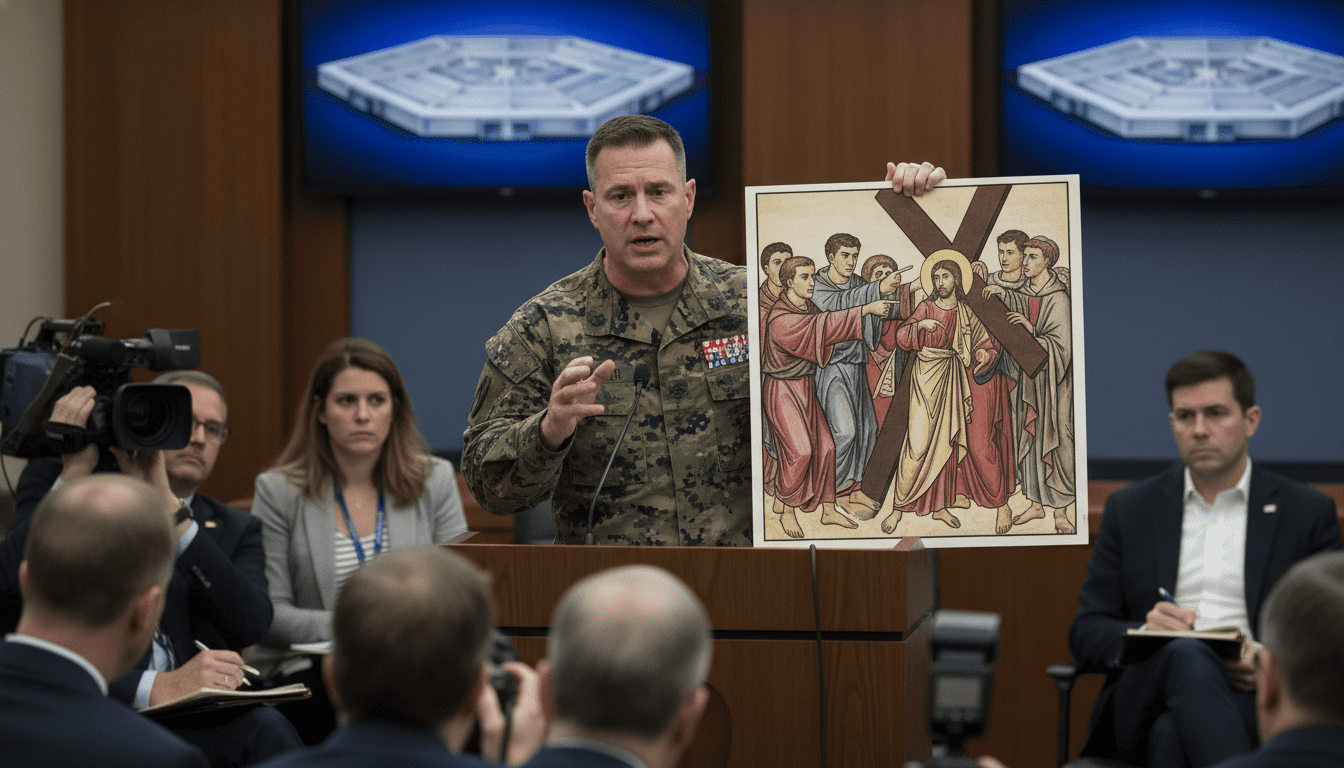
Pete Hegseth stunned reporters at a Pentagon press briefing on the U.S. and Israeli campaign against Iran when he equated critical members of the press with the Pharisees, the Jewish opponents of Jesus in the Christian tradition. Hegseth said the “established, Trump-hating press” sought to destroy public figures in the same way the Pharisees targeted Christ, framing media scrutiny as doctrinal hostility. His comments came amid growing friction between the Trump administration and religious leaders who have criticized the conflict.
Hegseth’s remarks at the Pentagon
At the briefing, Hegseth argued that mainstream outlets focused disproportionately on negative angles and questioned acts of service or sacrifice by U.S. forces. He characterized the press as having “hardened hearts” intent on casting good deeds in a negative light, language that tied moral judgment directly to journalistic practice. The framing conflated religious imagery with a political critique of media coverage, intensifying an already fraught relationship between the Pentagon and certain news organizations.
Officials present described the exchange as unusually theological for a defense-oriented news conference, noting that the comparison shifted the conversation from battlefield strategy to questions of religious symbolism and media motives. Hegseth’s rhetoric immediately reverberated through Washington political circles and media watchdog groups, where concerns were raised about its potential chilling effect on press freedom.
Vatican response within an hour
Less than an hour after the briefing, Pope Leo — the first U.S.-born pontiff and a noted critic of the current war policy — posted on the platform X to condemn those who use religion for political or military advantage. The pope warned against manipulating the name of God for economic, political or martial ends and decried efforts to drag the sacred into “darkness and filth,” language that Vatican aides said was directed at recent public invocations of Christianity. The swift papal rebuke underscored the international sensitivity of equating contemporary political conflicts with religious struggle.
Vatican officials said the pontiff’s message was intended as a broader admonition rather than a direct attack on any single individual, but diplomats acknowledged the timing increased tensions between Rome and Washington. The exchange exposed an uncommon public rift between a U.S. administration that has embraced explicit Christian language and a pontiff who has cautioned against religious instrumentalization.
Trump imagery and shared rhetoric
The confrontation follows a week in which President Donald Trump circulated images portraying himself in Jesus-like poses or embraced by religious iconography, a move that critics called an attempt to sacralize political leadership. Both the president and Hegseth have used overtly Christian language when discussing wartime events, including describing the rescue of a downed pilot on Easter Sunday as a “miracle.” Such rhetoric has blurred lines between faith and policy, prompting debate over the appropriate role of religion in public military affairs.
Hegseth’s recent public prayer at a church service, in which he asked for the troops to be granted ability to mete out “overwhelming violence” against those he said “deserve no mercy,” further amplified concerns among civil liberties advocates. Observers say these statements, paired with presidential imagery, form a consistent pattern of invoking divine sanction in justifying or reframing military actions.
Historical perspective and expert observations
Historians note that U.S. leaders have frequently invoked religious language during wartime, but some scholars argue the current administration’s approach is unusually explicit and politicized. John Fea, a historian who has studied the intersection of religion and American public life, said the language used by Hegseth and others marks a notable departure from past wartime rhetoric in its certainty and moral cast. Fea and other analysts argue the rhetoric serves both domestic political goals and the consolidation of a faith-based narrative around specific policy choices.
Analysts caution that tying national policy tightly to religious symbolism can complicate diplomatic efforts and alienate domestic constituencies who view such language as exclusionary. They point to potential risks in conflating theological conflict motifs with modern, multilateral geopolitical disputes.
Press relations and a pending legal fight
Hegseth also remains engaged in a high-profile legal dispute with media organizations over Pentagon accreditation rules, a case that has contributed to escalating tensions between the Defense Department and critical outlets. The lawsuit challenges changes in press access and has been framed by plaintiffs as an effort to protect journalistic independence in wartime reporting. Defense officials maintain the revisions are necessary for security and operational integrity, while news organizations argue they impede transparency.
The combination of legal pressure and rhetorical confrontation has led some newsrooms to reassess how they cover the Pentagon, with editors weighing continued scrutiny against access limitations. Press freedom advocates say the lawsuit and Hegseth’s statements together create a fraught environment for reporters covering sensitive national security matters.
Diplomatic fallout and domestic implications
Observers say the episode could widen diplomatic strains between the United States and the Vatican and complicate outreach to international partners wary of religious framing of military action. Foreign diplomats watching the exchange have flagged the risk that sacralized rhetoric will hinder negotiations or inflame sectarian sensitivities in a volatile region. The Vatican’s rebuke signals that even traditional religious allies may push back when faith language is used in ways they see as instrumental.
Domestically, the clash may stoke further polarization, with supporters viewing Hegseth’s language as a defense of faith-aligned patriotism and critics seeing it as an attempt to delegitimize independent journalism. Legal experts and constitutional scholars caution that conflating religious rhetoric with policy disputes raises complicated questions about free speech, press rights, and the role of faith in governance.
The exchange between Pete Hegseth, the press and the Vatican has intensified an already heated national conversation about religion, media and military policy, and it appears likely to shape both legal battles over access and broader debates about the limits of rhetorical framing in times of war.
