
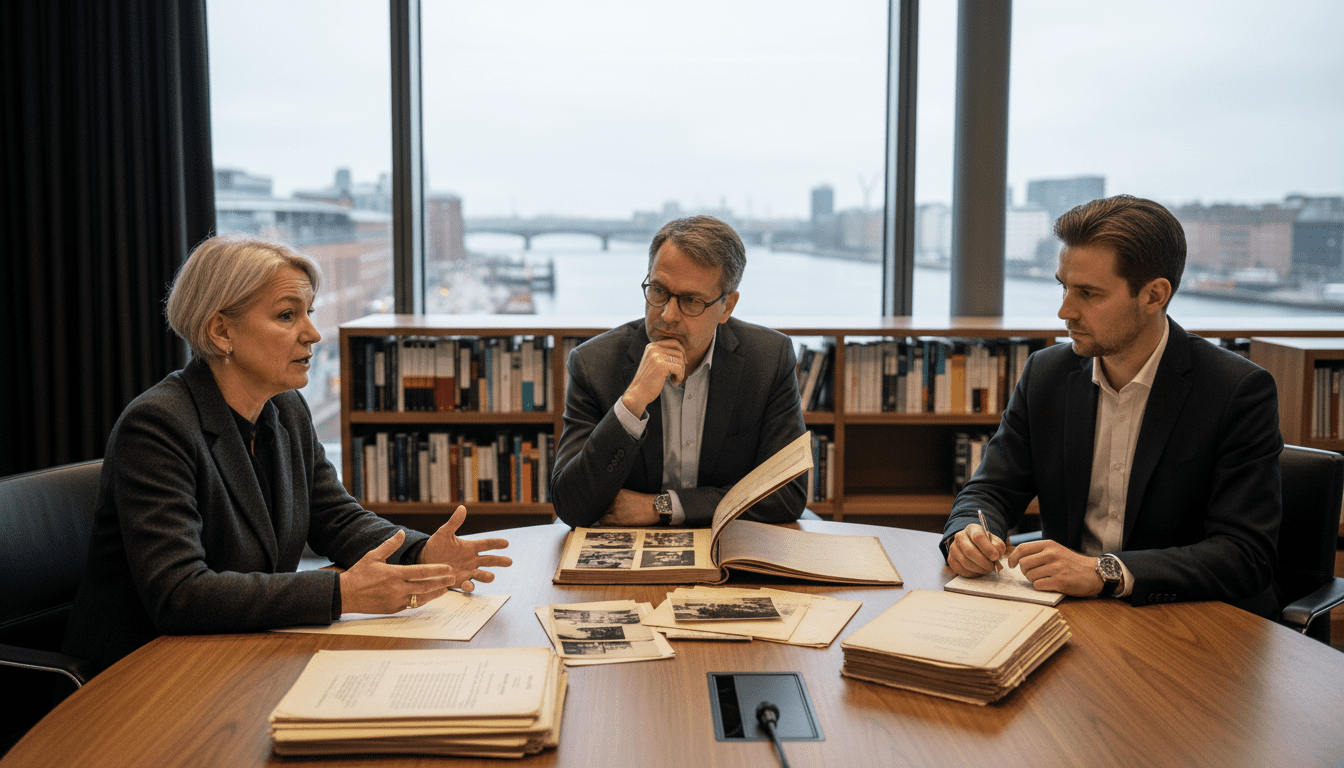
SPIEGEL-Talk Confronts Memory Culture and Family Ties to the Nazis
SPIEGEL-Talk: Gotz Aly, Susanne Siegert and Hadija Haruna-Oelker examine memory culture, family Nazi entanglements and rise of performative ‘memory theater’.
The SPIEGEL-Talk convened historian Gotz Aly, author Susanne Siegert and journalist Hadija Haruna-Oelker to examine how Germany’s memory culture grapples with family ties to Nazism and when public remembrance becomes performative. The panel explored personal archives, contested narratives and the tension between private reckoning and public ritual. Participants argued the debate over culpability and commemoration has shifted in recent years, prompting fresh scrutiny of how societies remember.
Panel Probes Nazi Entanglements in Families
The discussion centered on concrete cases in which descendants uncover records linking relatives to Nazi institutions, and the ethical dilemmas such discoveries provoke. Panelists described how family histories, once private, increasingly intersect with public duty to document and interpret the past. They emphasized that naming complicity does not always produce closure and can reopen ethical and legal questions for descendants.
Panelists also addressed the role of new archival access and digitization in surfacing previously hidden documents. Easier access to records has multiplied instances where families confront difficult evidence, which in turn reshapes local and national narratives. That dynamic, they said, compels historians and journalists to balance historical rigor with sensitivity toward individuals affected by revelations.
Historian Perspectives on Documentation and Evidence
Gotz Aly framed the conversation with a historian’s insistence on documentary standards and contextualization in assessing Nazi-era actions. He argued that careful archival work remains essential to distinguish levels of involvement and to avoid collapsing diverse behaviors into a single narrative of guilt. According to Aly, nuanced historical analysis helps prevent both trivialization and sensationalism.
Susanne Siegert added that autobiographical and family accounts require critical cross-checking against primary sources to build reliable histories. She cautioned against accepting oral testimonies at face value when official records tell a different story. The panel agreed that robust methodology is vital to maintain public trust in historical claims emerging from family investigations.
Journalistic Role and the Charge of ‘Memory Theater’
Hadija Haruna-Oelker focused on journalism’s responsibility when reporting family links to Nazism, warning that media coverage can drift into what she termed “memory theater.” Journalists must avoid turning personal pain into spectacle, she said, while still informing the public about matters of civic importance. The panel discussed editorial choices that either illuminate or amplify emotional drama at the expense of context.
Panelists examined examples where public ceremonies or sensational reporting appeared to substitute for substantive engagement with the past. They argued that performative acts—such as staged confessions or high-profile apologies—can create the illusion of reckoning without addressing structural legacies. This critique extended to institutional rituals that emphasize symbolic gestures over long-term education and restitution efforts.
Public Rituals, Education and Institutional Responsibility
The conversation turned to schools, museums and memorial sites as arenas where memory culture is produced and contested. Panel members agreed that institutional commitments to education, research and transparent exhibition practices strengthen collective memory. They urged institutions to pair commemorative events with sustained programs that teach historical complexity and encourage civic reflection.
Speakers also highlighted gaps in how local municipalities and national bodies support families navigating newly revealed histories. The panel recommended clearer guidelines for municipalities handling sensitive discoveries and better funding for initiatives that help communities integrate difficult truths. Such measures, they argued, can prevent episodic attention from replacing continuous engagement.
Paths Forward: Balancing Truth, Justice and Compassion
Concluding the discussion, the panel sketched practical steps to improve how societies handle revelations about family involvement in past crimes. Recommendations included wider access to reliable archives, interdisciplinary collaboration among historians, journalists and educators, and forums for affected families to share experiences without exposure to sensationalism. They emphasized that public remembrance should prioritize truth-seeking and reparative action over performative displays.
The speakers stressed that a healthy memory culture requires both rigorous scholarship and empathetic public conversation. The task, they said, is to hold institutions and individuals accountable while creating space for complex human stories that resist simple moral judgments. Sustained attention, rather than episodic spectacle, was offered as the core remedy to the problems they identified.
The SPIEGEL-Talk made clear that debates over family ties to Nazism and over the rise of memory theater are not merely historical but have ongoing civic implications. Panelists urged policymakers, cultural institutions and the media to recalibrate how remembrance is practiced so it serves education and justice rather than notoriety.
