
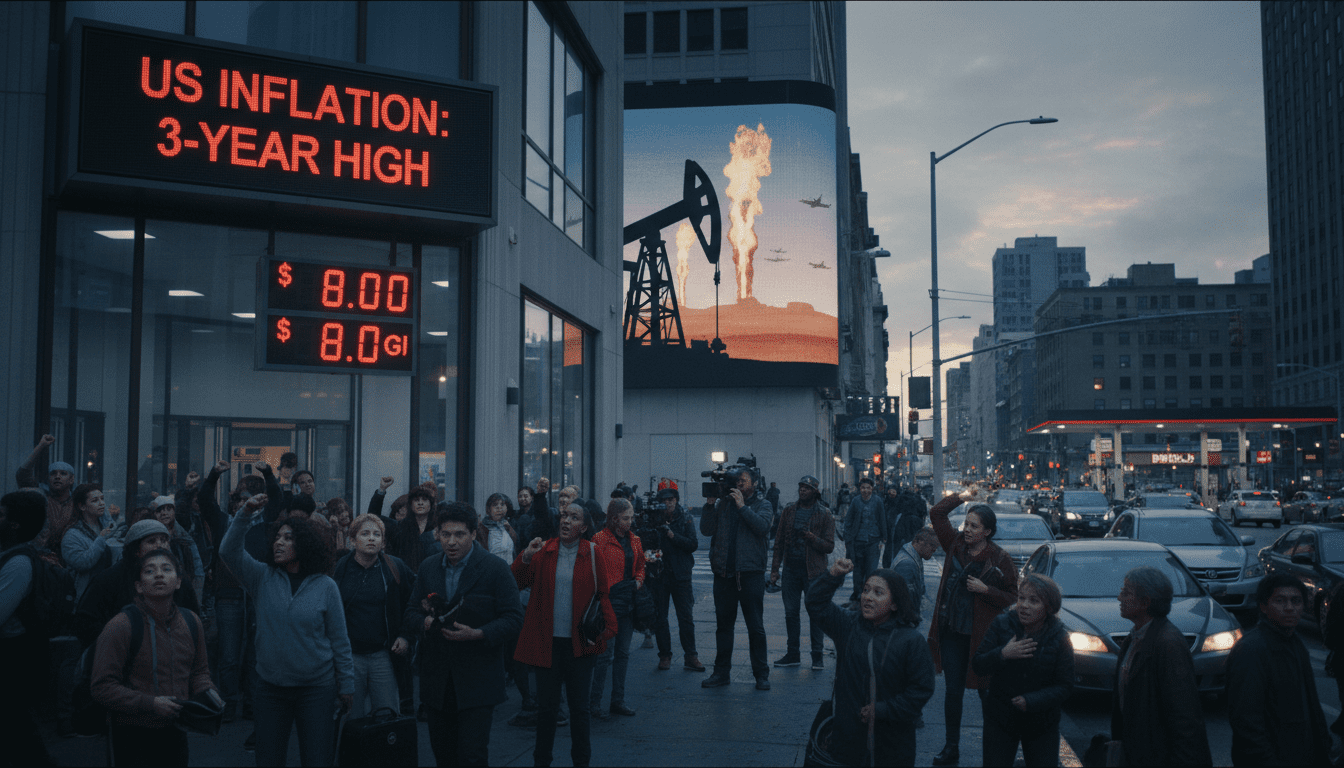
U.S. Inflation Jumps to 3.8% in April as Energy and Fuel Costs Surge
U.S. inflation rose to 3.8% in April, highest since May 2023, led by surging energy and fuel costs tied to the Iran conflict and squeezing households.
The United States recorded a sharper-than-expected rise in consumer prices in April, with the U.S. Labor Department reporting a year-on-year increase of 3.8 percent. That reading, up 0.6 percentage points from March, marks the highest annual inflation rate since May 2023 and underscores renewed pressure from energy markets. Officials flagged energy and fuel as the chief drivers of the uptick, while food prices and core measures also contributed to the upward trend.
Labor Department Releases April Consumer Price Data
The Labor Department’s monthly consumer price index showed fuel costs surged by more than 28 percent compared with April of last year, while overall energy prices rose nearly 18 percent. Food prices increased about 3 percent year on year, adding to household cost pressures across the income spectrum. Excluding volatile food and energy items, core inflation remained close to 3 percent, a level that keeps price stability concerns squarely on policymakers’ agendas.
Energy Market Volatility Linked to Middle East Conflict
Analysts and officials have linked the jump in energy costs to the recent escalation in and around the Persian Gulf following U.S. and allied military actions tied to Iran that began in late February. Disruptions and heightened geopolitical risk pushed oil and refined product markets higher, transmitting quickly into pump prices and utility bills. Traders cited tighter global supplies and risk premia for crude as central reasons U.S. consumers are now paying markedly more for fuel than at the start of the year.
Administration Response and Tax Proposal
President Donald Trump characterized the April increase as temporary, saying the spike would subside once hostilities ease and energy markets normalize. On Monday he announced plans to seek a temporary suspension of federal fuel taxes, acknowledging the measure would require Congressional approval. White House advisers described the pause as aimed at providing modest relief at the pump, but noted the administration faces limits on unilateral action and that the fiscal and logistical effects would be constrained without legislative backing.
Implications for Monetary Policy and Markets
The renewed rise in U.S. inflation complicates the Federal Reserve’s task of steering inflation back toward its 2 percent target, even as core measures show some moderation. Economists say energy-driven spikes can be transitory, but they also warn that sustained price pressure risks feeding into wages and services, which are harder to reverse. Financial markets reacted to the data with increased volatility in bond and commodity markets, while investors weighed the odds of further interest-rate adjustments later in the year.
Household Budgets and Political Fallout
Higher energy and food prices present immediate strains for households, particularly lower-income families that spend a larger share of income on essentials. Consumer groups and some lawmakers called for targeted relief measures, such as subsidies or direct assistance, while others warned that temporary tax breaks at the pump could offer limited benefit and complicate long-term fiscal planning. The inflation reading is likely to become a focal point in political debate as leaders reconcile economic messaging with growing cost-of-living concerns.
The April inflation report underscores how external shocks—especially in energy markets—can quickly alter the domestic price outlook and policy priorities. Economists will watch the coming months for signs that the energy-fueled surge is ebbing or spilling into broader price-setting behavior, while legislators and the administration consider what combination of measures might deliver meaningful relief to consumers without undermining fiscal stability.
