
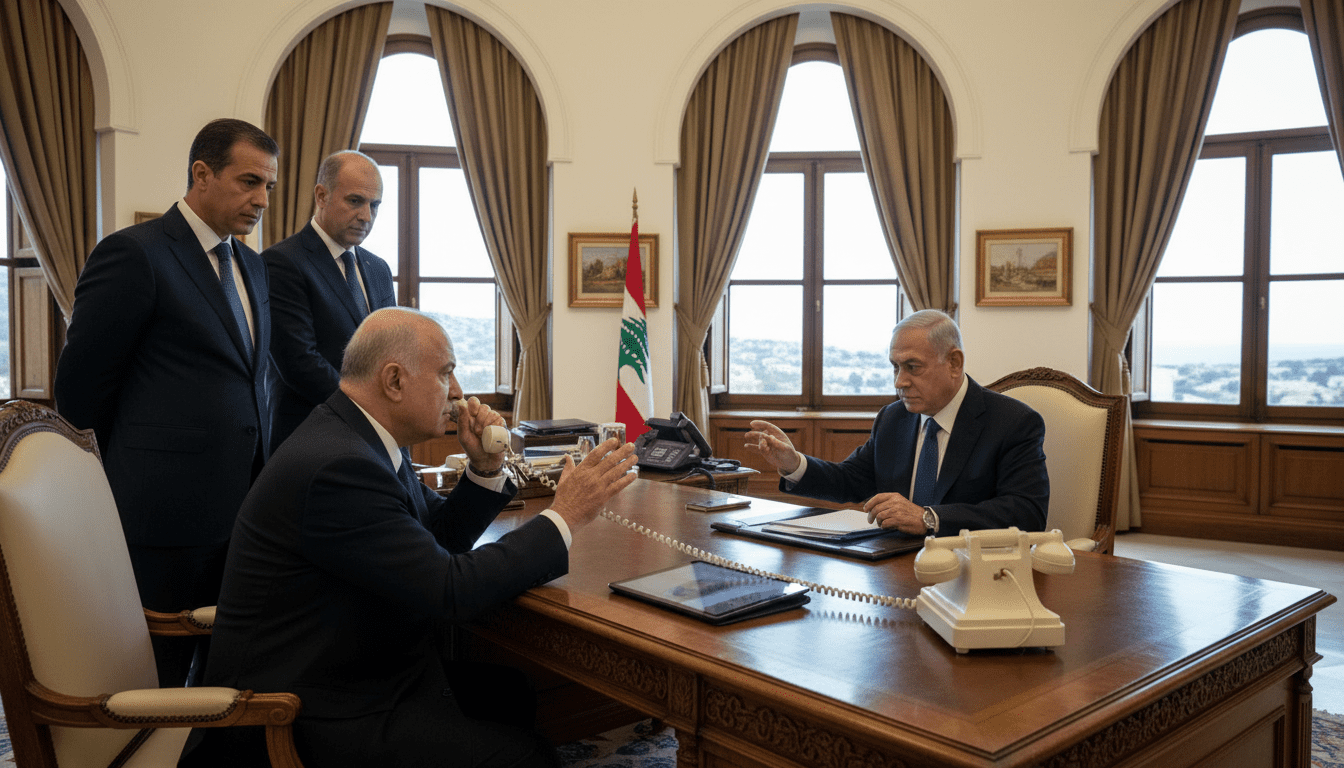
Lebanon’s president will not hold Aoun-Netanyahu call, officials say
Lebanon’s President Joseph Aoun has declined an Aoun-Netanyahu call, three Lebanese officials told Reuters, contradicting U.S. statements that talks between the two leaders were planned.
Aoun rejects direct call with Netanyahu
Two Lebanese officials told Reuters on Thursday that President Joseph Aoun will not hold a telephone call with Israeli Prime Minister Benjamin Netanyahu in the near future.
The officials described a firm decision in Beirut, saying the president would not engage in direct talks with Israel at this time.
Lebanese embassy notified Washington before U.S. call
According to two of the officials, the Lebanese embassy in Washington informed the U.S. administration in advance that President Aoun would not speak with Netanyahu.
That notification reportedly came ahead of a scheduled call involving Aoun and U.S. officials on Thursday, underscoring a communication gap between Beirut and Washington.
White House statements contrasted with Beirut account
The withdrawal from a bilateral call follows public remarks by U.S. President Donald Trump indicating leaders from both countries would speak.
Lebanese officials’ account therefore contradicts Washington’s statements and highlights discrepancies in messaging between the two capitals.
Context: diplomatic sensitivity on Lebanon-Israel ties
Direct contact between Lebanese and Israeli leaders is rare and politically sensitive given decades of hostilities and the presence of armed groups along the border.
Lebanon’s domestic politics and public opinion have long made official normalization with Israel difficult, so any suggestion of direct leader-to-leader talks draws scrutiny in Beirut.
Possible motives behind Beirut’s decision
Officials in Lebanon likely weighed domestic political reactions and security implications before declining the call, according to diplomatic analysts.
Concerns include public backlash, the position of influential parties, and the potential for the call to be interpreted as normalization without broader agreements on security and territorial issues.
U.S. mediation role faces immediate strain
Washington’s apparent expectation of a leaders’ call had been framed as part of U.S. efforts to mediate reduced tensions along the Lebanon-Israel frontier.
Beirut’s refusal complicates those efforts and may force U.S. mediators to recalibrate their approach, relying instead on lower-level or multilateral channels to shape talks.
Regional reactions and ripple effects
In Beirut, political factions and civil society actors are likely to interpret the refusal through established domestic fault lines, with some viewing it as prudent caution and others as missed diplomatic opportunity.
In Jerusalem, Israeli officials will monitor the development for signals about whether alternative negotiation channels remain viable or whether a pause in engagement is likely.
France, the United Nations and other external actors who have previously engaged on Lebanon-Israel de-escalation could step up shuttle diplomacy to bridge the communication gap.
International sponsors of ceasefire and stabilization agreements have an interest in preventing misunderstandings from escalating into renewed hostilities.
President Aoun’s decision not to proceed with the Aoun-Netanyahu call exposes the fragility of high-level diplomacy in a volatile region, and it forces mediators to return to more traditional, lower-profile channels to manage tensions and pursue any substantive agenda.
