
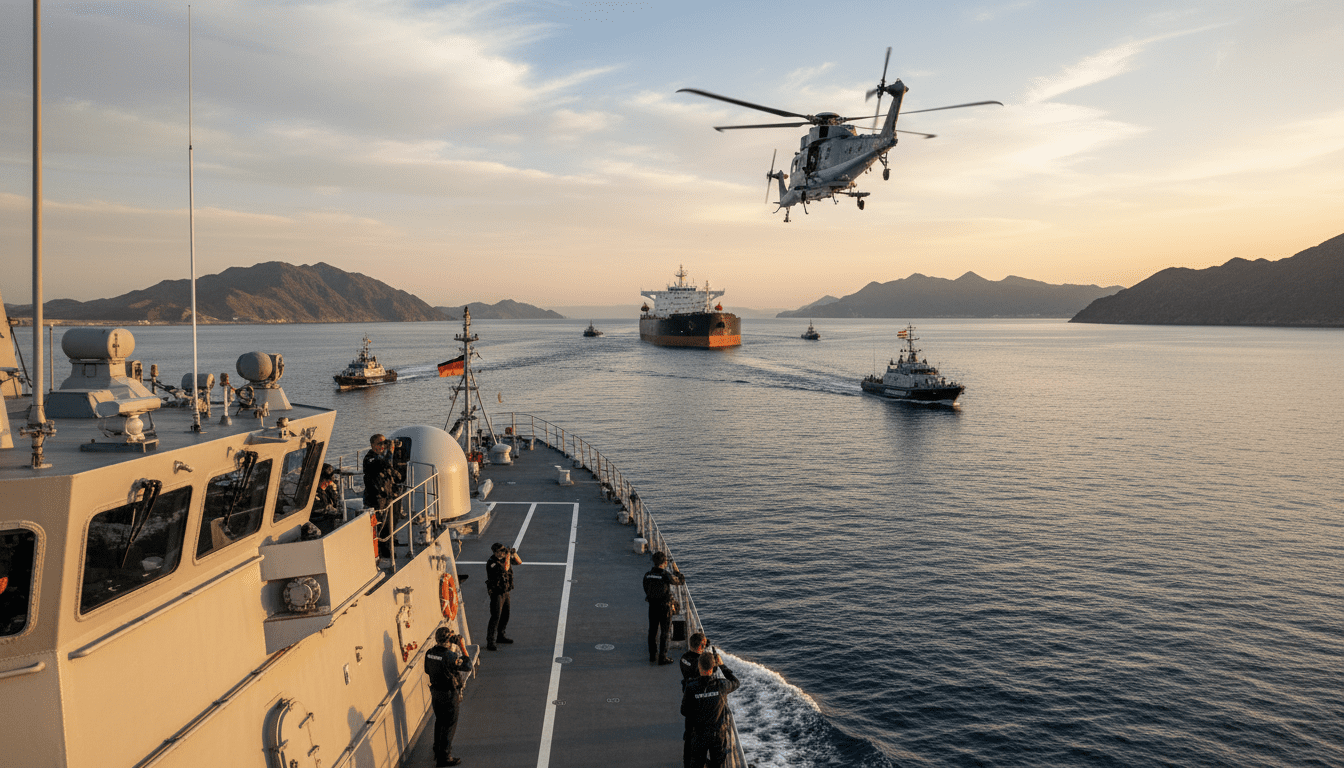
Germany to offer mine‑clearing and surveillance support for a Strait of Hormuz mission
Germany will offer mine‑clearing and maritime surveillance support for a possible mission to secure the Strait of Hormuz, Chancellor Merz will present the plan in Paris.
Germany said it is prepared to contribute mine‑clearing and maritime reconnaissance capabilities to a potential international mission to secure the Strait of Hormuz, Chancellor Friedrich Merz is expected to offer at a Paris meeting. The proposal will be made during talks convened by French President Emmanuel Macron and British Prime Minister Keir Starmer, where leaders and ministers will discuss coordinated steps. Italian Prime Minister Giorgia Meloni is also scheduled to attend, with other supporting states joining remotely to weigh a collective response.
Germany to Offer Mine-Clearing and Surveillance Capabilities
Germany’s pledge centers on specialized assets for mine countermeasures and maritime situational awareness. Officials said the contribution would include vessels and sensors designed to detect and neutralize naval mines, alongside patrol and reconnaissance platforms to monitor shipping lanes.
The capability package reflects Germany’s emphasis on protecting commercial navigation and preventing disruption to trade routes. Berlin framed the offer as a practical contribution that stops short of direct combat operations while addressing immediate maritime hazards.
Paris Meeting to Build a Coalition
The Paris meeting brings together European leaders to test international appetite for a coordinated operation in the Gulf. Invitations from Paris and London have drawn senior figures, with the session structured to combine in‑person attendance and remote participation from additional partners.
Organizers aim to clarify political objectives, potential command arrangements, and resource commitments in an initial round of consultations. The meeting will also seek to determine whether a naval operation would operate under an existing multilateral framework or require a new mandate.
British and Allied Statements Emphasize Strategic Urgency
British officials have highlighted the Strait of Hormuz as critical to global commerce and energy security, urging collective action to keep it open. “The Strait of Hormuz is vitally important for all of us,” a senior British foreign minister said in Berlin, underscoring London’s backing for multinational measures.
Other Western capitals signaled they would evaluate offers of support and consider a range of measures, from enhanced escorting of merchant vessels to technical mine‑clearance assistance. Diplomats emphasized that any coordinated mission will require careful legal and operational planning.
Operational Risks and Legal Complexities
Mine countermeasure operations are inherently hazardous and require precision, specialized crews, and sustained logistical support. Planners will need to account for search and clearance protocols, crew safety, and rules of engagement to avoid unintended escalation in a volatile region.
Legal questions remain about the right to operate in international waters and the need for consent from coastal states, as well as the role of international organizations such as the International Maritime Organization or the United Nations. Those issues are likely to be central in the Paris discussions and follow‑up consultations.
Regional Implications and Reactions to Watch
Any international mission to secure the Strait of Hormuz will be closely watched in the Gulf region and could alter diplomatic dynamics with local powers. Coastal states and regional actors will judge both the mission’s scope and its implications for sovereignty and maritime enforcement.
Analysts expect that diplomatic outreach and clear operational limits will be necessary to avoid misperceptions that could heighten tensions. Backers of the initiative say transparency about objectives and procedures should be prioritized to maintain commercial passage while minimizing risk.
Next Steps and Timeline for Decision
Following the Paris meeting, participating governments are expected to enter working‑level talks to map out capabilities, timelines, and command structures. Those sessions would establish whether a pilot operation, a formal coalition, or an umbrella mandate is the best path forward.
Any deployment would depend on both political consensus among supporters and the completion of detailed operational planning, which could take weeks to months. Ministers indicated that the initial Paris consultations are intended to accelerate that process rather than finalize a mission mandate.
The proposal by Chancellor Merz to offer mine‑clearing and surveillance support marks a notable step toward a coordinated Western response to threats affecting the Strait of Hormuz. If governments build on the Paris discussions, the coming weeks will determine whether a multilateral maritime operation is launched to protect the vital shipping corridor.
