
Kashmir donations for Iran surge as residents give gold, livestock and savings to relief drives
Kashmir donations for Iran surged as residents handed over gold, utensils and vehicles to relief drives, reflecting deep historical ties amid the US‑Israel war and oversight concerns.
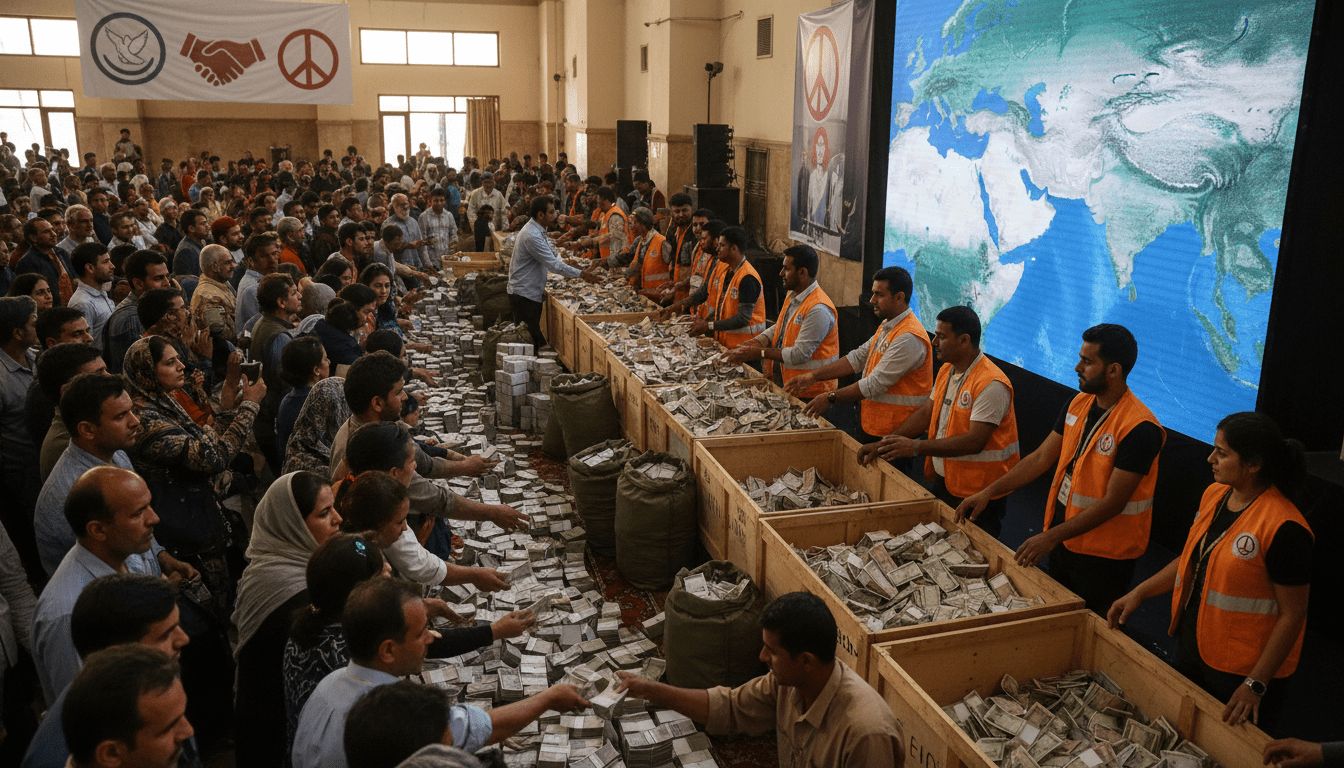
The Kashmir donations for Iran campaign gathered widespread public support during Eid‑ul‑Fitr, with families in Srinagar, Budgam and other districts turning personal wealth into humanitarian aid for civilians affected by the US‑Israel war on Iran. Residents donated gold jewellery, copper utensils, livestock, bicycles and even vehicles on March 21, redirecting traditional celebrations into a relief effort that organisers say reflects centuries‑old cultural bonds. Local volunteers and community leaders coordinated collection points across the valley while authorities flagged the need for transparent record‑keeping.
Residents convert personal mementos into aid
Many contributions came from deeply personal sources rather than formal charity coffers. A woman in Budgam handed over gold earrings she had received as a birthday gift months earlier, and children emptied piggy banks to add coins to the collections. Shopkeepers and traders contributed portions of daily earnings, while families offered household goods normally saved for weddings or dowries.
Organisers staged auctions and drives to convert donated items into cash and supplies, with medical kits assembled by local doctors and supply lists prepared by student groups. Volunteers said the volume of small, sentimental donations accounted for a large share of the items gathered at city and district centres.
Community donations cross sectarian lines
Donations were prominent in Shia‑majority areas such as Zadibal, but contributions extended across Sunni neighbourhoods and other communities. In one locality, a 73‑year‑old resident described giving away copper pots traditionally saved for daughters’ weddings so they could instead be used to support families in Iran. A young mini‑truck driver donated one of the two vehicles he uses for work, highlighting the financial sacrifice some contributors accepted.
Political and religious figures also took part: a local lawmaker donated a month’s salary, and prominent community leaders said public participation cut across sectarian divides. Organisers noted that the valley’s response mirrored solidarity campaigns elsewhere in the region, including Pakistan and Iraq.
Historical ties framed the relief effort
Organisers and scholars linked the campaign to long‑standing cultural and religious connections between Kashmir and Persia. The arrival of the 14th‑century Sufi scholar Mir Sayyid Ali Hamadani from Hamadan is frequently cited as a source of shared traditions, and Persian language and architectural influences remain visible in the valley’s cultural fabric. Locals often refer to Kashmir by the historical epithet Iran‑e‑Sagheer, or Little Iran, invoking a shared heritage that organisers say motivates the current solidarity.
Experts described the donations as more than material transfers: they represent emotional continuity and a sense of kinship with civilians suffering amid the conflict. Prayers and rituals at collection points echoed cultural motifs that organisers said connect present‑day Kashmiris to centuries of cross‑border ties.
Scale of collections and logistics
Local authorities and community organisers estimated the value of contributions in the valley at as much as six billion rupees, equivalent to roughly $64 million, encompassing cash, gold, jewellery, household items, livestock and vehicles. Collection points in Srinagar, Budgam, Baramulla and the northern districts were staffed by volunteers who documented donations and prepared consignments for transport or conversion to cash.
Students, doctors and civic groups coordinated packing and medical supply assembly based on assessed needs. Volunteers managing central Srinagar collections said even modest offerings, such as coins and utensils, were significant because of their sheer number and the symbolic sacrifice they represented.
Authorities raise transparency and security concerns
While organisers insisted the drives were strictly humanitarian, Jammu and Kashmir police and the State Investigative Agency warned that unverified door‑to‑door collections risked misuse. Officials said funds collected by intermediaries without transparent channels could be diverted to groups operating in the region, urging volunteers to maintain proper records and receipts for all donations.
Authorities pointed to a past incident in 2023 when funds raised in southern Kashmir for humanitarian purposes were alleged to have been redirected toward armed groups. Organisers and community leaders denied such claims in the current campaign, saying collection points implemented documentation procedures to ensure donations reached legitimate relief channels.
Diplomatic acknowledgements and online confusion
The Iranian embassy in New Delhi publicly thanked donors from Kashmir and India, posting on the social media platform X that it appreciated the valley’s “humanitarian support and heartfelt solidarity.” That post was briefly removed and then followed by a later public thank‑you; embassy and diplomatic statements emphasised appreciation while local sources said Kashmir’s contributions formed a substantial portion of India’s total aid.
Organisers maintained the relief effort was apolitical and focused on civilian needs, and videos circulated by volunteers showed auctions and sorting operations converting donated goods into funds and supplies bound for relief distribution.
The ceasefire brokered by Pakistan remains fragile and recent rounds of diplomacy have yet to yield a durable settlement, leaving aid organisers to continue collection drives amid uncertainty about the conflict’s next phase. Communities in the Kashmir valley say they will keep contributing goods and funds while calling for clearer channels so their donations can be tracked and used for humanitarian relief.
