
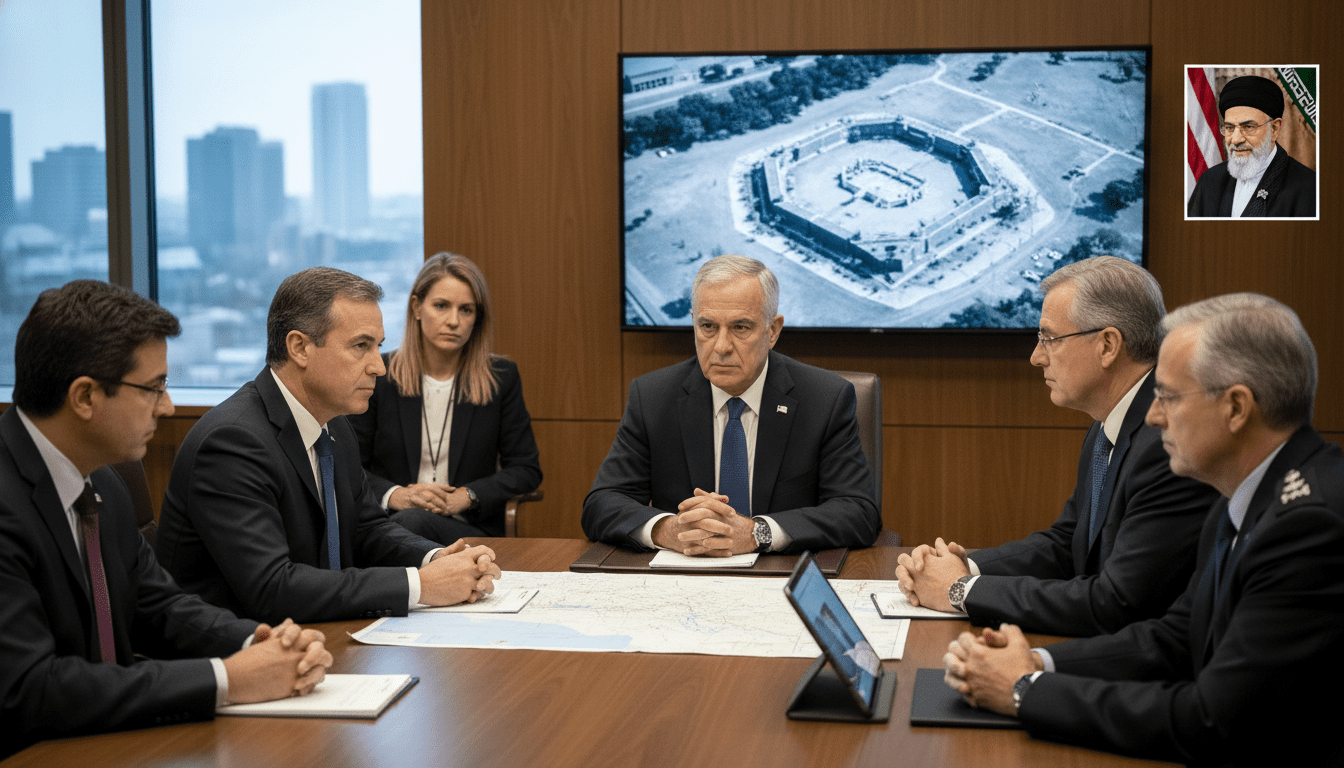
Israel Signals Plans to Target Iran’s Leadership, Seeks U.S. ‘Green Light’
Israel seeks U.S. approval to target Iran’s leadership, Defence Minister Israel Katz said, escalating rhetoric and raising risks of a wider regional confrontation.
Opening: Katz Announces Request for U.S. Authorization
Israeli Defence Minister Israel Katz publicly said Israel is awaiting a “green light” from the United States to strike members of Iran’s ruling family, naming Mojtaba Khamenei as a potential target.
Katz framed the request as part of a broader effort to “complete the elimination of the Khamenei dynasty,” using stark language that underscored the severity of the planned operations.
His comments signalled an intention to target Iran’s leadership directly and to intensify military pressure if Washington consents.
Details of Katz’s Statement and Language Used
Katz described the proposed action as larger in scope and more destructive than prior strikes, warning that any future attacks would “be different and deadly” and would inflict “devastating blows.”
He also used vivid historical metaphors in a televised statement, saying Israel sought to “return Iran to the Dark Ages and the Stone Age,” a formulation that dramatically escalates his rhetoric.
Those remarks were presented as part of a campaign Israel says aims to degrade Iran’s capacity to direct attacks against Israeli territory and interests.
Who’s Named and Succession Context
Katz specifically referenced Mojtaba Khamenei, who is widely discussed outside Iran as a figure within the supreme leader’s inner circle and is sometimes mentioned in analyses of succession dynamics.
The defence minister framed strikes against family members as a way to dismantle the power structure around Iran’s supreme leader rather than focusing solely on military installations.
Observers say naming individuals linked to Iran’s leadership raises legal and diplomatic questions as well as the potential for unpredictable retaliation.
Potential for Regional Escalation
Military action aimed at Iran’s leadership would mark a significant escalation with high risks for spillover across the Middle East and beyond.
Analysts warn such strikes could prompt retaliatory attacks on Israeli forces, American personnel in the region, or allied states, and might trigger proxy responses from groups aligned with Tehran.
Katz’s announcement is likely to intensify regional alert levels and complicate efforts by diplomats to contain tensions.
U.S.-Israel Coordination and the Request for Approval
Katz framed the operation as contingent on receiving U.S. approval, indicating a desire for close coordination with Washington before any action against Iran’s top leadership.
The call for a “green light” underscores Israel’s reliance on political and possibly logistical support from the United States for operations with broad strategic implications.
How Washington responds will be closely watched by allies and adversaries alike and will shape the short-term trajectory of Israeli-Iranian hostilities.
Legal and Diplomatic Implications
Targeting political leaders raises complex issues under international law, including questions about the legality of preemptive strikes and the protections afforded to non-combatants.
Diplomats and legal experts typically caution that attacks on state leaderships can be construed as acts of war and carry obligations for proportionality and distinction under the laws of armed conflict.
The prospect of naming family members as targets is particularly sensitive and could prompt calls for international investigations or emergency sessions of multilateral bodies.
Reactions Likely and International Stakes
Katz’s comments are expected to draw strong reactions from Tehran, regional governments, and global capitals concerned about a widening conflict.
Even without an immediate retaliatory move, the rhetoric alone may prompt changes in military posture, intelligence operations, and diplomatic outreach across the Middle East.
International actors will weigh the strategic consequences of supporting or opposing such an operation, balancing regional stability against perceived security threats.
Katz’s public appeal to the United States to authorize strikes on figures linked to Iran’s ruling circle marks a sharp intensification in public Israeli rhetoric toward Tehran.
If Washington and Jerusalem move forward, the decision will reshape regional calculations and test international mechanisms aimed at de-escalation.
