
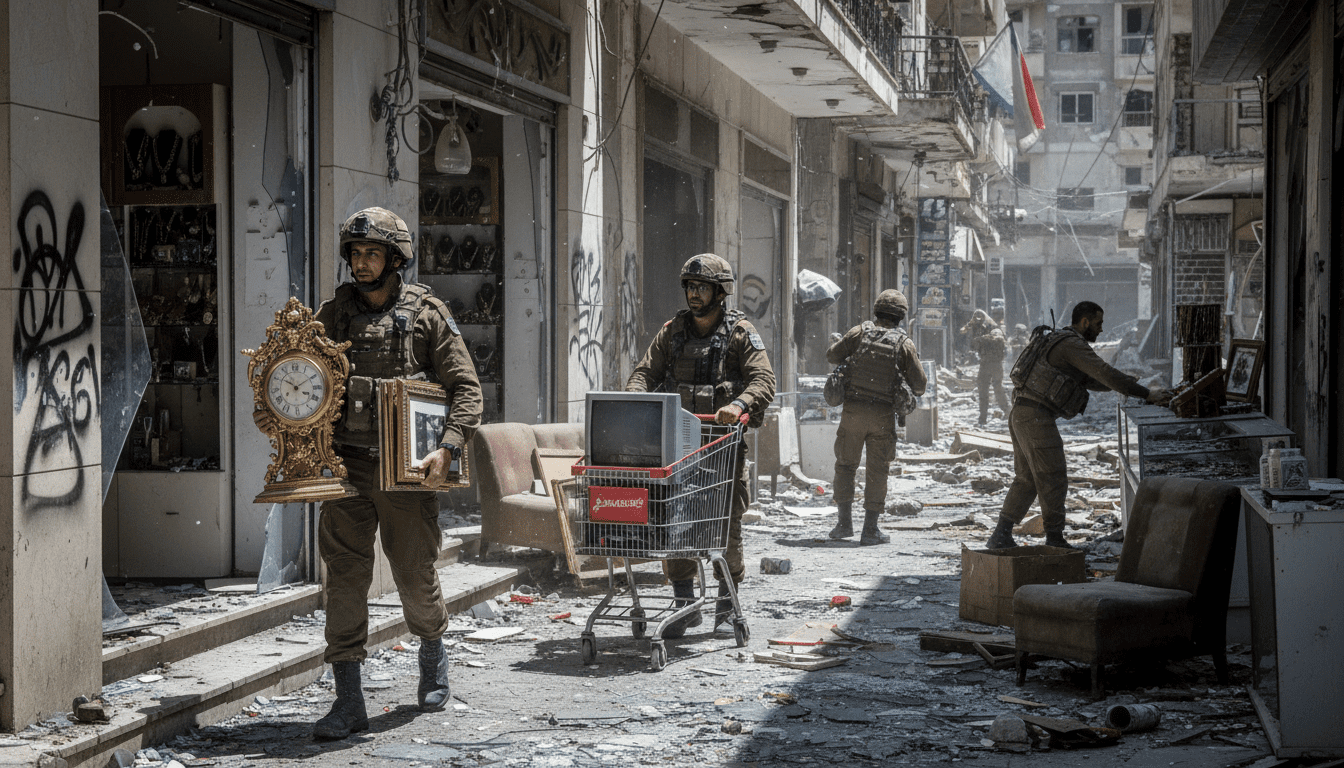
Israeli Soldiers Accused of Looting in Southern Lebanon
Soldier accounts allege Israeli soldiers looting southern Lebanon, taking TVs, motorcycles and furniture while commanders are reportedly aware but rarely punish.
A series of soldier testimonies collected by journalists and aid workers describe extensive seizure of private property across southern Lebanon, with troops accused of removing large quantities of household and commercial goods. The accounts say the items taken include electronics, vehicles and personal furnishings, and that the transfers often occurred in full view of other service members and local residents. Military spokespeople have reiterated that disciplinary procedures are in place, but several witnesses say command-level intervention has been limited or ineffective.
Soldiers’ Testimonies Describe Widespread Seizures
Multiple service members speaking to reporters described a pattern of systematic taking of goods from homes and businesses in areas where Israeli forces have operated. Those testimonies portray an environment in which soldiers routinely identify and load items into military vehicles rather than storing them at bases.
One soldier characterized the behavior as open and normalised among units, saying the practice was not concealed and that others observed the activity without intervening. The testimonies suggest the seizures were not isolated incidents but rather recurrent across different positions and times.
Types of Property Reportedly Taken
Accounts detail a broad range of items removed from civilian spaces, including televisions, motorcycles, sofas, carpets, paintings and smaller goods such as tools and cigarettes. Witnesses also reported that some commercial equipment was loaded directly from shops and workshops.
The descriptions indicate both portable, high-value items and everyday household goods were taken, which raises questions about motive and selection criteria. Several soldiers told interviewers that the choice of items appeared opportunistic rather than restricted to military-usable equipment.
Command Awareness and Discipline Claims
Sources say that both junior and senior levels of command were aware of the activity but that formal disciplinary measures were infrequent or absent in practice. Soldiers’ accounts assert that commanders did not consistently investigate or stop the behavior, contributing to the perception that the conduct was tolerated.
Military officials have stated publicly that breaches of conduct are investigated and that sanctions are applied when appropriate. The gap between official statements and the field testimonies is central to current scrutiny, with veterans and legal observers calling for transparent records of any disciplinary proceedings.
Visible Loading and Troop Behavior in the Field
Several testimonies emphasize that loading of seized property occurred openly, often beside roads or within view of local communities, rather than being hidden away in secured posts. Witnesses described items being placed in the back of vehicles or stacked near checkpoints where other troops and civilians could see them.
Observers say this visibility may have reduced incentives for concealment and increased the likelihood of more soldiers participating. The apparent lack of discreet handling has also widened the circle of witnesses able to corroborate the claims, according to aid workers and journalists operating in the area.
Potential Legal and Diplomatic Consequences
If substantiated, allegations of large-scale seizure of civilian property could prompt internal military probes as well as inquiries by international legal bodies and human rights organizations. Legal experts note that taking private property during military operations can violate the laws of armed conflict and may lead to individual or command responsibility determinations.
Diplomatically, such accusations risk further complicating relations between Israel and Lebanon and could influence international responses, including statements from third-party governments and multilateral institutions. Calls for an independent investigation are likely to intensify if corroborating evidence emerges from additional witnesses, photographic records, or third-party monitors.
Current status and next steps are unclear as military representatives maintain that regulations govern conduct and that violations are subject to punishment. Investigative journalists and rights groups say they are seeking further testimony and documentary evidence to substantiate the scope of the alleged looting. The unfolding claims have prompted renewed calls from legal analysts and humanitarian organizations for transparent, independent scrutiny and for measures to protect civilian property in conflict zones.
