
Lebanese Journalist Amal Chalil Killed in Alleged Israeli Airstrike During Ceasefire
Amal Chalil, a Lebanese journalist, was reportedly killed in an Israeli airstrike on the southern village of al-Tiri, amid accusations that rescue teams were prevented from reaching her. The death was confirmed by Lebanon’s information minister and Chalil’s employer, Al-Akhbar, and occurred during a period in which Beirut and Israel had agreed a temporary ceasefire on April 16, 2026. Lebanon has accused Israeli forces of carrying out strikes in the south despite the ten-day truce brokered with the involvement of the United States.
Death of Amal Chalil in al-Tiri
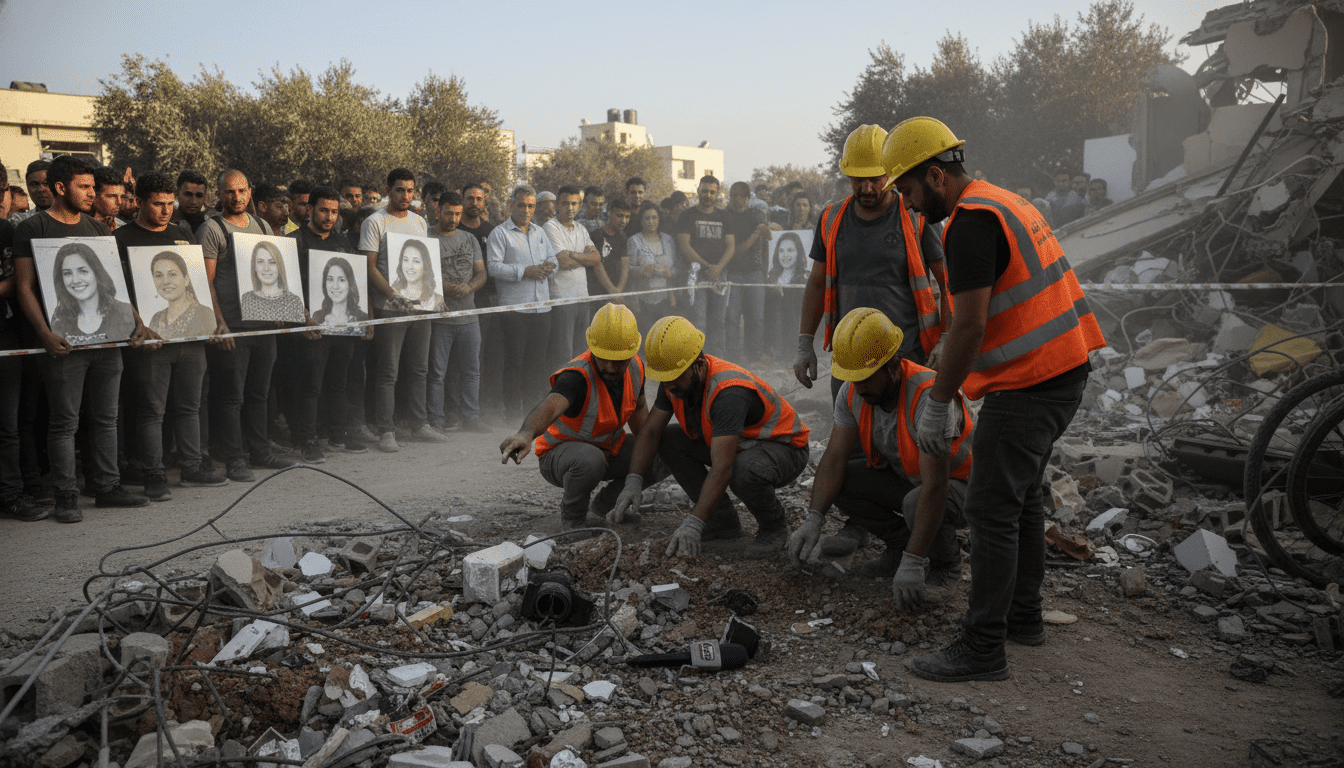
A body identified as that of journalist Amal Chalil was recovered by rescuers after what Lebanese officials described as two Israeli attacks on al-Tiri. Lebanon’s information minister, Paul Morcos, and Al-Akhbar both confirmed her death, saying the strikes killed Chalil and at least two other people in the area.
The incident has intensified scrutiny of frontline reporting in the conflict, where journalists operate under persistent risk from air and ground operations. Local authorities say the attacks occurred in a zone that has seen repeated clashes since the escalation in March.
Rescue efforts and reported ambulance attack
Lebanese health ministry officials said a paramedic team attempting to reach Chalil was initially prevented from accessing the site and that an ambulance came under fire. Rescuers reportedly were delayed for several hours before they could retrieve the body, a delay that Lebanese sources say contributed to the inability to save her.
Officials also reported the use of a stun grenade near the damaged building, which they said hindered the return of emergency teams. Those accounts, provided by Beirut health authorities and local journalist unions, describe chaotic scenes as medics and volunteers sought to reach wounded civilians and reporters.
Reporters Without Borders warning and reactions
Reporters Without Borders (RSF) publicly urged the international community to press military authorities to allow immediate medical access when Chalil’s condition was first reported as critical. RSF warned hours earlier that “her life is in danger,” saying continuing airstrikes had obstructed rescue efforts.
Lebanese journalist associations and unions echoed the appeal, stressing the exceptional danger for media personnel covering front-line developments. The organizations called for safeguards to protect civilians and press workers operating in active combat zones.
Israeli military response and explanation
Israel’s military rejected accusations that it blocked rescue teams, saying it had received reports that two journalists were injured and that forces were responding to perceived threats. An Israeli statement cited the identification of two vehicles leaving what it described as a Hezbollah-used military site, saying that one vehicle’s movement presented an immediate risk to troops.
According to that account, strikes targeted a vehicle and, subsequently, a nearby building after those movements were detected. The military framed the actions as defensive responses to vehicles that crossed what it calls the forward defense line established during operations in the south.
Other journalists killed and wider civilian casualties
This incident follows a deadly March strike that killed three journalists in the southern Lebanese theatre, underscoring the repeated losses among media workers since hostilities intensified. Lebanese authorities report that, since the exchange of attacks beginning on March 2, more than 2,400 people in Lebanon have been killed, a toll that includes combatants and civilians.
Israel has announced the occupation of a border strip where it has stationed troops to establish a buffer zone aimed at reducing cross-border attacks. Hezbollah, for its part, has fired hundreds of rockets into Israel during the campaign, contributing to a broader cycle of tit-for-tat strikes that has driven the humanitarian crisis in northern and southern border areas.
Ceasefire signed April 16 and continuing allegations
On April 16, 2026, Lebanon and Israel agreed to a ten-day ceasefire brokered with U.S. involvement, intended to pause hostilities and allow humanitarian access. Despite the agreement, Lebanese officials have accused Israeli forces of continuing to carry out strikes in the south, a charge that has been repeatedly denied by Israel in similar incidents.
The alleged killing of Amal Chalil highlights the fragility of pauses in violence and the difficulty of enforcing protections for civilians and journalists. International and local actors continue to call for clear mechanisms to ensure emergency responders can reach wounded persons without being exposed to renewed attacks.
The death of Amal Chalil has drawn condemnation from press freedom groups and renewed demands for independent investigations into attacks that harm journalists and impede rescue operations. In the absence of immediate accountability, media organizations say the pattern of risk to reporters in Lebanon’s conflict zones remains unchecked.
The consequences for press freedom and civilian protection are likely to reverberate as negotiations over the ceasefire and humanitarian access continue, with families, colleagues and rights groups pressing for answers about how a reporter on assignment was killed and why medical teams were delayed.
