
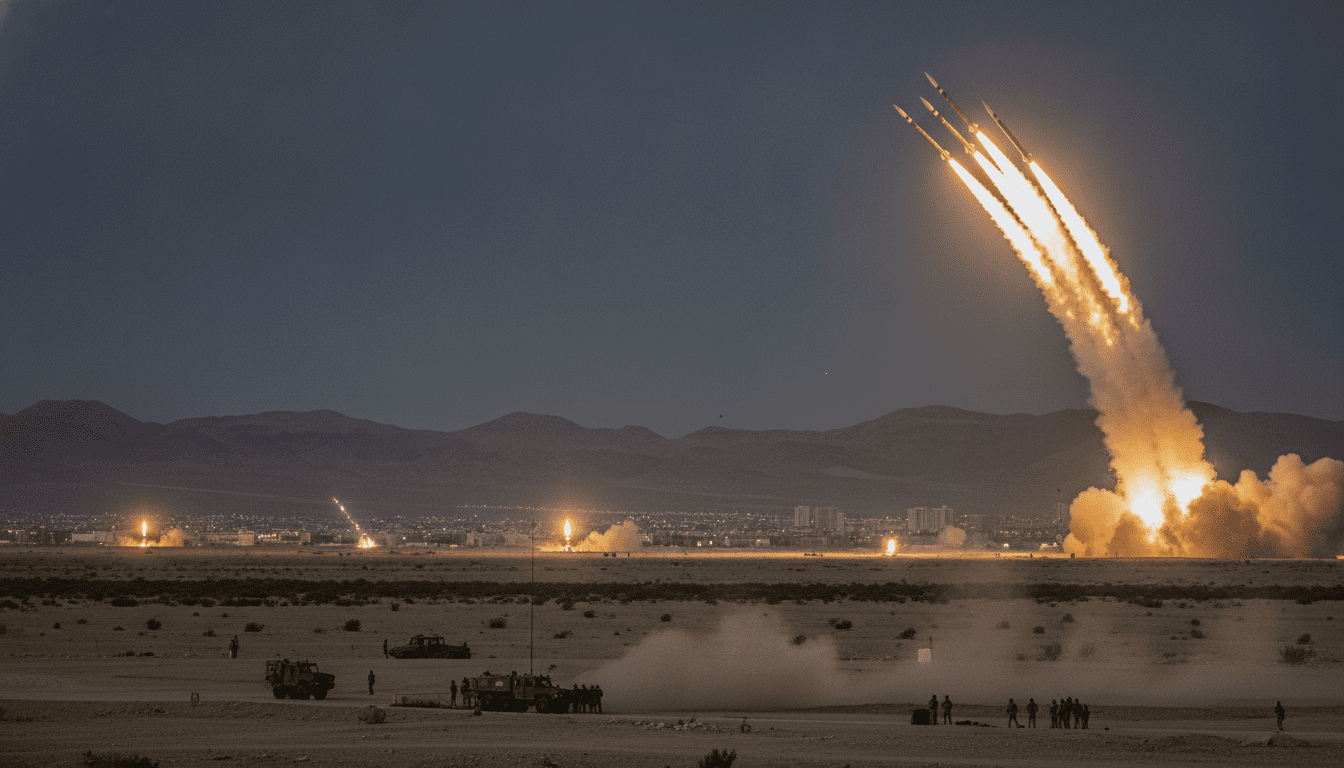
Iran fires rockets at Israel in weekend salvos, effectively ending April truce
Iran fires rockets at Israel in weekend salvos, effectively ending an April truce; regional tensions rise as U.S. diplomacy and Israeli politics face strain.
For the second consecutive week of escalations, Iran fired multiple rocket salvos at Israel on Sunday evening, a move Tehran described as retaliation that reportedly activated Israeli air defences and marked the collapse of a fragile April truce. The phrase “Iran fires rockets at Israel” captures the central development that has intensified military exchanges across the Gulf and Lebanon fronts. Both Tehran and Jerusalem framed the strikes as responses to recent attacks, while Washington urged restraint even as diplomatic efforts continued.
Iran Says Salvos Were Retaliation for Strikes on Beirut
Iran’s Islamic Revolutionary Guard Corps called the Sunday barrages a direct response to Israeli air strikes on southern Beirut earlier in the day, saying the April ceasefire had required a halt “on all fronts.” Tehran characterized the rocket fire as a warning and pledged that, should full-scale war resume, Iran’s responses would be broader and could target what it termed “American-Zionist” interests across the region. Iranian officials reiterated that any clause of the truce that excluded Lebanon would be violated by continued Israeli operations there.
Iran’s foreign ministry argued the truce negotiated in April was contingent on reciprocal restraint and accused Israel and the United States of failing to uphold those terms. State statements emphasized that the strikes were intended to deter further attacks rather than to precipitate open war, but officials also issued veiled threats that future responses would escalate if hostilities continued.
Israel Activates Air Defences; Threat of Retaliation Looms
The Israeli military reported that air-defence systems were activated to intercept incoming projectiles, but initial briefings offered no immediate confirmation of casualties or successful interceptions. Israeli leadership framed the incident within a wider pattern of threats emanating from Lebanon and Tehran, signaling that defensive measures and the option of targeted reprisals remain on the table. Military spokespeople said they were assessing the damage and the appropriate operational response.
Across Israeli political circles, responses diverged between calls for measured restraint and demands for stronger military action. Some security officials and commentators urged caution to avoid triggering a wider regional conflagration, while hardline voices publicly advocated for forceful replies aimed at degrading Iran’s strike capabilities.
February Strikes and the Fragile April Truce
The current spike in violence traces back to late February, when U.S. and Israeli strikes targeted Iranian-linked assets and personnel, a campaign that prompted a range of Iranian countermeasures. Tehran’s subsequent attacks on Israeli territory and on Gulf Arab partners, and its temporary disruption of commercial traffic through the Strait of Hormuz, heightened international concern about economic and security fallout. Those months of tit-for-tat operations set the stage for an early April agreement intended to pause fighting, but the accord was always described by participants as fragile.
Officials in Washington and Tehran had presented the April arrangement as a pathway to de-escalation, yet both sides continued to accuse each other of violations in the following weeks. The weekend salvo illustrates how quickly localized exchanges can unravel broader diplomatic efforts when front-line actors or allied militias remain active.
Hezbollah Strikes and Intensified Operations in Southern Beirut
Alongside Iran’s direct involvement, Lebanon’s Hezbollah has stepped up attacks on Israel in recent days, employing drones and rockets that Israeli officials say justify expanded operations across the northern border. On Sunday afternoon Israel struck southern suburbs of Beirut for the first time in weeks, targeting areas the military described as Hezbollah strongholds despite their dense civilian populations. Humanitarian groups and regional monitors warned that strikes in built-up areas risk significant civilian casualties and displacement.
Hezbollah framed its actions as support for Tehran and as retaliation for Israeli strikes in Lebanon, deepening the linkage between the Lebanese front and broader Iran-Israel hostilities. The mutual escalation along that border increases the danger that localized clashes could widen, drawing in regional powers and complicating Geneva-style diplomatic initiatives.
U.S. Diplomacy and Mixed Signals from Washington
In parallel with battlefield developments, U.S. diplomatic efforts have intensified amid conflicting public signals from Washington. President Donald Trump told multiple outlets he was seeking a negotiated settlement with Iran and urged Tehran to return to talks, while also expressing frustration at Israeli strikes that were not coordinated with U.S. officials. The White House publicly pressed for de-escalation even as senior American and Israeli commanders remained in close strategic consultation.
Media reports indicate Washington attempted to dissuade Israel from immediate retaliation after the weekend strikes, while also signaling readiness to defend U.S. assets if attacks widen. Those dual tracks—diplomacy coupled with a military “backstop”—reflect a conventional strategy to manage escalation, but analysts warn mixed messaging can undermine confidence on all sides.
Political Stakes in Israel as Elections Approach
Domestic politics in Israel stand to be reshaped by the renewed fighting, with Prime Minister Benjamin Netanyahu and members of his cabinet framing military action as necessary to protect the state. Critics argue Netanyahu may benefit politically from an intensifying security narrative ahead of fall elections, while supporters contend decisive responses are required to deter future attacks. Voices from the right of the coalition have pushed for an extended campaign, asserting that halting operations now could be interpreted as weakness.
At the same time, opposition figures and some analysts caution that prolonged conflict could exact heavy economic and human costs and further polarize Israeli society. The interplay between security policy and electoral calculation will likely influence any decision on whether to escalate further or seek renewed negotiations.
The weekend salvo that saw Iran fire rockets at Israel underscores how quickly fragile truces can collapse amid a web of military actions and political incentives. With air defences on alert, diplomatic shuttle efforts underway, and militia operations continuing along Lebanon’s border, the risk of a wider regional confrontation remains acute and will hinge on whether key actors choose restraint or retaliation in the coming days.
