
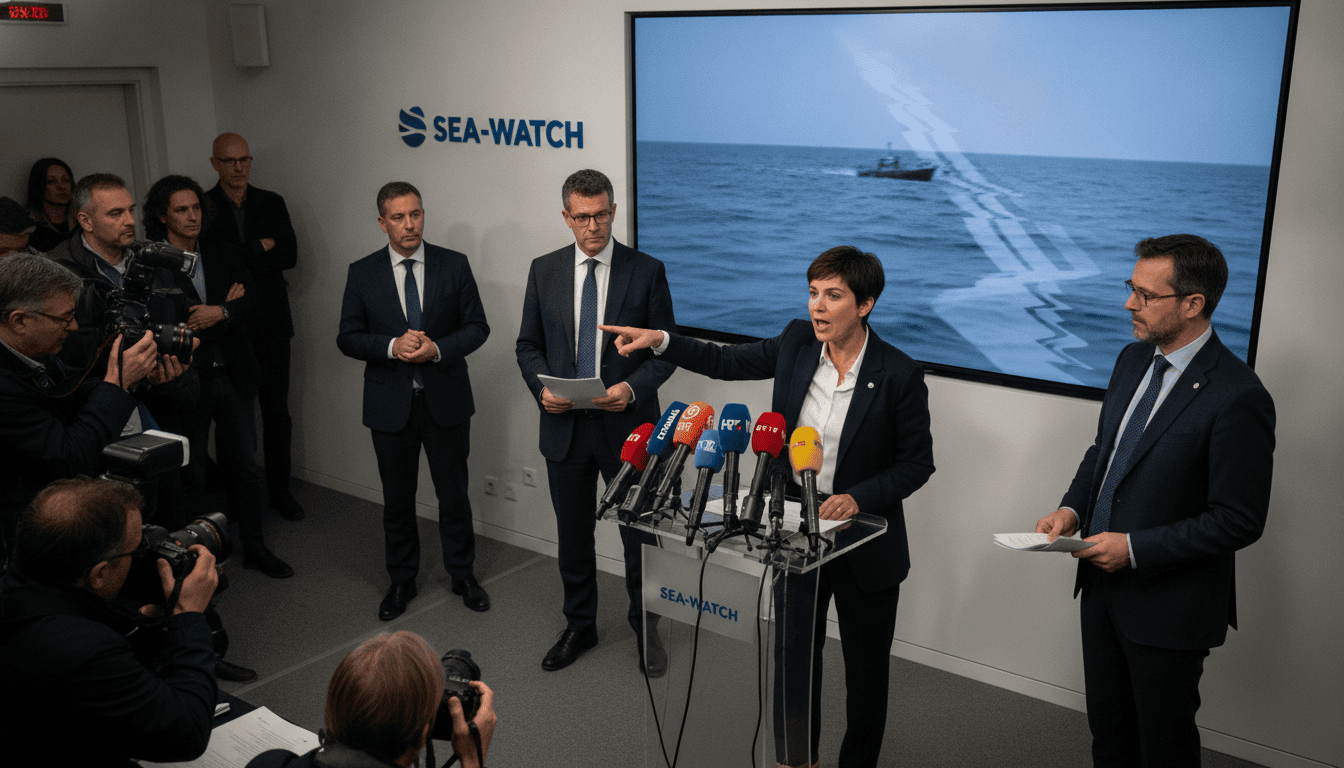
Sea-Watch 5 rescue footage sparks legal battle and claims of a right-wing smear campaign
Sea-Watch 5 footage controversy draws scrutiny after May 11 rescue; NGO calls allegations misleading while prosecutors use videos in trial.
The dispute over the Sea-Watch 5 rescue operation on May 11 has escalated into a legal and political confrontation after French and Italian newspapers published Frontex video showing the NGO’s boats taking migrants from a fast craft offshore Libya. Sea-Watch has described the coverage as part of a “right-wing” smear campaign and says the footage has been edited to mislead the public. Prosecutors in Brindisi have relied on the same recordings as evidence in a criminal case against the vessel’s captain.
Frontex footage published by European outlets
The newspapers Le Figaro and Il Giornale published video clips captured by a Frontex aircraft that depict two Sea-Watch inflatable boats approaching a larger, double-deck fast boat. The footage shows dozens of people on the fast boat and Sea-Watch crew members distributing life jackets before transferring migrants to their inflatables. Masked, armed figures are visible on the deck of the larger vessel during the encounter.
In the videos, one masked man appears to raise his thumb after migrants are put aboard Sea-Watch craft, and the fast boat then departs. The recordings were taken in international waters off Libya and have become central to public debate about the circumstances of the handover and the presence of alleged smugglers.
Sea-Watch rejects claims and alleges manipulation
Sea-Watch acknowledged the authenticity of the Frontex recordings but said their release and presentation by some media outlets were intended to mislead. In a press statement the NGO accused elements of the political right of mounting a “campaign of vilification” and questioned the editorial choices made by the newspapers that published the footage. The group stressed it had informed authorities before and during the operation on May 11.
The NGO also provided a description of the scene seen in the footage, saying its teams found unconscious and severely weakened people aboard the fast boat and that there was no navigational or lifesaving equipment on the craft. Sea-Watch said its actions were aimed at de-escalation to protect lives when confronted with masked men who posed a danger to both crew and migrants.
Prosecutors use video as evidence in Brindisi case
Italian prosecutors in Brindisi have incorporated the Frontex footage into an ongoing investigation that began in May and targets the Sea-Watch 5’s captain, identified in court documents as Anne van Dam. Authorities allege that the captain provided “assistance to illegal entry,” and the indictment carries potential prison sentences that Italian law can extend up to two decades in serious cases of facilitation.
The publication of the clips in the press has raised questions about the chain of custody and how recordings circulated beyond investigative channels. It remains unclear who leaked the material to the newspapers, and prosecutors are balancing evidentiary preservation with public interest in understanding the events at sea.
Sequence of events reported by rescuers and media
According to Sea-Watch, its crew first issued life jackets to people aboard the larger vessel and then took the most vulnerable on board their inflatables after finding multiple individuals unconscious or trapped below deck. The NGO says its priority was rescuing those at immediate risk while attempting to avoid confrontation with armed men on the scene. Sea-Watch also reported that, after the operation, the Sea-Watch 5 was fired upon by units it identified as belonging to the Libyan coast guard, a claim the Italian coast guard later confirmed.
Media reports have added further details, with Il Giornale citing investigators who claimed the fast boat had been equipped with a satellite terminal and had loitered in the search-and-rescue area before approaching Sea-Watch’s vessels. Sea-Watch disputed suggestions that a thumbs-up gesture from a man on the fast boat signified collusion with smugglers, saying there was “no indication” the gesture targeted the rescuers.
Authorities and investigators respond cautiously
Italian maritime authorities have acknowledged receipt of Sea-Watch’s incident reports and confirmed that elements of the coast guard registered hostile actions in the wake of the May 11 operation. Prosecutors in Brindisi continue to examine the footage alongside testimony from rescuers, crew statements and operational logs to establish the sequence of events and criminal responsibility, if any. Questions about the origin and handling of the recordings have added a layer of procedural complexity to the inquiry.
Frontex has not publicly disputed the provenance of the images, which were recorded by one of its aircraft, but the agency has limited its commentary to confirming the existence of aerial surveillance missions in the area. Meanwhile, the identity of those who provided the clips to the press remains a subject of speculation among investigators.
Implications for NGO rescues and migration policy
The case highlights the fraught environment in which maritime rescue NGOs operate in the central Mediterranean, where acts of lifesaving are increasingly contested by legal, political and security narratives. Criminal investigations tied to rescue operations can create pressure on non-governmental vessels and potentially deter crews from conducting interventions in hazardous conditions. The controversy also feeds a wider public debate about enforcement at sea, the role of aerial surveillance and information flows between agencies and media.
Legal scrutiny of rescue missions may lead to calls for clearer operational rules and stronger safeguards for both rescuers and persons in distress, but it may also harden political stances that frame NGO activity as facilitatory rather than humanitarian. The outcome of the Brindisi proceedings could influence how future incidents are investigated and reported.
The case remains under investigation, with prosecutors in Brindisi continuing to review the Frontex footage and other evidence while Sea-Watch maintains its account that the May 11 operation was a lifesaving intervention and not collusion with smugglers.
