
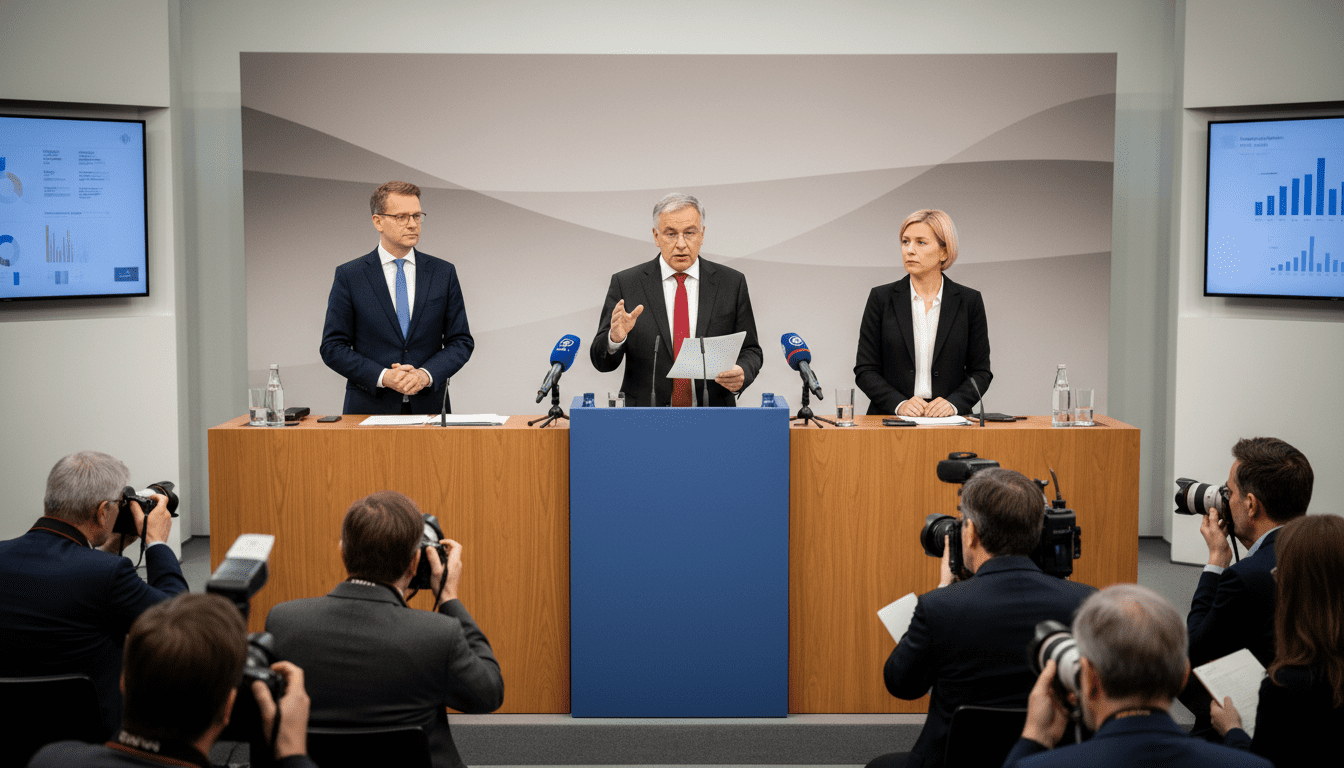
Germany energy relief measures reshaped as coalition adds health levies and delays transport reforms
Germany’s energy relief measures are now being reallocated amid renewed Gulf tensions, with the coalition on Monday, April 13, 2026, announcing new levies to shore up statutory health insurance while leaving energy compensations unsettled.
Coalition announces new levies to shore up statutory health insurance
The federal coalition declared on Monday that it will introduce fresh burdens intended to stabilise the statutory health insurance system. Lawmakers provided few specifics, saying only that ministries will draft the necessary legislation following commission recommendations.
Party leaders framed the step as urgent to prevent a funding shortfall, but critics warned the measures could shift costs onto employers and households. The announcement came alongside plans to reconsider earlier promises of broad relief tied to rising energy costs.
Energy price compensations left unallocated amid Iran conflict
Rising energy costs driven by the war involving Iran and disruptions in the Strait of Hormuz have complicated the distribution of Germany energy relief measures. Officials acknowledged that compensations originally intended for households and businesses have not been fully assigned, citing continued volatility in global oil and gas markets.
Ministers and coalition representatives suggested alternative destinations for the funds — from proposed income tax reforms to municipal finance support — but stressed that final decisions will wait until the security situation stabilises. The lack of a clear plan has raised concerns among consumers and local governments seeking prompt relief.
Commission recommendations guide policy but postpone detail
Across health, social and pension policy the coalition adopted a recurring approach: accept expert commission findings in principle and task the responsible ministry with drafting law. This commission-first method was presented as a pragmatic way to build consensus, yet it leaves many technical details unresolved for months.
Government spokespeople said the process allows for careful legislative preparation, while opposition voices described it as a formula for delay. In practice, the pattern means headline commitments without immediate parliamentary debate on the substantive measures.
Pension reform next in line after commission report
Pension policy is now expected to follow the same trajectory, with a commission report due to shape the next round of proposals. Coalition members indicated they will "note" the panel’s recommendations and then ask the labour ministry to produce a bill for parliamentary consideration.
Observers expect contentious trade-offs over contribution rates, retirement age adjustments and intergenerational fairness to surface once draft legislation appears. Municipalities and organised labour have already signalled they will push for measures that cushion vulnerable retirees and preserve local budget capacity.
Delay of combustion-engine ban signals climate-policy strain
Separately, the coalition’s delay of the planned ban on new combustion-engine vehicles underscores growing tension between economic and climate objectives. That postponement was cited as evidence the government is increasingly sensitive to short-term price and political pressures tied to fuel costs and the wider energy debate.
Policy analysts say the transport decision, coupled with the unsettled Germany energy relief measures, signals a broader shift toward incrementalism on environmental reform. Stakeholders in the climate and automotive sectors warned that further delays could complicate long-term investment decisions and Germany’s commitments under European climate frameworks.
Despite the government’s emphasis on commission-led policymaking, critics argue that urgent economic pressures require faster, transparent choices to deliver relief to households and businesses. The coalition insists it is balancing fiscal stability with social protection while navigating an unstable international energy environment.
As ministries begin drafting bills, the practical impact of the announced levies and the fate of pending energy compensations will depend on parliamentary negotiations and evolving geopolitical risks. The coming weeks are likely to reveal whether the commission-first approach yields workable legislation or simply postpones difficult trade-offs.
