
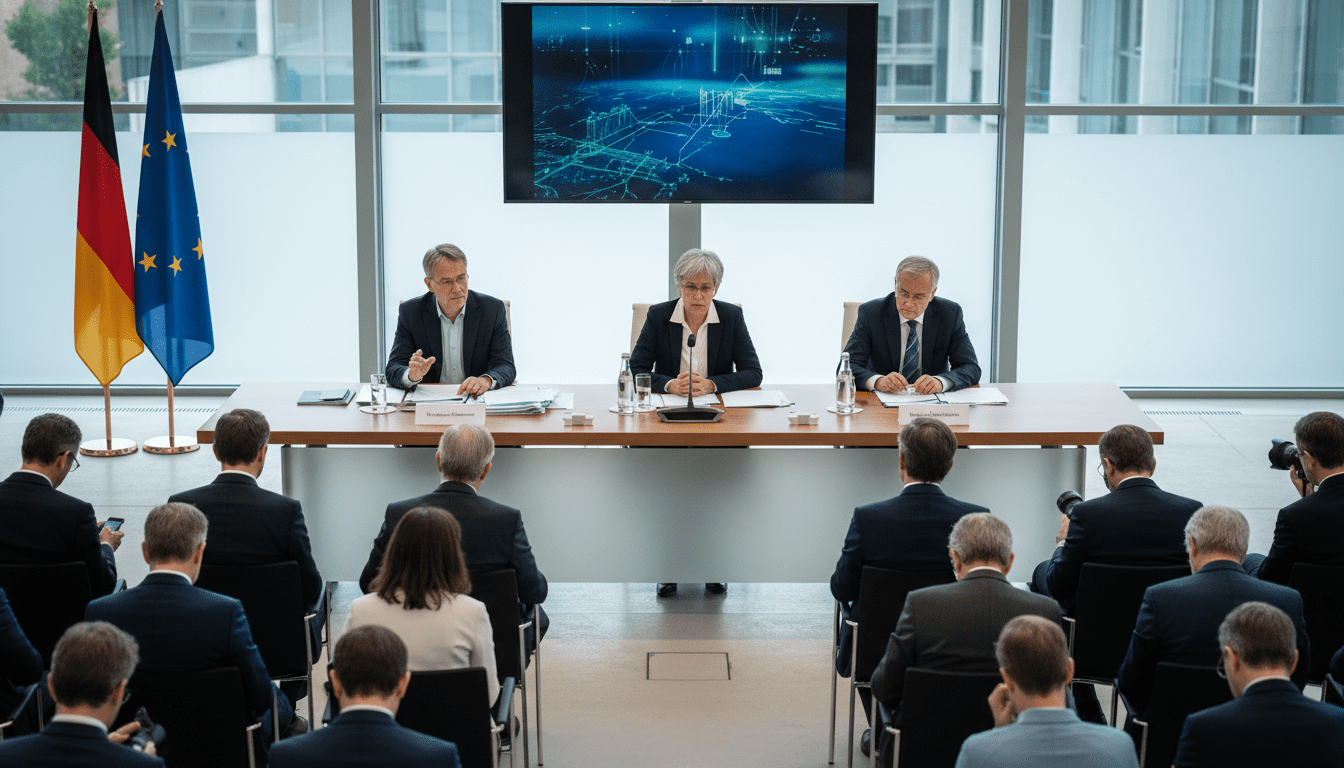
Germany 2040 climate targets at risk as expert council warns; Union drops plan for MPs’ pay rise
Expert Council report finds Germany 2040 climate targets unattainable even with full program; Union parliamentary leaders withdraw support for a planned pay increase for MPs.
The Expert Council on Climate Issues warned that Germany 2040 climate targets are unlikely to be met even if the government’s climate protection programme is implemented in full, according to its latest assessment. The finding has intensified scrutiny of policy gaps and prompted an immediate political response from the Union parliamentary group, whose leaders announced they will forgo a planned parliamentary pay rise. These twin developments have placed both climate policy and legislative pay under the spotlight in Berlin.
Expert Council Says Germany 2040 Climate Targets Unattainable
The independent advisory body concluded that the existing climate protection programme, as currently designed, does not close the emissions gap leading to the 2040 goals. Its analysis suggests that current measures and planned actions fall short of the reductions required to align the country’s trajectory with its long-term commitments.
The council’s findings underscore structural weaknesses across sectors, from energy and transport to industry and buildings. The report prompted calls from climate experts for faster, deeper measures and clearer implementation timelines to avoid missing legally and politically significant benchmarks.
Union Parliamentary Leaders Drop Plan for Pay Increase
Leaders of the Union parliamentary group announced they will support foregoing a scheduled increase in parliamentary allowances, reversing earlier positions. The decision reflects a calculated political stance following public sensitivity to living costs, government performance, and the council’s stark assessment of climate progress.
Party officials framed the move as an exercise in responsibility, saying it should be unacceptable to take a pay rise while key national targets appear out of reach. The withdrawal of support reduces momentum for the increase and places pressure on other parties to clarify their positions ahead of any parliamentary vote.
Assessment of the Climate Protection Programme’s Shortfalls
According to the council’s summary, even a fully implemented climate protection programme would not deliver the emissions reductions required by 2040, indicating a substantial policy gap. Analysts point to a need for both additional measures and stronger enforcement mechanisms to ensure targets translate into real-world reductions.
Shortfalls are reportedly present in projected renewable energy deployment, transport electrification rates, and industrial decarbonization pathways. The council recommends that the government revise sectoral targets, tighten regulatory frameworks, and accelerate investment in low-carbon infrastructure to close the gap.
Parliamentary Pay Debate and Political Calculus
The decision by Union leaders to oppose the pay rise injects a new variable into a long-running debate over parliamentary remuneration. Supporters of raising allowances had argued the adjustment reflected inflation and the costs of public office, while critics warned of the optics of pay increases amid policy shortfalls and public concern.
By stepping back, the Union aims to avoid further reputational damage and to set a public tone of austerity in a sensitive policy moment. The move could influence other factions’ calculations and increase scrutiny on how parties prioritize fiscal choices versus policy delivery.
Implications for Government Strategy and Public Trust
The dual headlines — an expert council warning of missed climate goals and a high-profile political retreat on pay — risk eroding confidence in the government’s capacity to meet future commitments. Observers say the report and the parliamentary pay decision together amplify questions about political leadership, policy credibility, and the pace of reforms necessary to reach climate targets.
Ministries responsible for climate, energy, and transport now face pressure to provide clear, actionable plans that go beyond existing proposals. Greater transparency on milestone timelines and measurable outcomes will be essential if public trust is to be restored.
The Expert Council’s assessment and the Union’s payout reversal have quickly become focal points in national debate over ambition, accountability, and governance as Germany assesses its path to 2040 climate goals and the standards expected of its elected officials.
