
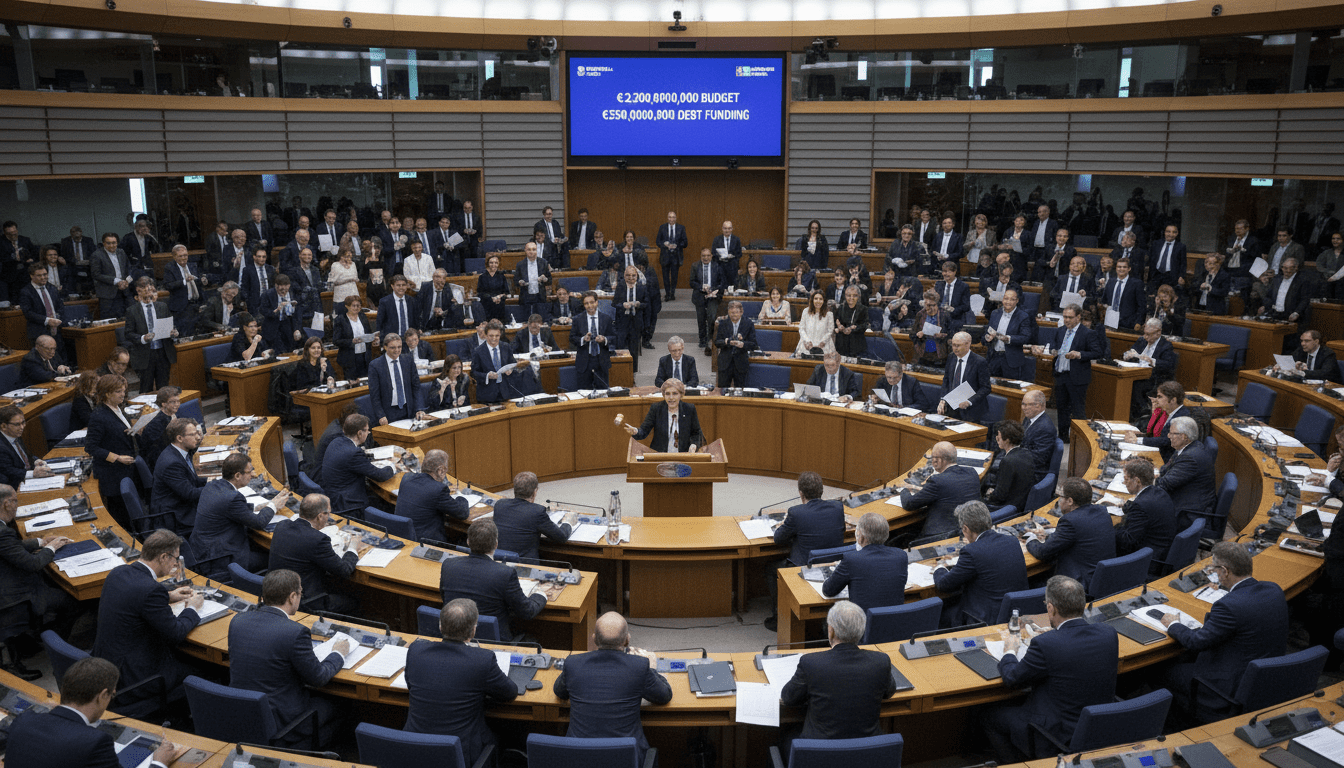
EU budget 2028-2035 sparks clash as Parliament demands bigger envelope and new debt funds
EU budget 2028-2035 debate intensifies as the Commission’s €2 trillion plan faces Parliament’s €2.2 trillion proposal, new debt funds and staffing boosts.
The Commission’s proposal for the EU budget 2028-2035, set at roughly €2 trillion and equivalent to about 1.26 percent of EU gross domestic product, has opened a contentious negotiation between Brussels and the European Parliament. The Parliament’s budget committee has countered with a demand for an 11 percent larger envelope — approximately €2.2 trillion — and additional borrowing mechanisms, setting the stage for a politically charged bargaining process. At stake are major spending priorities including farm payments, cohesion policy and a sizable competitiveness fund pitched by the Commission.
Commission frames the baseline proposal
The European Commission presented its multiannual financial framework for 2028-2035 as a step up from the current 2021-2027 budget, proposing a rise from 1.13 percent to 1.26 percent of EU GDP over the seven-year period. Officials argue the increase reflects mounting strategic and economic pressures, and that higher resources will be necessary to support competitiveness, resilience and post-pandemic debt servicing. The proposal is intended to fund policy objectives without fundamentally altering the EU’s fiscal architecture.
The Commission also flagged that repayment obligations linked to temporary pandemic-era borrowing will affect future budgets, estimating that servicing those liabilities will account for a measurable share of the fiscal ceiling. That projected cost has figured prominently in the Commission’s argument for an expanded envelope.
Parliament demands bigger envelope and new borrowing
Members of the European Parliament’s budget committee pushed back, recommending a larger overall budget of about €2.2 trillion and proposing two new debt funds worth some €550 billion in total. The committee’s rationale centers on perceived shortfalls in the Commission’s draft for areas such as agriculture, regional cohesion and investment in strategic sectors. Lawmakers further urged increased staffing at EU institutions to administer expanded programs, including a request for roughly 2,500 additional Commission posts.
Parliamentarians portrayed the request as necessary to match rising geopolitical risks and to bolster the EU’s capacity to implement complex spending programs across member states. The demand, however, raises immediate questions about how to reconcile competing fiscal philosophies among capitals.
New debt funds and institutional expansion under scrutiny
The Parliament’s plan includes proposals for two large borrowing facilities, intended to provide supplemental financing for long-term investment and crisis response. Proponents say such instruments can mobilize private capital and foster pan-European projects that national budgets cannot finance alone. Critics warn that large-scale debt funds risk locking the EU into costly obligations and may dilute national control over fiscal priorities.
Alongside borrowing, the push for 2,500 extra Commission staff has become a flashpoint. Supporters argue new personnel are needed to manage expanded programs and ensure compliance; opponents view the request as bureaucratic growth at odds with calls for efficiency.
Agriculture, cohesion and competitiveness compete for resources
A central element of the dispute is how funds would be distributed. The Parliament’s draft prioritizes sustained or increased payments to the Common Agricultural Policy and cohesion funds aimed at poorer regions. At the same time, the Commission has advocated a substantial “competitiveness” fund — figures cited in planning documents reach as high as €450 billion — to back industrial policy and research.
Observers note these priorities reflect divergent political pressures: rural constituencies and less prosperous regions press for safeguards to existing transfers, while other stakeholders press for targeted investment to boost growth and technological sovereignty. The debate has exposed tensions over whether the EU should protect longstanding redistributive programs or pivot toward large-scale strategic spending.
Member states face a test of fiscal politics
The negotiation over the EU budget 2028-2035 will test cohesion among member states, pitting frugal capitals against governments more open to supranational spending. Some national leaders who emphasize balanced public finances will push back on both higher contributions and expanded EU borrowing. Germany, long a central player in budget talks, may be expected to lead calls for restraint — though domestic politics and prior fiscal commitments could complicate its stance.
Smaller and net-recipient countries will lobby to preserve or increase transfers they say are vital for regional development. The resulting horse-trading will be shaped by alliance-building in the Council and by whether capitals accept additional EU-level debt instruments.
Path to agreement and political stakes ahead
Formal negotiations will follow standard EU budgetary procedures, with the Council and Parliament required to reconcile competing positions before any multiannual framework is agreed. The process will involve technical assessments of long-term fiscal sustainability, legal scrutiny of proposed debt instruments and political compromises on spending priorities. Timelines are likely to stretch as capitals gauge the domestic fallout of any concessions.
Beyond arithmetic, the debate over the EU budget 2028-2035 raises broader questions about the future division of responsibility between national governments and EU institutions. How member states resolve trade-offs between redistribution, strategic investment and fiscal prudence will shape EU policymaking for years.
The coming months will determine whether the Commission’s baseline, Parliament’s expanded demands, or a negotiated middle ground emerges as the final blueprint for the bloc’s spending priorities. Negotiators face pressure to deliver a stable financial plan that reconciles economic realities with political ambitions across a diverse union.
