
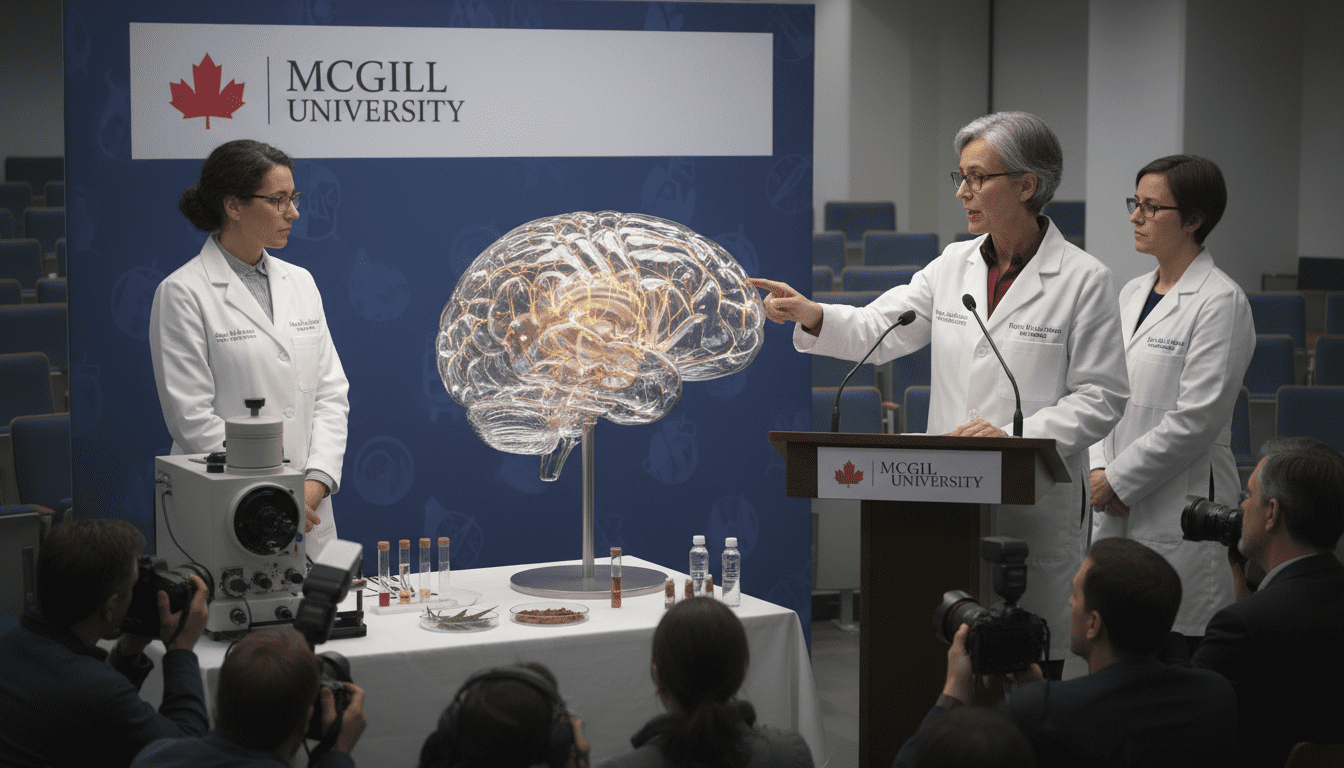
McGill Study Links Cannabis and Tobacco Co-Use to Altered ‘Bliss Molecule’ System
McGill researchers report that cannabis and tobacco co-use is associated with higher FAAH and lower anandamide levels, potentially increasing anxiety, depression and relapse risk.
People who use both cannabis and tobacco show measurable differences in a brain enzyme that regulates anandamide, the so‑called “bliss molecule,” according to a small PET‑imaging study led by McGill University investigators at the Douglas Research Centre. The team reports that those who combined daily cigarette smoking with regular cannabis use had elevated levels of FAAH, the enzyme that breaks down anandamide, compared with cannabis‑only users. The findings suggest a biological pathway that could help explain why co‑users more often experience mood symptoms and greater difficulty quitting cannabis.
Study Finds Altered FAAH Levels in Co-Users
Pet‑based imaging showed a consistent increase in FAAH activity among participants who smoked cigarettes in addition to using cannabis. Higher FAAH implies reduced anandamide availability, a pattern previously associated with anxiety, depression and a higher likelihood of relapse in substance‑use contexts. McGill researchers said this is the first human evidence pointing to a molecular mechanism that might distinguish co‑use outcomes from cannabis use alone.
The lead investigator, Rachel Rabin of McGill’s Department of Psychiatry, described the result as an “important early step” toward identifying pharmacological targets for cannabis use disorder among people who also use tobacco. Co‑author Romina Mizrahi, director of the McGill Research Center for Cannabis, noted that the magnitude of the difference surprised the team and warranted further study. Both investigators emphasized that current treatments for cannabis dependence remain largely behavioral and that biological targets could broaden intervention options.
Participant Profile and Imaging Methods
The analysis drew on data from 13 young adults: eight who used cannabis without tobacco and five who combined cannabis with daily cigarettes. Reported cannabis consumption averaged just over one gram per day, while combustible tobacco intake ranged from one to 12 cigarettes daily among co‑users. All participants underwent PET imaging to measure FAAH; the scans were then compared across the two groups to assess endocannabinoid system activity.
Investigators acknowledged the study used data originally gathered for a separate project, which constrained the sampling framework and prevented inclusion of a tobacco‑only comparison arm. The absence of a nicotine‑only group means the observed FAAH differences could—at least theoretically—reflect effects of tobacco by itself rather than a unique interaction with cannabis. The research team has stressed that these are preliminary, hypothesis‑generating results requiring replication in larger, purpose‑designed cohorts.
Clinical Implications for Mood and Relapse
Neuroscientists have linked lower anandamide signaling to a range of negative mood states and stress vulnerability, which may help explain clinical observations that co‑users report higher rates of anxiety and depressive symptoms. If FAAH elevation contributes to diminished anandamide tone, pharmacological modulation of this enzyme could represent a therapeutic avenue for people struggling with cannabis dependence alongside nicotine use. The McGill authors argue that identifying such molecular targets is a necessary complement to existing behavioral therapies, which remain the mainstay of treatment.
The potential treatment implications are tentative, however, and would require rigorous clinical trials before any changes to practice. Researchers also caution that individual variability in substance use patterns, genetics and co‑occurring conditions could influence both biological markers and treatment response. Still, the findings focus attention on the endocannabinoid system as a relevant target in dual‑use populations.
Limitations and Need for Tobacco-Only Comparison
Small sample size is a primary limitation of the study, which diminishes statistical power and raises the risk of chance findings. The cross‑sectional design also prevents conclusions about causality—whether tobacco exposure drives FAAH changes, whether preexisting differences lead individuals to co‑use, or whether a bidirectional process is involved. The lack of a tobacco‑only group is particularly important because cigarette smoking alone might produce similar FAAH alterations.
The investigators openly acknowledge these constraints and present the report as early‑stage evidence rather than definitive proof of mechanism. They recommend replication with larger, more diverse samples and with study designs that can parse the separate and combined effects of nicotine, tobacco smoke constituents and cannabis. Such work would also benefit from longitudinal follow‑up to determine whether FAAH changes predict clinical trajectories like relapse or mood deterioration.
Planned Follow-Up Research and Funding
To address open questions, the McGill team is recruiting participants who smoke cigarettes and individuals who vape nicotine to compare endocannabinoid markers in the absence of cannabis use. That follow‑up study aims to determine whether similar FAAH elevations occur with tobacco or nicotine alone, and whether mode of nicotine delivery alters the pattern. The initial report, authored by Rachel Rabin, Joseph Farrugia, Ranjini Garani and Romina Mizrahi, was published in Drug and Alcohol Dependence Reports and received funding from the U.S. National Institute of Mental Health.
Those next steps reflect a broader effort to disentangle how common co‑use patterns influence brain chemistry and clinical outcomes. Investigators said that clarifying nicotine’s role is essential before recommending targeted pharmacological strategies for co‑users. They also noted the public‑health relevance given that many cannabis consumers continue to use tobacco even as overall smoking rates decline.
The McGill findings add a biological dimension to clinical observations that people who combine cannabis and tobacco often fare worse on mood measures and have more trouble quitting cannabis than those who avoid tobacco. Although preliminary, the results highlight FAAH and the endocannabinoid system as promising areas for further research and potential treatment development. Future, larger studies that include tobacco‑only and longitudinal designs will be needed to confirm whether the enzyme changes reported here are a cause, consequence or correlate of co‑use.
