
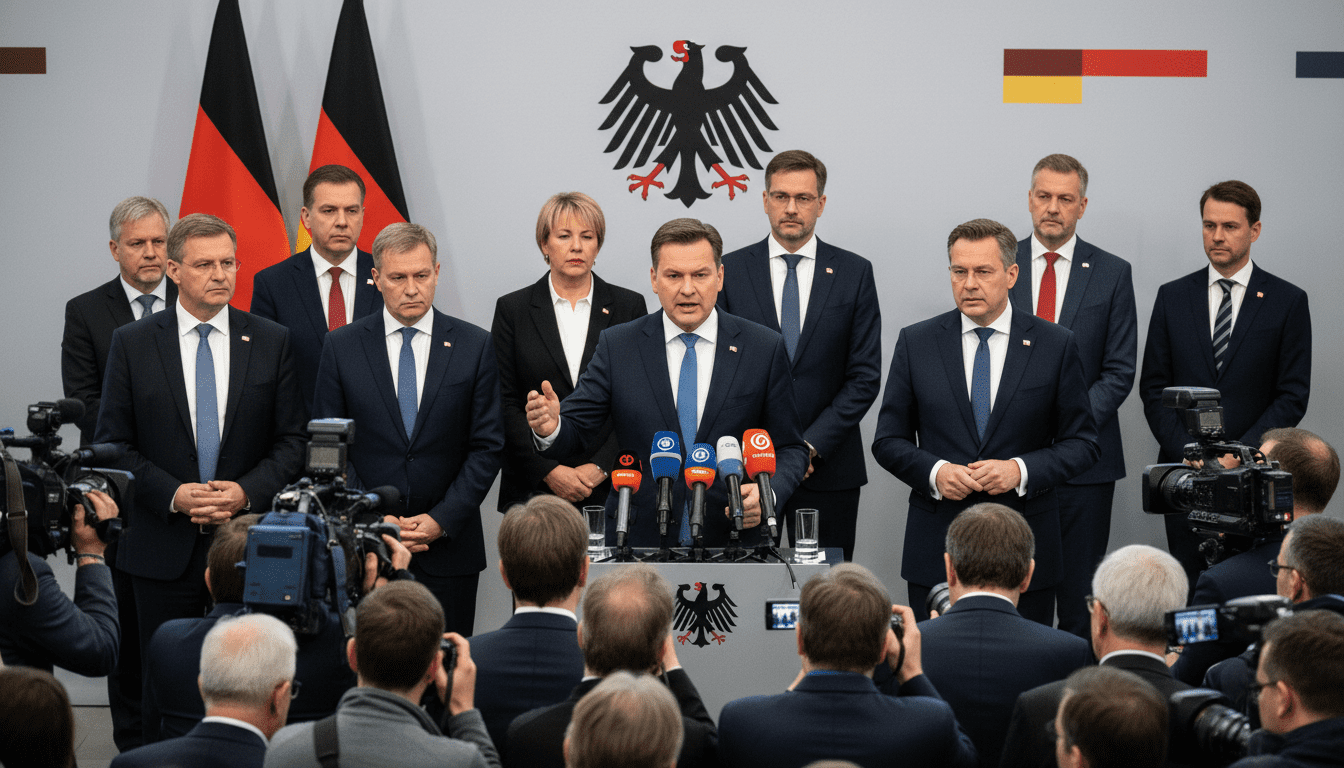
Germany Urged to Act as Energy Prices Trigger Calls for Immediate Relief
German state leaders demand rapid federal action to ease rising energy prices and propose suspending the CO2 levy while coalition talks over relief measures continue without a firm decision.
Germany’s mounting energy prices have prompted urgent demands from two CDU state premiers for fast, concrete federal relief, with calls growing across the political spectrum for measures that provide immediate household and business relief. Thuringia’s Mario Voigt and Saxony-Anhalt’s Sven Schulze pressed the federal government in televised interviews for decisions "in the next hours," arguing political wrangling cannot delay steps to blunt the financial strain on families and firms. At the same time, Green leader Franziska Brantner proposed a different bundle of measures focused on tax cuts and a windfall levy on corporate profits, underscoring the widening debate inside the ruling coalition.
CDU State Leaders Press for Immediate Measures
Both Mario Voigt and Sven Schulze publicly demanded rapid action to address energy prices, saying talk is no longer sufficient and urging the federal government to deliver swift decisions. Schulze told a national television audience he expected outcomes within hours and warned that internal coalition disputes should not paralyze policy responses. Voigt likewise told viewers he wanted visible measures the same day, signaling rising impatience among regional executives who face mounting pressure from constituents. Their proposals seek to prioritize quick, administratively simple interventions to reach households before winter price pressures intensify further.
Proposal to Suspend the CO2 Levy Gains Prominence
A central concrete suggestion from the CDU premiers was the temporary suspension of the CO2 levy, an idea framed as a rapid way to lower consumer costs without lengthy legislative battles. Advocates say suspending the levy would immediately reduce fuel and heating costs at the point of sale, offering quick relief to vulnerable households and small businesses. Critics, however, warn that removing a price signal for carbon risks undermining climate policy objectives and could complicate long-term emissions targets. The proposal has reopened debate on how to balance near-term economic relief with Germany’s broader energy transition commitments.
Greens Push for Tax Cuts and Windfall Levies
Franziska Brantner of the Greens criticized the government for what she called a failure to lead and proposed an alternative package that focuses on tax relief and corporate accountability to tackle energy prices. Brantner urged a reduction in the electricity tax to lower household bills and called for an over‑profit levy on energy companies that have benefitted from market volatility. She also suggested targeted direct payments to low‑income and otherwise vulnerable citizens as an immediate buffer against price spikes. Her stance highlights a competing view within the coalition that relief should be both socially targeted and financed by those with excess gains.
Weekend Coalition Talks Show Deep Divisions
Coalition leaders met over the weekend to discuss relief on fuel costs and broader structural reforms, but sources indicate positions remained deeply divergent and no formal announcements were expected on Sunday. The dispute has centered on how to fund relief measures, whether to prioritize across‑the‑board cuts or means‑tested support, and how to square short‑term fixes with climate commitments. Voices from both the Union and SPD have suggested compromise may be difficult to reach quickly, increasing the pressure on the chancellor and vice chancellor to broker an agreement. The public impasse has prompted state leaders to ramp up pressure for immediate, tangible steps.
Regional Impact and Political Stakes Rise
State governments warn that continuing high energy prices carry acute social and economic risks, from rising household debt to added costs for energy‑intensive industries that support regional employment. Local officials say they are already seeing increased demand for emergency support measures and expect political fallout if federal relief is delayed. For the federal coalition, the conflict over energy prices is testing unity and public credibility, with each party mindful of voter sensitivity to cost‑of‑living issues. Observers note that visible action in the near term may be decisive for public confidence heading into the next political cycle.
Implementation Challenges and Fiscal Questions
Even where there is agreement on objectives, implementing relief measures quickly presents administrative and fiscal challenges that have so far complicated the debate over energy prices. Temporary tax suspensions or direct payments require clear legal authority, budgetary offsets, and rapid distribution mechanisms to be effective before households feel further strain. Proposals to tax windfall profits also face legal and accounting complexities that could delay receipts and reduce their usefulness as immediate funding sources. Officials say any chosen package will need to balance speed, legality, and fairness to avoid unintended consequences.
The coming days will likely determine whether Germany’s federal government can translate mounting political pressure into concrete steps to ease energy prices or whether the debate will continue to stall amid competing priorities and implementation hurdles.
