
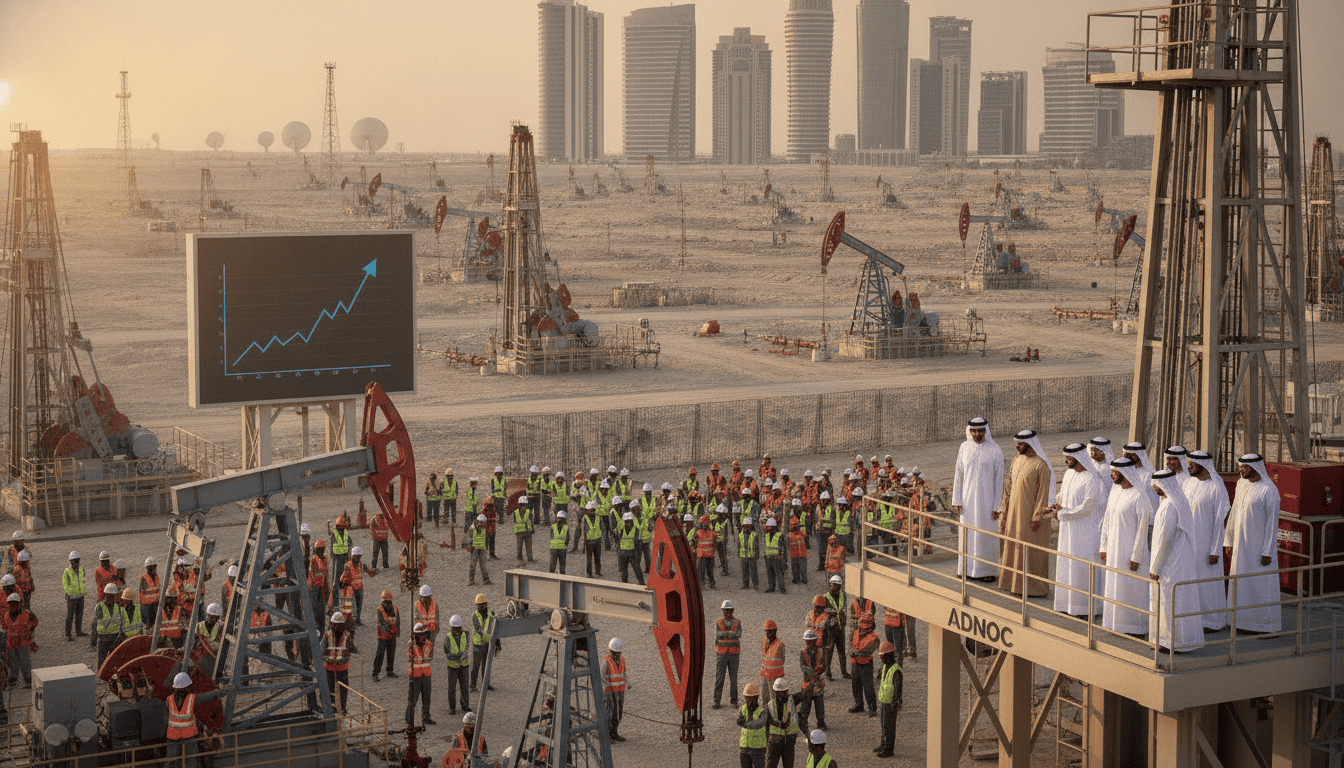
UAE oil production hits record 4.1 million bpd in June as Abu Dhabi exits Opec
UAE oil production hit a record 4.1 million barrels per day in June after Abu Dhabi left Opec, reshaping Gulf exports, routes and global oil markets. Price impacts follow.
The United Arab Emirates recorded a sharp rise in oil output in June, pushing UAE oil production to an unprecedented 4.1 million barrels per day, according to a report released Friday. The surge marks a notable jump from the country’s 2025 average and surpasses its previous peak during the 2020 market disruptions. The increase highlights Abu Dhabi’s rapid deployment of new capacity and its new posture outside the Saudi-led Opec framework.
Record monthly output and how it compares to 2025
The 4.1 million bpd figure represents the UAE’s highest monthly production on record and is well above the approximately 3.5 million bpd the country averaged in 2025. That rise reflects accelerated output from fields where Abu Dhabi invested in capacity expansion over recent years. Observers say the uptick closes a gap between installed capacity and the volumes Abu Dhabi was permitted to export under prior Opec arrangements.
The jump also surpasses the UAE’s earlier high of around four million bpd recorded during the production turmoil of 2020. Analysts note that the latest peak comes at a very different geopolitical moment, with regional tensions and reconfigured alliances influencing producers’ calculations. The scale of the increase signals Abu Dhabi’s intention to translate capacity gains into tangible market share.
Exit from Opec and immediate policy effects
Abu Dhabi formally stepped away from the Saudi-led Opec alliance in May, a decision officials framed as asserting national control over production policy. The departure followed wider diplomatic frictions with Riyadh on several regional issues and gave the UAE clearance to pursue a more independent supply strategy. With the Opec discipline lifted, the UAE has moved swiftly to convert spare capacity into increased deliveries.
Producers and traders say the move weakens Opec’s ability to manage global supply, at least in the near term, because Abu Dhabi has become more willing to prioritize market access over price support. Saudi Arabia and other members retain levers over volumes, but the reorientation of a major Gulf supplier has already altered negotiating dynamics inside and outside the cartel. Market participants will watch whether other producers recalibrate their own targets in response.
Export routes and the Strait of Hormuz bypass
A key factor enabling sustained exports has been the UAE’s logistics that bypass the Strait of Hormuz, the narrow waterway where Iran exerts significant influence. Abu Dhabi routes oil through a pipeline terminating at Fujairah on the Gulf of Oman, allowing tankers to load without transiting the strait. That physical redundancy has helped the UAE keep flows moving despite threats to shipping and the potential for maritime disruption.
However, the Fujairah route is not risk-free; officials and analysts point to the continued vulnerability of terminals and tankers to drone or missile strikes originating from the broader region. The UAE has also maintained a fleet of national tankers and engaged commercial shipowners willing to take higher insurance and charter costs, enabling exports even when conventional routes face risks. These logistical choices have been central to turning capacity into delivered barrels.
Market effects, reserve releases and demand shifts
Global oil prices earlier spiked above $100 per barrel amid the outbreak of regional hostilities, but price momentum softened as consumer countries released strategic reserves and China sharply cut crude purchases. Those factors, combined with the UAE’s larger supply, helped cap sustained price escalation and moderated the immediate economic fallout. Still, refined fuels such as diesel, jet fuel and LPG experienced significant regional price pressure.
Traders say the interplay of increased Gulf supply and weakened demand in parts of Asia created a temporary buffer for end-users, even as volatility persisted in spot markets. The unequal regional price experience — with Asian buyers often paying more than counterparts in the US and Europe — underlines how shipping costs and route choices influence final pricing. Analysts caution that further geopolitical shocks could quickly reverse the present stability.
Shipping practices and security arrangements
Maritime intelligence firms report that some Gulf crude has moved aboard vessels operating without active transponders to avoid tracking, a tactic sometimes described as sailing “dark.” Such practices reflect market incentives to keep cargoes moving when insurers, ports or buyers might otherwise balk. The UAE has also engaged in ad hoc commercial arrangements, including relying on shipowners prepared to accept higher risk premiums for access to higher freight rates.
Separately, reporting suggests Abu Dhabi has pursued diplomatic channels to reduce direct attacks on its infrastructure, including commercial payments and negotiations with regional actors. Those steps, together with defensive measures and alternative routing, have been used to sustain export volumes in a tense security environment. Maritime security remains a central variable for Gulf producers and global buyers alike.
Broader implications for Gulf politics and energy markets
The UAE’s production surge will reverberate across Gulf politics by altering leverage between Abu Dhabi and Riyadh and by forcing consuming nations to reassess supply relationships. A more assertive UAE as an independent supplier changes the calculus for Opec members seeking to coordinate output for price stability. Markets, meanwhile, must factor in the possibility of sustained higher flows from Abu Dhabi even as other suppliers react.
For buyers, the shift means greater diversification of available Gulf barrels but with accompanying questions about security, cost and long-term strategy. Investors and refiners will monitor whether the UAE can sustain elevated output and how Riyadh and other producers respond on quotas and diplomacy. The near-term balance of supply and demand will dictate whether the record monthly figure becomes a new plateau or a temporary spike.
The UAE’s record June output marks a significant reordering of Gulf supply dynamics and underscores how infrastructure, diplomacy and commercial risk-taking shape contemporary oil markets.
