
Marta Kostjuk Reaches First Roland Garros Semifinal and Dedicates Win to War-Torn Ukraine
Marta Kostjuk dedicated her French Open quarterfinal victory to the people of Ukraine after reports of a rocket strike near her parents’ home, as she advanced to her first Roland Garros semifinal.
Kostjuk wins tight three-set battle
Marta Kostjuk defeated compatriot Elina Svitolina 6-3, 2-6, 6-2 to secure a place in the Roland Garros semifinals. The 23-year-old produced a composed performance in the decisive set, converting opportunities and lifting her level when it mattered most. The match finished to loud applause at Court Philippe-Chatrier, where supporters acknowledged both the tennis and the emotional stakes behind it.
Victory dedicated to Ukrainians
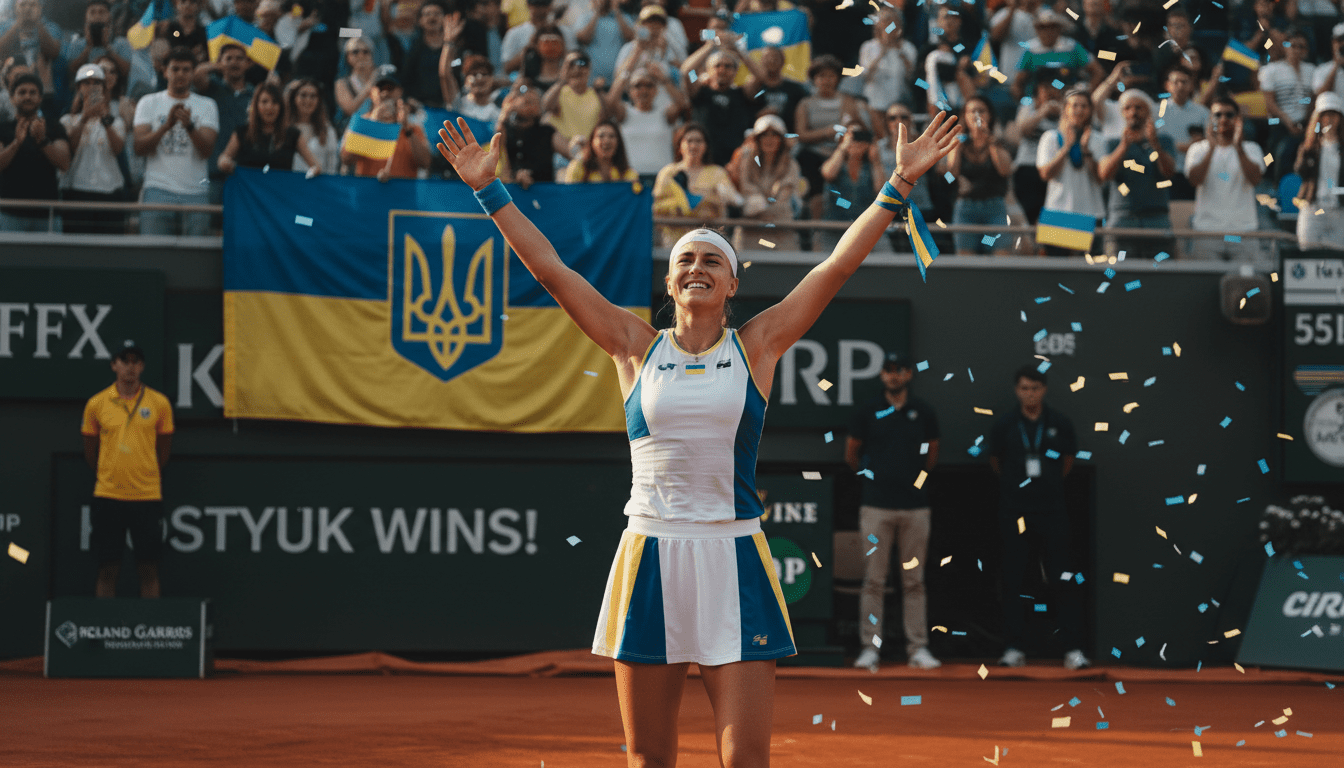
After the match Kostjuk addressed the crowd and dedicated the win to the Ukrainian people, invoking the phrase “Slava Ukraini” and showing visible emotion. She spoke of recent violence in her homeland and explicitly linked her result to the resilience of civilians enduring the conflict. The dedication drew a sustained ovation and visible Ukrainian flags from the stands, underscoring the intersection of sport and national identity in Paris.
Historic milestone for Ukraine at Roland Garros
Kostjuk’s progression marks the first time a Ukrainian woman has reached the semifinals at Roland Garros. The achievement elevates her standing in Grand Slam competition and represents a landmark moment for Ukrainian tennis on clay. Observers noted the historical significance both for the player and for a country striving for international recognition amid ongoing hardship.
Upcoming match against Mirra Andreeva
In the semifinal Kostjuk is scheduled to face 19-year-old Mirra Andreeva, who advanced after a dominant 6-0, 6-3 victory against Sorana Cirstea. The match-up pairs two young players at contrasting stages of their careers and has added attention because Andreeva represents Russia. Tournament build-up has already highlighted the sporting challenge as well as the geopolitical context surrounding encounters between athletes from the two countries.
Family home and personal testimony
Kostjuk has previously disclosed that a rocket struck within 100 meters of her parents’ house, an account she reiterated in Paris and illustrated with a photograph she showed to reporters. She said she aims to keep the realities of daily life in Ukraine visible whenever she can, using her platform to draw attention to civilian suffering. Teary at times, she framed her on-court efforts as part of a broader attempt to honor those affected by the conflict.
Tensions and protocol inside the tennis world
The tournament has seen Ukrainian players decline the customary handshake at the net when matched against Russians, a protocol choice that has drawn attention and sometimes debate. Tournament officials and peers have largely allowed players to follow their own practices amid the sensitive political backdrop. The interactions have become symbolic gestures that reflect wider international tensions, and they have factored into how matches between players of the two nations are perceived.
Kostjuk’s run now places her among the contenders for the title and raises questions about momentum, matchup dynamics, and the capacity of a young contender to convert an emotional surge into continued on-court success. The semifinal will test her endurance and tactical versatility against a powerful and confident opponent.
The win in Paris has transformed what began as a routine Grand Slam campaign into a narrative about sport, national identity and personal testimony, with Kostjuk’s voice amplifying stories from home as she pursues a place in the Roland Garros final.
