
Max Eberl Reflects on Future as Bayern’s Cockatoo Mascot Draws Spotlight
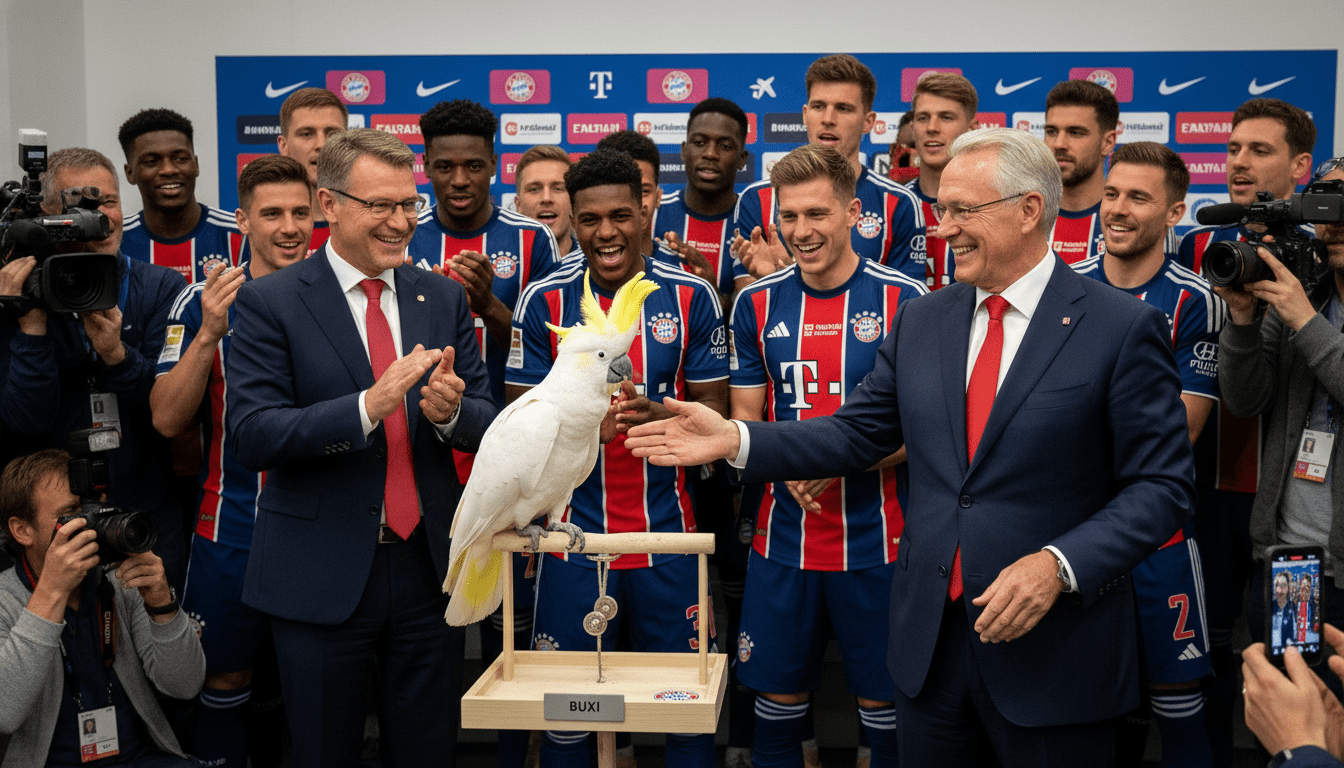
Max Eberl addressed doubts about his future at Bayern after the Cup win, while the team’s white cockatoo mascot – a travelling talisman – sparks curiosity.
Max Eberl stood in Berlin’s Olympiastadion after Bayern’s Cup victory and spoke candidly about doubts over his role with the club while an unlikely symbol of the team’s celebrations drew public attention. The white cockatoo figurine, long treated as a travelling mascot since a championship celebration at Munich’s Käfer restaurant, has become a conspicuous presence alongside traditional symbols like Berni the bear. Questions about who originally took the delicate bird from the restaurant and why have persisted, prompting calls for clarity even as Eberl navigates his immediate professional future.
Eberl addresses his position after the Cup final
Max Eberl acknowledged uncertainty about his future during post-match discussions at the Olympiastadion, framing his remarks around the club’s short-term objectives and his personal responsibilities. He did not signal any abrupt changes but underlined that decisions about sports leadership will align with Bayern’s strategic direction. His comments came amid public interest in both sporting matters and the lighter, more symbolic story of the team’s cockatoo mascot.
Eberl’s remarks were measured and focused on continuity, player development and maintaining Bayern’s standards on and off the pitch. He emphasised the importance of clear communication within the club’s hierarchy and with players, signalling that governance and tradition remain priorities as the club moves forward. The broader atmosphere in Berlin combined celebratory relief with pragmatic questions about the season ahead.
Origins of the white cockatoo as a club talisman
The cockatoo’s role traces back to a porcelain figure observed during Bayern’s televised title celebration at the Käfer restaurant in Munich. That figure, noted for its distinctive crest, became an impromptu charm for the squad and has accompanied the team to high-profile events despite its fragile nature. Over time the bird has evolved from a decorative curiosity into an emblem that players and staff reference during celebrations.
Club insiders describe the cockatoo as a quirky addition to a roster of symbols that includes established mascots and trophies. Its growing prominence reflects how informal rituals can be absorbed into a club’s public identity. The persistence of the cockatoo at matches and celebrations has prompted a mix of amusement and interest from the fanbase and media.
How the mascot entered the team’s narrative
Reports and anecdotes circulating among supporters suggest the cockatoo was taken from the restaurant during the original celebration and subsequently treated as a good-luck charm. The exact sequence—who physically brought it onto the team bus, which player first claimed it as a talisman, and whether the move was intended as a light-hearted memento—remains a point of curiosity. Club historians and archivists have noted that informal objects sometimes gain legendary status through repeated use and shared storytelling.
That uncertainty has not diminished the bird’s visibility; if anything, it has amplified attention to small rituals surrounding elite sport. While the club continues to celebrate traditional symbols publicly, the cockatoo’s narrative highlights the informal customs that develop inside team cultures. Fans have embraced the story, turning it into social media conversation and matchday chatter.
Calls for an official account and clearer chronicle
Some voices within the club and among supporters have urged an official accounting of how the cockatoo entered Bayern’s belongings, arguing that accurate records form part of any professional club’s history. Archivists say that documenting such moments preserves institutional memory and prevents confusion in future retellings. A clear explanation would also resolve questions about ownership and stewardship of a fragile porcelain object that travels frequently with the squad.
Club officials have not announced a formal inquiry, but the requests reflect a desire for transparency in how team traditions are adopted and maintained. For Bayern, which places emphasis on both heritage and contemporary management, reconciling informal rituals with official records could become a small but symbolic administrative task.
Bayern’s Cup night and the mood in Berlin
The team’s Cup win in Berlin mixed triumph with relief, and the atmosphere around the squad was celebratory yet reflective. Players posed with trophies and mascots while staffers and officials navigated media attention on both sporting outcomes and lighter off-field incidents. For Eberl, the night provided a public platform to address immediate questions about performance and the club’s sporting direction.
Scenes from the stadium—trophies, singing supporters and the now-familiar cockatoo—underscored the interplay between ritual and results in elite football. While the trophy marked the conclusion of a competitive campaign, conversations sparked by small items can linger, shaping narratives in the weeks that follow.
Max Eberl’s future at Bayern will likely be decided through internal deliberations that balance sporting ambition and organisational stability. In the meantime, the white cockatoo remains a visible, if delicate, symbol of a club that mixes long-standing traditions with new, informal rituals. Fans and officials alike appear set to watch both processes—the administrative decisions about leadership and the light-hearted saga of the mascot—with equal curiosity in the coming weeks.
