
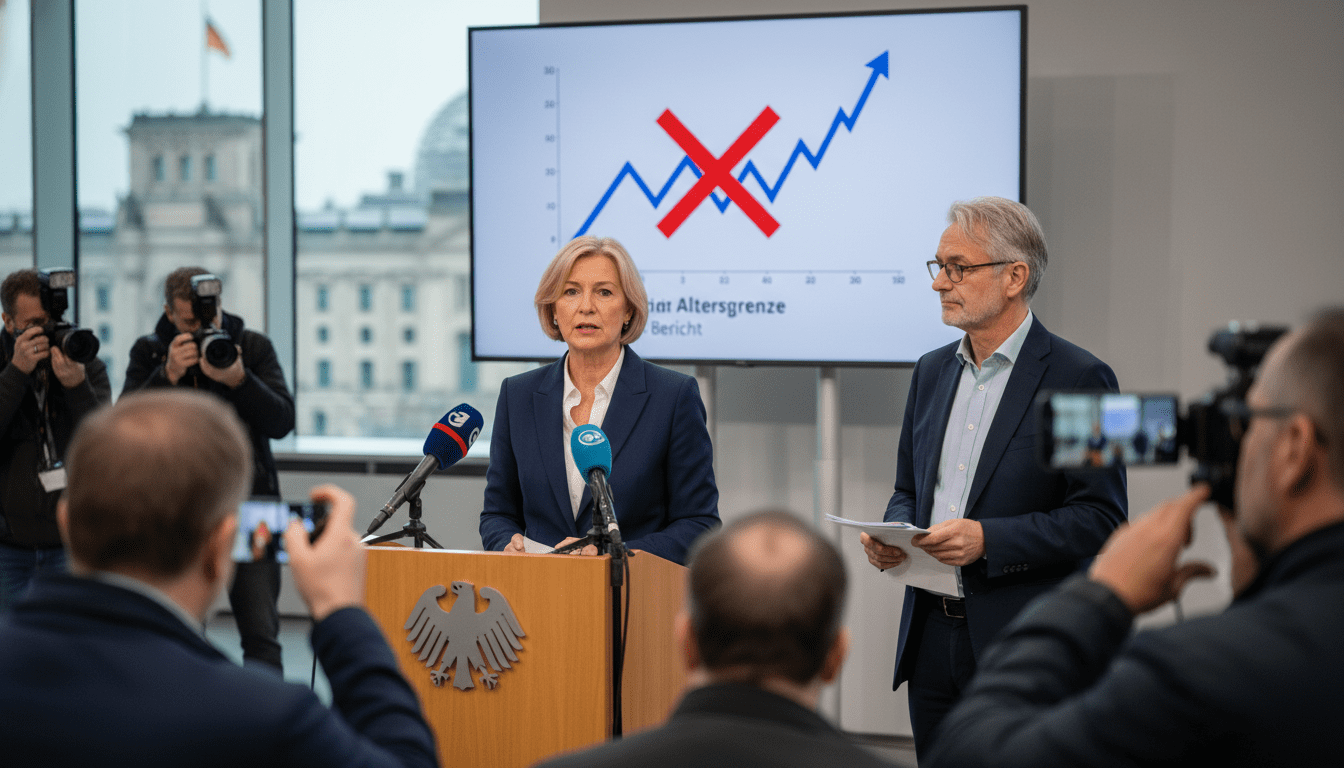
Germany’s pension debate intensifies as report on a proposed pension age of 70 is denied
Media report sparks debate as Germany’s pension commission denies recommending a pension age of 70; parties, unions and economists brace for June 30, 2026 proposals.
A media report suggesting the pension commission would recommend raising the pension age to 70 has set off a broad political and social debate in Germany, but the commission’s co-chair Constanze Janda has publicly rejected that characterization. Janda said she could not confirm the report and emphasized that commission work remains confidential while deliberations continue. The dispute has heightened attention on the commission’s deadline to present reform recommendations on June 30, 2026.
Report prompts immediate denials from commission leadership
Commission co-chairs insisted that no final decisions have been taken and that internal details remain confidential. Members contacted about the report pointed to strict confidentiality rules governing interim discussions and rejected the suggestion that a consensus recommendation is already settled. Commission sources said work is ongoing and that any proposals will only be released once the body finalizes its conclusions.
Commission mandate and timeline clarified
The pension commission began work in December 2025 and is tasked with producing reform recommendations to secure long-term pension financing and stable contribution rates for the next decade. Its formal deadline to publish is June 30, 2026, and members were instructed to seek consensus; however, the commission’s rules allow majority votes where consensus cannot be reached. Major topics under consideration include financing mechanisms, inclusion of additional groups in statutory insurance, and possible extensions of working life.
Federal ministries and the chancellery respond with caution
Government offices reacted cautiously to the leaked claims, declining to confirm any interim positions from the commission and reiterating that the body must reach collective decisions. The head of the federal chancellery described the media accounts as speculative and urged restraint in treating preliminary discussions as settled policy. The labor ministry emphasized trust in the commission chairs’ ability to deliver balanced recommendations reflecting the body’s expertise.
Political divisions emerge within the coalition and opposition
Political leaders expressed sharp differences over the prospect of a higher retirement age, with some centrist figures signalling openness to measures that extend working life and others condemning such steps as socially damaging. Green parliamentary leaders criticized leaks of internal debate as destabilising, arguing that premature disclosures create unnecessary alarm. Members of conservative ranks displayed a split: some warned that many people cannot physically work to a higher age, while younger conservative voices said longer working lives may be inevitable to protect pension levels.
Unions warn of social harm while some economists back policy options
Trade unions reacted strongly against a blanket increase of the pension age to 70, framing such a move as disproportionate and likely to deepen inequality and poverty among the elderly. Union leaders argued that policy should focus on measures to get more people into full-time employment and to address work-related burdens that prevent many from working longer. At the same time, several economic research directors privately and publicly argued that extending working life could help stabilise pension finances without raising contribution rates, while cautioning that any reduction in the pension level would exacerbate existing risks of old-age poverty.
Policy trade-offs and scenarios still under discussion
Commission deliberations are weighing technical options — for example, gradual increases linked to life expectancy, targeted exemptions for physically demanding occupations, or complementary measures to boost labor force participation among underemployed groups. Officials say proposals could combine changes to retirement age with adjustments to contribution rules or targeted social protections to shield vulnerable cohorts. Analysts note that the political acceptability of any package will depend on whether proposals are framed as part of a broader reform that balances sustainability with social protection.
The commission’s final report, due June 30, 2026, will be closely watched for concrete policy recommendations and the extent to which members achieved consensus. Until then, parties, unions and economic institutes are likely to intensify public messaging to shape the debate, and policymakers will face pressure to present options that both reassure younger generations about long-term pension security and protect those already close to retirement.
