
Markus Krösche Accepts Responsibility as Eintracht Frankfurt Plans Squad Overhaul and New Coach Hunt
Eintracht Frankfurt sporting director Markus Krösche admitted full responsibility Tuesday for a season that fell short of the club’s targets, saying the team failed to qualify for European competition and outlining plans to slim the squad and search for a new head coach. Krösche addressed his role in the club’s managerial decisions and internal problems, while committing to a restructuring that prioritises top-level starters and youth development. He said lessons have been learned and stressed he will remain in charge to steer the club back to international competition.
Krösche’s Public Admission and Immediate Consequences
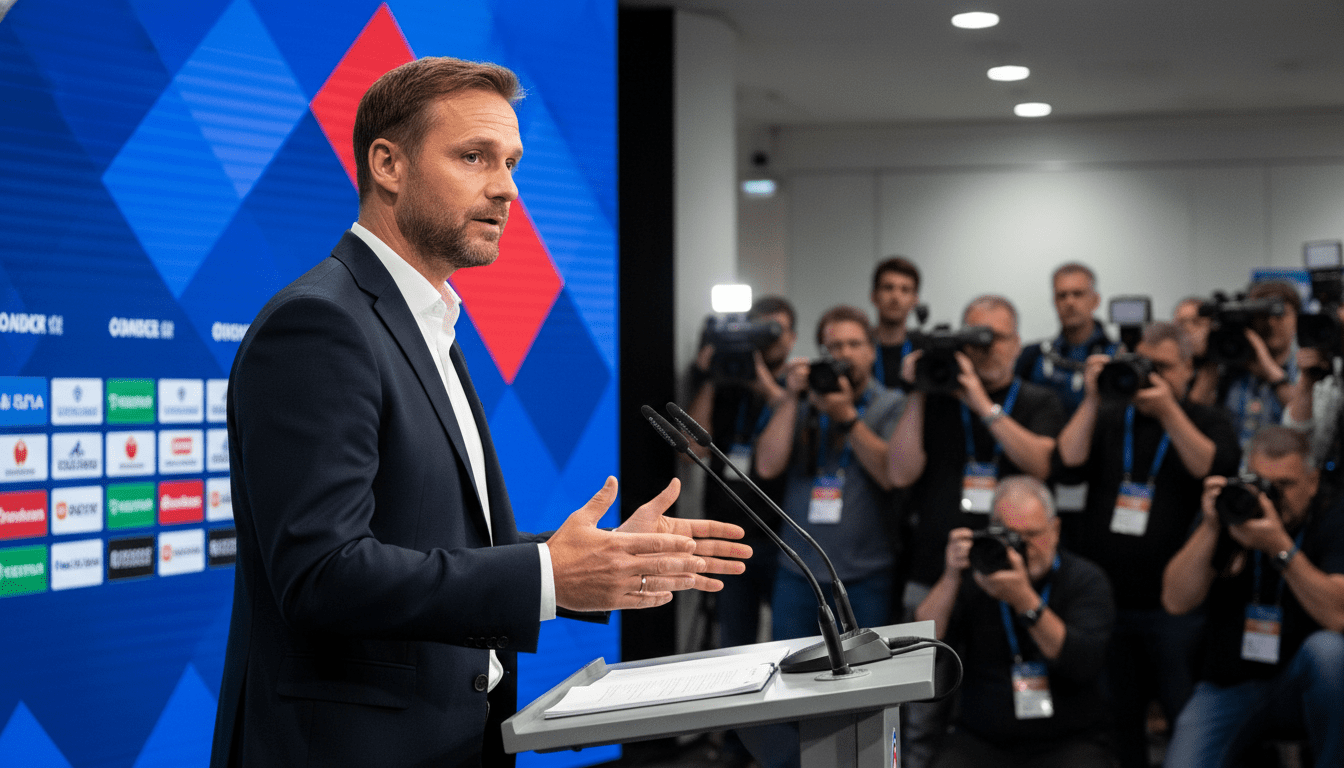
Markus Krösche opened the season-closing press conference by acknowledging that Eintracht did not achieve any of its stated objectives and that he bears full responsibility. He defended departing and interim coaches while conceding that some appointments and timing were mistakes that undermined the team’s chances. Krösche described sleepless nights and a personal reckoning with decisions that weakened cohesion across the first-team squad.
Krösche repeatedly emphasised accountability rather than deflection, saying he will not walk away from the club and that the failure has already prompted changes to how the sporting department will operate. He framed the setback as an opportunity to correct internal dynamics and improve decision-making ahead of the next campaign. The sporting director insisted there would be continuity in commitment, not a radical reversal of the club’s principles.
Assessment of the Albert Riera Appointment
Krösche defended his judgement in hiring Albert Riera, noting he had sought a strong character and a disciplinarian capable of imposing a clear identity on the team. Riera was appointed on February 2 and was placed on leave only after the final league fixture, a short tenure that Krösche said was affected by language barriers and the coach’s unfamiliarity with the Bundesliga. The sporting director acknowledged that those factors, combined with polarising public statements and unconventional line-ups, made consistent progress difficult.
While Krösche stopped short of personal criticism of Riera’s character, he accepted that his own decision to deviate from a long-held principle—never midseason appointing a coach who lacks language or league experience—was a misjudgment. He said external warnings and critical press coverage did not drive his choice, but admitted the outcome demonstrated the limits of an appointment made on instinct rather than strict alignment with club norms.
Interim Staff and Fixture Congestion Issues
Krösche also defended the club’s interim coaching cohort, including Dennis Schmitt and Alexander Meier, saying they were placed in an almost impossible sequence of fixtures that denied them meaningful preparation time. The sporting director pointed to a congested calendar that featured Champions League commitments sandwiched between domestic matches, which he said prevented sustained work with the squad. Eintracht lost all four matches in that window, a run Krösche attributed to the timing rather than the interim staff’s competence.
The explanation underscores a broader operational problem the club will seek to address: managing the first-team calendar and ensuring that any coaching transition allows for adequate training and tactical clarity. Krösche suggested future contingency plans will consider fixture sequencing and staffing flexibility to avoid repeating a similar collapse.
Planned Squad Restructure and Transfer Strategy
On the sporting and financial front, Krösche laid out a clear strategy to reduce squad size and concentrate resources on a core of top-tier players. The aim is to assemble 17 elite field players while filling three additional roster spots from the club’s youth ranks, both as a sporting statement and a budgetary necessity. Krösche acknowledged that Champions League participation had previously required a broader roster, but said the club must now be more selective and efficient.
Krösche also signalled a change in transfer policy: Eintracht will likely pursue at most one high-priced international youngster per window, and will instead broaden scouting into less-expensive markets and invest in developing talent from the academy and U21 team. He cited rising market values for players of the calibre of past recruits and the need to balance ambition with fiscal realism against wealthier competitors.
Culture, Communication, and Leadership Remedies
Beyond personnel moves, Krösche addressed internal culture and leadership shortcomings that contributed to the decline in team cohesion. He said instances arose where individual players treated high-profile matches as personal showcases rather than part of a collective mission, and that this created distance between staff, players, and supporters. Krösche accepted his own role in failing to maintain unity and promised measures to restore a stronger team ethic.
He emphasised that the next head coach must combine ball-possession principles with quick transition play, be capable of developing youth prospects, and instil high intensity across matches. The sporting director said a new coach should be announced promptly and must be a stylistic fit for Eintracht’s identity rather than a short-term experiment.
Eintracht now faces decisive weeks as Krösche implements a more concentrated squad plan, finalises a coaching appointment, and seeks to rebuild trust within the dressing room and with fans. The sporting director framed the work ahead as a process of correction and learning, promising to remain committed to returning the club to European competition while managing resources prudently.
