
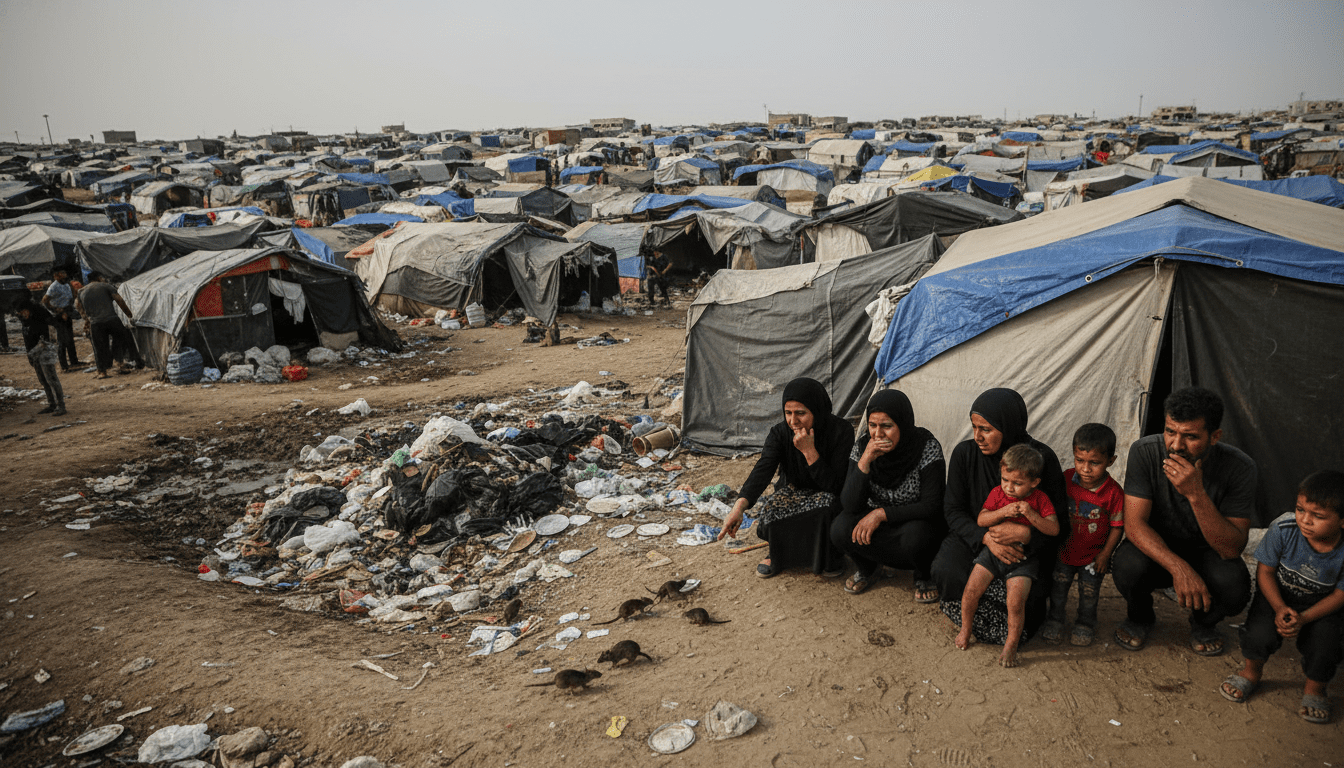
Al-Mawasi refugee camp in Gaza plagued by rat infestations and disease amid sanitation collapse
Residents in al-Mawasi refugee camp report rats eating food, widespread skin disease and inadequate waste disposal, straining humanitarian services in southern Gaza.
Residents report tent infestations and food loss
Residents of the al-Mawasi refugee camp in southern Gaza say rat infestations have become a daily crisis, contaminating food supplies and rendering stored staples unsafe. Young people and parents described hanging rice and flour from tent rafters only to find rodents gnawing through wood and canvas to reach provisions. These accounts were given while people waited at a Medical Aid for Palestinians‑supported primary healthcare centre in Khan Younis, where clinicians are seeing secondary health effects of the breakdown in shelter conditions.
The testimonies paint a picture of families forced to throw away basic foodstuffs and ration what little remains, worsening hunger and dependence on aid. Camp residents described the expense and impracticality of upgrading shelters, noting that many cannot afford more durable structures to keep vermin out. The combination of extreme poverty and damaged living space leaves households exceptionally vulnerable to contamination and nutritional shortfalls.
Children suffering skin infections and flea infestations
Multiple parents and teachers reported children waking with flea bites, rashes and skin lesions that interfere with sleep and schooling. Caregivers said over‑the‑counter creams provide only temporary relief and that there is almost no access to effective dermatological treatment inside the crowded displacement sites. Teachers working in makeshift education initiatives also reported rashes among staff and schoolchildren, affecting classroom attendance and learning conditions.
Medical staff at the Khan Younis clinic confirmed an increase in skin complaints linked to overcrowding and poor hygiene, and warned that untreated conditions can lead to secondary infections. Health workers described the strain on limited supplies as they try to treat symptoms while underlying causes — pests, filth and inadequate water and sanitation — remain unaddressed. Families recounted sleeping outside tents to avoid bites, a measure that exposes them to weather and security risks.
Sanitation infrastructure has effectively collapsed
Residents said the camps are dangerously overcrowded and lack functioning sanitation infrastructure, including safe toilets and reliable waste collection. People described having to bury refuse or discard it in nearby fields because designated disposal routes are inaccessible or lie inside militarised areas. That proximity to active zones makes routine waste removal both dangerous and impractical, compounding contamination risks.
The absence of sewage control and clear waste management pathways increases the chance of waterborne and vector‑borne diseases spreading through the camp population. Community members expressed constant anxiety about the placement and safety of latrines and said communal facilities are overflowing or unusable. The failure of basic services undermines public health interventions and limits the effectiveness of any medical response.
Humanitarian clinics stretched thin in Khan Younis
Healthcare providers operating in Khan Younis report rising demand for treatment of wound infections, skin disease and symptoms consistent with gastrointestinal illness tied to contaminated food. The Medical Aid for Palestinians‑supported primary healthcare centre where residents gave testimony is one of the few accessible facilities in the area, and staff say resources are insufficient for the volume and complexity of cases. Clinicians warned that addressing symptoms without tackling overcrowding and sanitation leaves communities exposed to recurring outbreaks.
Aid organisations face logistical and security constraints that restrict the delivery of materials such as pest control supplies, clean water, hygiene kits and durable shelter components. Medical personnel described improvising care with limited medications and topical treatments, while referrals for specialised care are hampered by mobility and access barriers. The scale of need reported by families suggests a gap between emergency healthcare provision and the preventive interventions required to stop disease spread.
Community coping mechanisms reveal desperation
Camp residents described makeshift coping strategies including hanging food, sleeping outdoors, and burying waste — tactics that offer limited protection and carry additional hazards. People said communal solutions are difficult to sustain, because tent structures are not rodent‑proof and because many households lack the financial means to make even minor improvements. Teachers and parents emphasized the psychological toll of living in constant fear for children’s health and safety.
Those interviewed stressed that temporary fixes cannot replace systemic improvements in shelter, sanitation and waste management. Several called for urgent delivery of pest control, safe storage containers, and durable shelter materials that could reduce contact between food and vermin. The testimonies underline how households are balancing immediate survival needs against longer‑term health risks.
Humanitarian agencies and health workers in southern Gaza are urging accelerated aid flows and secure, sustained access to address the converging crises of infestation, overcrowding and collapsing sanitation. Residents of al‑Mawasi say that without prompt, durable interventions the cycle of contamination and disease will continue to erode their already precarious living conditions.
Medical Aid for Palestinians provided images and statements dated May 2026 documenting the conditions described by families in the camp. These accounts highlight urgent public health concerns as residents seek immediate relief and longer‑term measures to restore basic hygiene, food safety and shelter integrity.
The situation in al‑Mawasi underscores a wider humanitarian challenge: when sanitation systems and shelter are compromised, secondary health crises follow rapidly and disproportionately affect children and the most vulnerable.
