
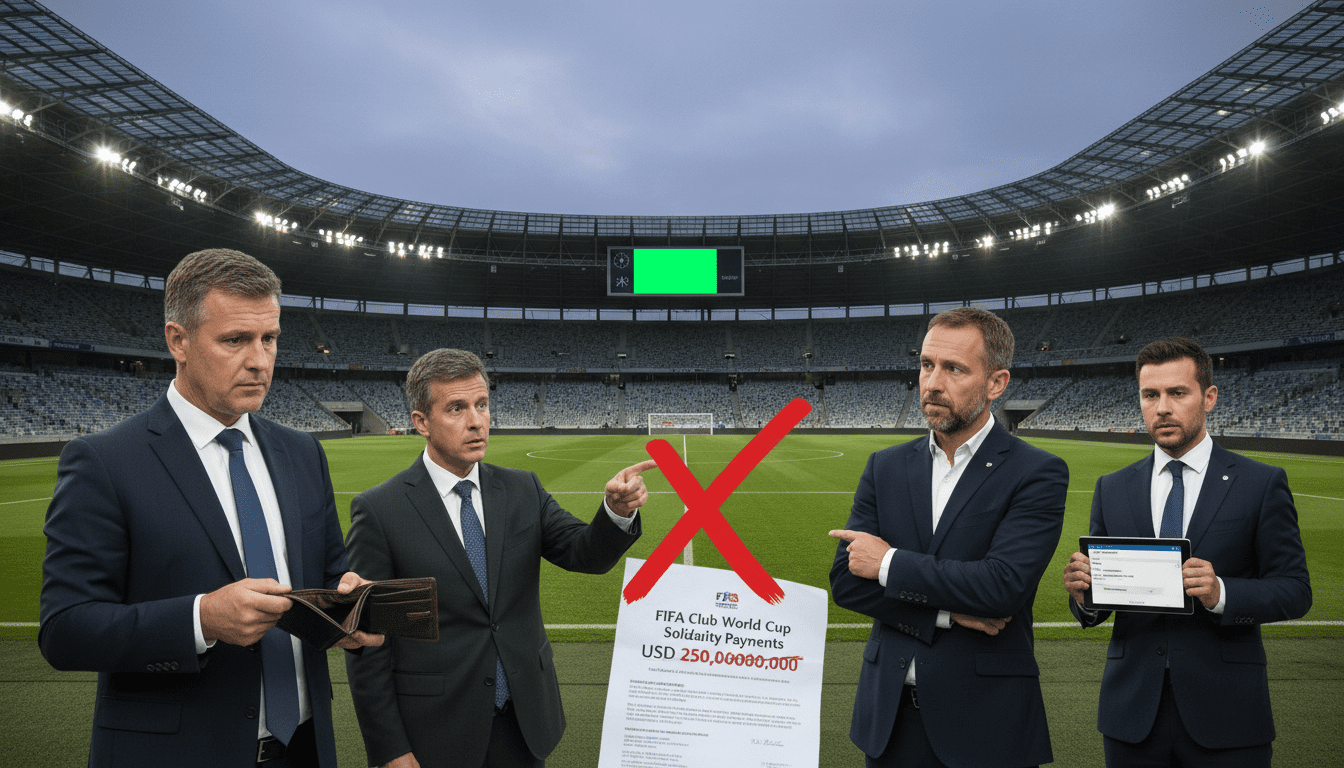
FIFA solidarity payments still unpaid more than a year after Club World Cup pledge
FIFA solidarity payments pledged after the 2025 Club World Cup have not been distributed, leaving clubs and leagues without the promised $250 million in aid.
The football world is facing rising concern after FIFA’s pledge to deliver $250 million in solidarity payments following the 2025 Club World Cup has yet to materialize. The promised FIFA solidarity payments were announced as part of a broader prize-money plan tied to the tournament, but more than a year after the pledge and months after the competition concluded, detailed distribution plans and transfers remain absent. Clubs and league representatives report growing frustration as top teams have already reaped large windfalls while most others await clarity.
FIFA pledged $250 million after Club World Cup in March 2025
In March 2025 FIFA announced a record prize pool for the expanded Club World Cup and said it would add a separate “comprehensive” solidarity program worth $250 million to support clubs worldwide. The pledge was presented alongside claims that the tournament generated unprecedented revenues and would benefit the broader club ecosystem through targeted transfers. Officials framed the payments as a corrective measure intended to reduce the competitive distortion created when a small number of clubs receive outsized payouts from global competitions.
Payments still not delivered more than a year later
Despite the announcement, the $250 million in solidarity funds has not been paid out, and FIFA has not published a clear timeline for disbursement. Requests from club and league officials for details on eligibility, allocation formulas and payment schedules have gone largely unanswered. The lack of transparency has left many federations and domestic competitions uncertain about how, when or whether they will receive any support that could blunt the financial advantage enjoyed by the tournament’s highest-earning participants.
FIFA cites implementation while reporting record revenues
In its own financial statements, FIFA described the Club World Cup as generating “beispiellose finanzielle Erfolge” and recorded multi-billion-euro revenues linked to the event. The organization has said the solidarity program is in an “implementation phase,” but it has provided few concrete milestones or public documents outlining the mechanism for distributing the funds. That mismatch — public claims of large revenues paired with scant operational detail on solidarity payments — has intensified calls for clearer accountability from member associations and clubs.
Top clubs earned large sums that widened domestic gaps
Several major clubs that participated in the Club World Cup received tens of millions of euros from the tournament, boosting their financial positions relative to domestic rivals. The disparity has revived longstanding concerns that global competitions can amplify inequities within national leagues when rewards accrue to a handful of teams. League officials argue that pledged solidarity payments were meant to mitigate precisely this effect, but the delay in delivery has done little to assuage fears about growing imbalance.
UEFA’s solidarity model offers a partial precedent
European football relies on a different solidarity system in which UEFA redistributes a portion of competition revenues to produce some parity across its member clubs. That model typically channels a fixed percentage of tournament income back to national associations and smaller clubs, although critics say the sums are insufficient to redress deeper market disparities. Comparisons to UEFA’s approach have been used to emphasize that redistributive frameworks require clear formulas, audited disbursements and predictable schedules — elements currently missing from FIFA’s announced plan.
Clubs and leagues press for concrete details and timelines
National associations and club representatives say they need precise criteria and dates to plan budgets and regulatory responses for upcoming seasons. Some stakeholders warn that continued silence could prompt formal inquiries at the level of confederations or compel domestic regulators to seek protective measures. Others say they will consider public appeals or collective action if FIFA does not publish a transparent distribution plan and begin transfers within a definable timeframe.
The delay in distributing the promised FIFA solidarity payments is raising fresh questions about governance and priorities at the sport’s global governing body. With substantial revenue figures reported from the Club World Cup and a high-profile pledge still unfulfilled, clubs and competitions across continents are demanding clarity on how and when the money will reach the clubs it was intended to help.
