
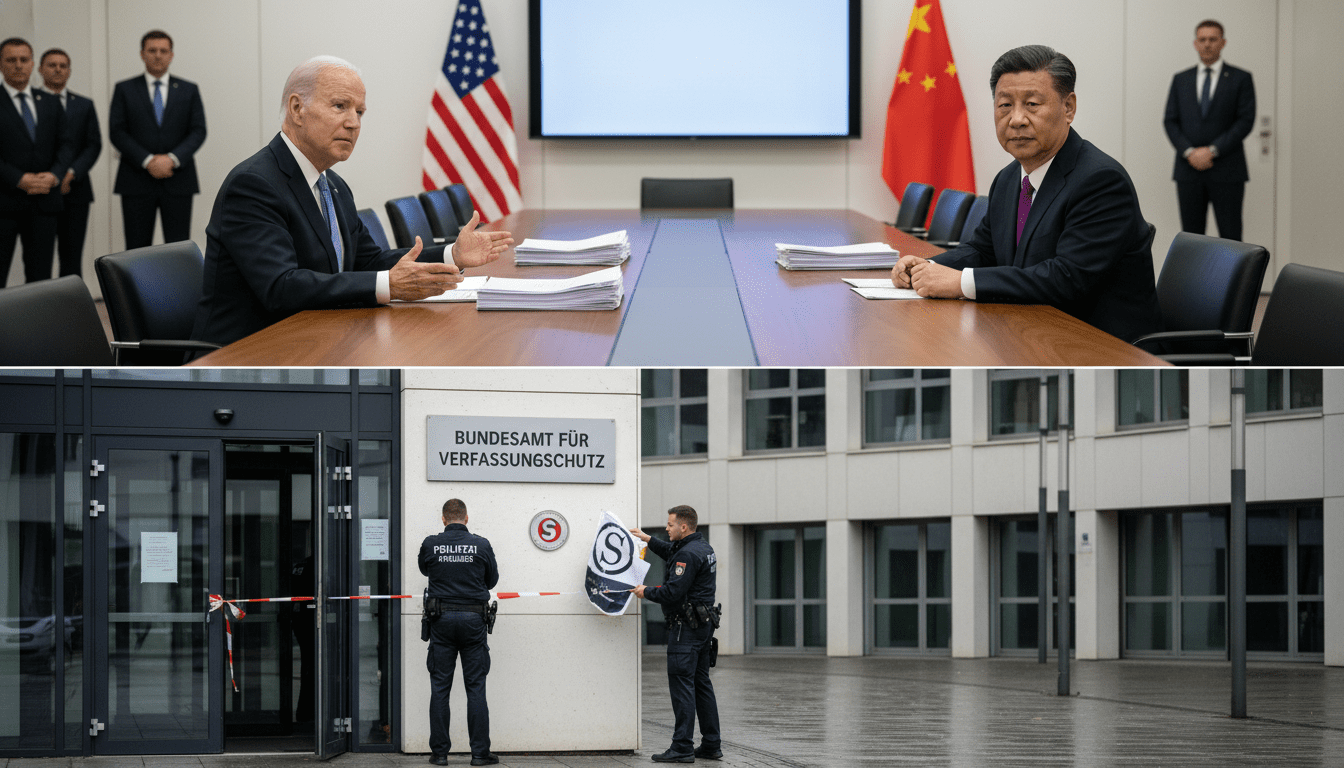
US-China summit ends ‘historic’ but yields little substance as Germany reacts
US-China summit produced few concrete outcomes on May 15, 2026, prompting debate in Berlin as Saxony-Anhalt’s AfD lead candidate touts rapid change and the Federal Office for the Protection of the Constitution drops Scientology monitoring.
The US-China summit billed as “historic” concluded on Friday, May 15, 2026, but delivered only limited, headline-level agreements and no major breakthroughs, observers said. The lack of substantive outcomes has prompted scrutiny in European capitals, including Berlin, where political actors seized on domestic questions. At the same time, Germany saw two significant developments: the AfD’s Saxony-Anhalt lead candidate publicly pressing for immediate policy change and the Federal Office for the Protection of the Constitution ending its formal observation of Scientology.
‘Historic’ summit described by officials ends with scant deliverables
Several senior officials characterized the two-day US-China summit as an important moment for dialogue, yet most announced items were framed around future talks rather than binding commitments. Delegations left without major new trade pacts, security guarantees, or enforceable timelines, according to public statements. Analysts in multiple capitals noted the optics of high-level engagement, but emphasized the gap between rhetoric and measurable outcomes.
Washington and Beijing emphasize process over immediate gains
Both Washington and Beijing presented the summit as a step toward stabilizing communication channels and managing rivalry, rather than as a venue for decisive policy shifts. Statements from each side highlighted mechanisms for continued dialogue on economic, climate and security issues while steering clear of contentious, binding measures. Diplomats cautioned that the summit’s value may lie in downstream talks, but that expectations of rapid change were unrealistic.
European capitals weigh implications for trade and security
European governments now face pressure to interpret what limited US-China progress means for continental policy, especially on trade dependencies and technology regulation. Brussels has signaled interest in coordinating responses that protect strategic industries without escalating tensions. In Germany, business groups expressed cautious relief at resumed high-level contact but urged follow-through on concrete measures to reduce supply-chain risk.
AfD lead candidate in Saxony-Anhalt calls for immediate ‘Day One’ changes
In regional politics, Saxony-Anhalt’s lead candidate for the Alternative for Germany (AfD) used the moment to promise swift action if elected, invoking a “Day One” agenda aimed at rapid regulatory and administrative shifts. The candidate framed the promise as responding to voters’ desire for quick, visible results and contrasted it with what he called establishment inertia. Opponents warned that sweeping measures announced on day one could bypass deliberative processes and raise legal tensions.
Federal Office for the Protection of the Constitution discontinues Scientology observation
Separately, Germany’s domestic intelligence authority announced it will no longer place Scientology under active observation, citing an internal reassessment of the organisation’s current activities. The decision ends a period of surveillance that had been justified by concerns over anti-democratic tendencies and social influence. Civil society groups reacted with mixed responses, some welcoming the move as recognition of changed circumstances and others urging continued vigilance.
Domestic debate intensifies over security, civil liberties and party strategy
The twin developments — foreign diplomatic ambiguity and shifting domestic policy — have sharpened debates across the German political spectrum. Parties on the left and center criticized the AfD’s immediate-action rhetoric as destabilizing, while critics of the surveillance change warned that removing observation could reduce transparency on potentially harmful organizational behavior. Legal experts noted the Federal Office for the Protection of the Constitution must balance societal freedoms with its mandate to protect democratic order.
Looking ahead, analysts say the US-China summit’s principal legacy may be procedural: restored channels and the possibility of incremental cooperation rather than headline-making accords. In Germany, the political reverberations of both the AfD’s campaign posture in Saxony-Anhalt and the intelligence service’s new stance on Scientology are likely to shape debates through the regional election season and beyond.
