
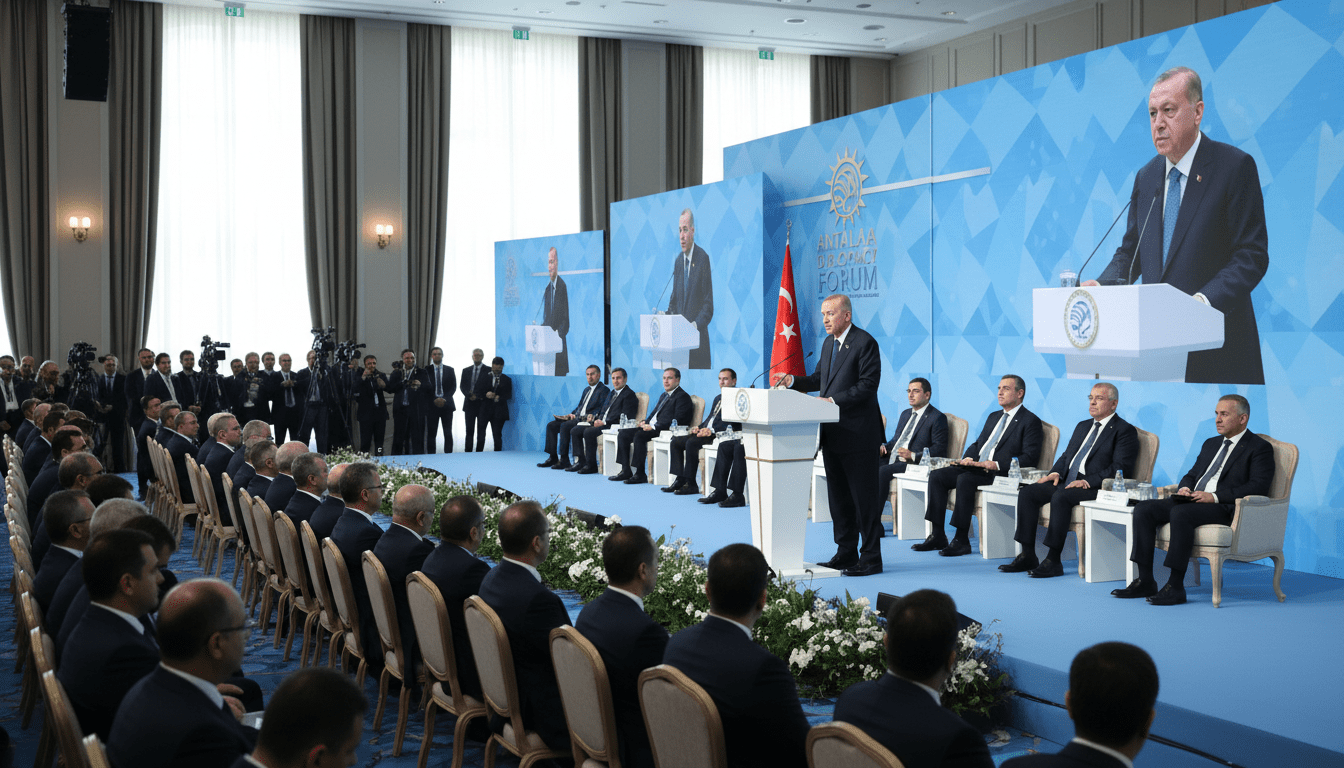
Erdoğan Opens Antalya Diplomacy Forum, Calling Turkey the “Key of Peace”
At the Antalya Diplomacy Forum this weekend, President Recep Tayyip Erdoğan opened the summit at the Antalya Convention Center and framed Turkey as a central broker for regional dialogue. Erdoğan told delegates the forum would bring “wisdom” to global diplomacy and argued that being present at the table determines who shapes outcomes. The remarks underscore the forum’s growing ambition as a platform where regional and global actors gather to discuss crises and cooperation.
Erdoğan frames Antalya Diplomacy Forum as ‘key to peace’
In his opening address, Erdoğan presented the Antalya Diplomacy Forum as a vehicle for constructive engagement, describing the forum as a “key of peace” and a source of hope for the future. He highlighted that the event, now in its fifth year, has become a Mediterranean-based platform where leaders, ministers and experts can convene. The language underscored Ankara’s intent to position Turkey as an indispensable interlocutor in regional diplomacy.
Erdoğan’s rhetoric tied the forum’s legitimacy to physical presence, echoing a familiar maxim of diplomacy: decisions are made by those who are in the room. That premise framed not only the tone of his speech but also the political logic underpinning the summit’s structure and invitations. The implication was clear: attendance confers influence, and the forum seeks to draw the right mix of participants to shape outcomes.
Attendance, voices and the “decisions are made by those in the room” maxim
Organizers assembled a mix of government officials, former statesmen, policy analysts and civil society figures to populate panels and bilateral meetings across the Convention Center. The diversity of formats — plenaries, closed-door sessions and one-on-one dialogues — reflected an effort to create both public signals and private negotiation space. That design amplifies the idea that presence enables both visibility and behind-the-scenes bargaining.
However, the maxim also highlights an unavoidable diplomatic tension: who is invited, and who remains absent, determines which perspectives will inform decisions. The prominence given to being “in the room” drew attention from observers who say that forums of this kind can both broaden conversation and entrench existing power dynamics. Organizers face the balancing act of widening the table while preserving the space for candid diplomacy.
Turkey’s Mediterranean positioning and diplomatic aims
Hosting the forum on the Turkish Mediterranean coast is part of an explicit strategy to anchor Turkey’s diplomatic profile in a region marked by overlapping crises and rivalries. By situating the event in Antalya, Ankara emphasizes geographic proximity to conflicts and cooperation areas ranging from the Eastern Mediterranean to the Middle East and North Africa. That proximity can help Turkey convene actors with immediate stakes in regional stability.
Ankara’s framing of itself as a “key of peace” carries policy implications beyond rhetoric: it signals a bid for broker status in disputes where Turkey holds leverage or contact channels. The forum provides an opportunity to translate diplomatic showmanship into concrete initiatives, whether through confidence-building measures, mediation talks, or coordinated relief efforts. For Turkey, success will be measured by whether the gatherings generate practical follow-through rather than only high-profile statements.
Agenda highlights and expectations at the Antalya Convention Center
Panels at the forum addressed an array of topics, from security challenges and migration to energy cooperation and multilateral institutions. Organizers emphasized problem-solving sessions intended to move discussions from analysis to actionable proposals. That format aims to attract attendees who seek both public exposure and targeted, solution-oriented exchanges.
Beyond panels, bilateral and multilateral meetings scheduled on the sidelines have been a central draw for participants looking to negotiate quietly or test diplomatic openings. Those private conversations often determine whether summit rhetoric translates into policy shifts. The real test for the Antalya Diplomacy Forum is whether it can foster agreements or working groups that endure after delegates disperse.
Debate over inclusivity and regional representation
Despite broad participation, critics pointed out that summits necessarily reflect choices about who shapes the conversation, and those choices can reinforce existing fault lines. Questions of inclusivity — which countries, non-governmental actors and dissenting voices are represented — remained central to post-session commentary. Observers urged organizers to balance geopolitical imperatives with efforts to include underrepresented perspectives.
Proponents counter that a pragmatic mix of state and non-state participants can produce effective outcomes when managed carefully. They argue that the forum’s strength lies in combining official negotiation with expert analysis and civil society input. The challenge for Antalya’s hosts will be sustaining that balance while avoiding the perception that influence is granted only to the most powerful attendees.
Concluding paragraph without title
As the Antalya Diplomacy Forum concluded its packed schedule this weekend, the event underscored both the opportunities and limits of conference diplomacy: gathering the right people can catalyze discussion, but presence alone does not guarantee resolution. Erdoğan’s appeal to Turkey’s role as a “key of peace” sets clear expectations for Ankara’s post-forum diplomacy, while the outcomes will be judged by follow-up actions and whether the conversations held in Antalya translate into concrete cooperation.
