
France says European mine clearance could escort ships through Strait of Hormuz
France says European mine-clearance capacity could escort ships through the Strait of Hormuz; a Paris summit of about 30 countries will debate the plan.
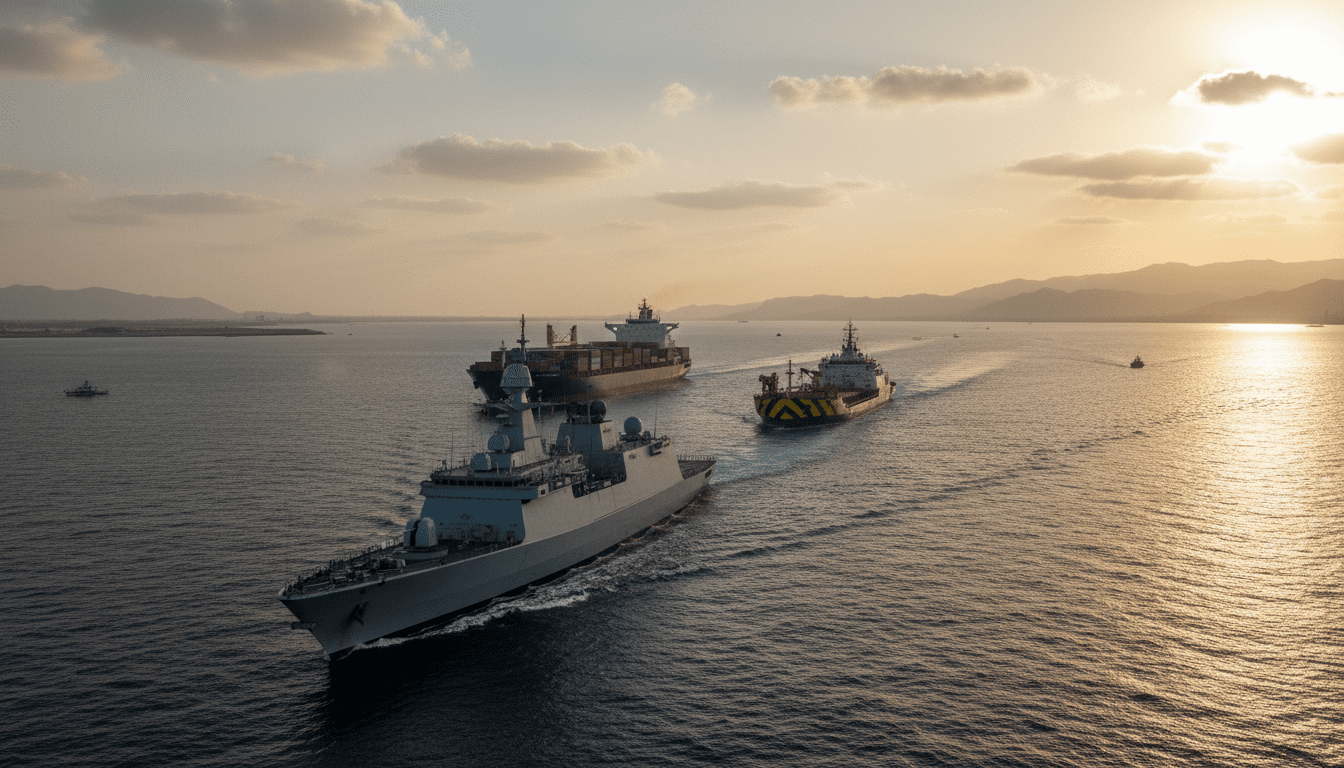
France’s defence minister signalled on Friday that European countries have mine-clearance capabilities that could be used to secure commercial traffic through the Strait of Hormuz. The proposal to provide non-offensive escort services for merchant vessels is set to be discussed at an international summit convened in Paris on Friday, April 17, 2026. French and British officials are co-hosting the talks, which Macron’s office says will include roughly 30 countries from Europe, the Middle East and Asia.
French Defence Minister’s statement
Catherine Vautrin told a French television station that European navies possess the capacity to clear mines and provide fully supported escort services to protect shipping in the strait. She stressed that any escort operations discussed would be defensive in nature rather than offensive. The minister framed the capability as a technical and protective measure intended to ensure safe passage for civilian vessels.
European countries identified as contributors
Officials identified Belgium, the Netherlands and France among the European states with relevant mine-clearance assets and experience. Those contributions could include specialized mine-countermeasure ships, remotely operated systems and coordination support for merchant convoys. European governments have in recent years invested in such capabilities for operations in contested waterways and humanitarian mine-clearance missions.
Paris summit and international attendance
French and British hosts have invited a broad slate of partners to the Paris discussions, with Macron’s office indicating about 30 countries will attend. Invitations reportedly extend beyond NATO allies to include regional and Asian states with commercial and security stakes in Gulf shipping lanes. The summit’s agenda centers on proposals to protect commercial navigation while avoiding escalation in an already tense region.
Non-offensive escort concept and rules
French officials emphasised that proposed escort missions would be “non-offensive,” focused on mine clearance, route marking and protective passage rather than combat operations. Practical implementation would require clear rules of engagement, legal mandates and coordination with flag states and regional authorities. Planners will need to reconcile freedom of navigation principles with the need for protective measures on international sea lanes.
Implications for regional shipping and trade
Securing the Strait of Hormuz would have immediate significance for global energy and shipping markets, given the waterway’s role in transporting oil and goods from the Gulf. Escorting convoys could reduce disruptions for commercial operators and insurers, but would also require detailed planning on routes, timings and liability. The presence of international mine-countermeasure teams may reassure shippers while prompting diplomatic responses from states with regional interests.
Path to operational decisions
Delegates at the Paris talks are expected to weigh technical assessments, legal frameworks and offers of capability from participating countries before outlining next steps. Any move toward escorted transits would likely begin with reconnaissance, deconfliction with regional actors and coordination with maritime organizations and commercial operators. Officials said the summit is intended to be a forum for debate and agreement on whether and how to proceed.
The Paris meeting will test whether a coalition of European and international partners can translate mine-clearance capabilities into a workable escort plan that preserves maritime safety without worsening regional tensions.
