
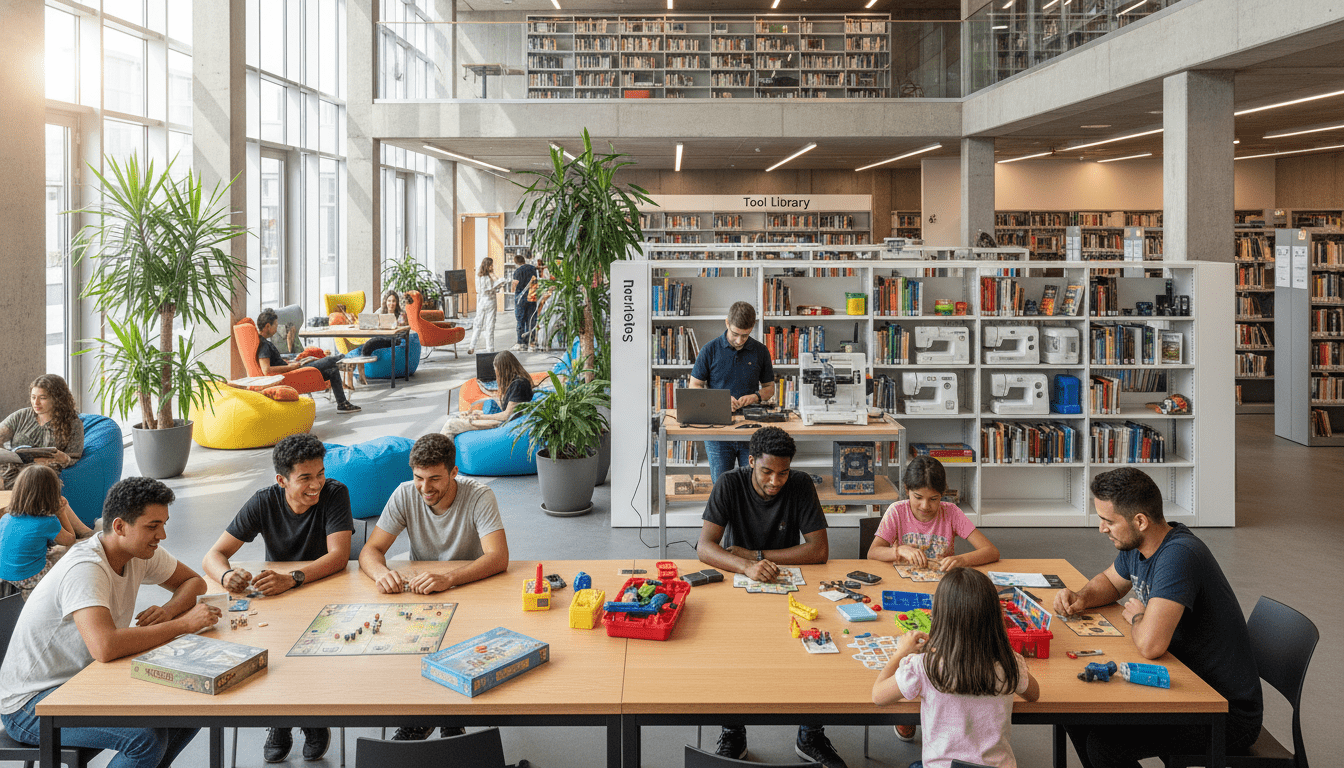
Berlin libraries broaden services with board-game lending, tools and sensory-friendly spaces
Explore Berlin libraries: public branches lending board games, tools and media, offering sensory-friendly spaces, community programs and low-cost membership.
Since local branches have widened what they lend and how they welcome visitors, Berlin libraries have become more than places to borrow books. City libraries now routinely lend board games, garden tools, DVDs and video games, and they promote quieter, sensory-friendly areas for people who need them. This expansion has shifted libraries’ role toward being active community hubs where practical borrowing and inclusive design meet public access.
Libraries increase practical lending alongside books
Several branches across Berlin now offer items traditionally found in private households, reflecting a strategic embrace of practical lending. Patrons can borrow board games to share with friends, garden tools to maintain community plots, and multimedia items for entertainment or study. These services are typically available for a small fee or included in standard membership, keeping access broadly affordable.
Library staff say the broadened collections reduce waste and support wider participation in cultural and leisure activities. By treating non-book items as loanable resources, libraries are extending public value beyond literature and research. The move also aligns libraries with circular-economy goals by promoting reuse and shared ownership.
Philipp Schaeffer Library in Mitte as a neighbourhood anchor
The Philipp Schaeffer Library in Mitte exemplifies the trend toward multifunctional public branches. Located off a courtyard entrance that connects to a nearby independent bookstore, the library hides an unexpectedly large interior and a well-equipped children’s floor. That lower level features cosy reading nooks, child-height tables and a broad selection of family-oriented games and picture books.
Parents and carers describe the branch as a dependable local resource where they can borrow games and media for home use without a big expense. The building’s layout encourages lingering: circulation spaces open onto reading areas, and small program rooms host story times and hobby evenings. These design choices reinforce the library’s role as a daily meeting point for neighbourhood life.
Staatsbibliothek and larger branches as dependable workspaces
Beyond neighbourhood branches, Berlin’s state libraries continue to serve as reliable study and work environments for residents and visitors. The Staatsbibliothek on Potsdamer Straße is frequently cited as a quiet, structured place suitable for long periods of focused work. It attracts researchers, students and freelancers who rely on predictable opening hours and extensive collections.
For people who find unfamiliar urban settings challenging, larger libraries can offer a steady, calming routine that supports concentration and wellbeing. Dedicated reading rooms, clear signage and regulated behaviour expectations make these institutions predictable spaces where people can plan work or reflection. Staff at major branches also provide information services that help users navigate large collections and access digital resources.
Design and accessibility: creating inclusive public spaces
Contemporary library planning in Berlin increasingly prioritises accessibility and sensory considerations alongside traditional services. Many branches now incorporate quiet zones, adjustable lighting, and furniture designed to reduce sensory overload. These changes aim to make public libraries usable by older readers, parents with young children and neurodiverse visitors alike.
Architectural updates sometimes include clearer wayfinding, step-free access and tactile signage to support visitors with limited mobility or visual impairments. Program rooms are calibrated to host a variety of events, from lively workshops to small-group study sessions, while quiet reading areas remain protected for uninterrupted use. Taken together, these measures reflect a civic commitment to making knowledge spaces open to all.
Board games, community programs and new social functions
Lending board games has become a deliberate strategy to attract different age groups and broaden libraries’ role as social venues. Game collections vary by branch but commonly include family games, strategy titles and cooperative options that encourage shared play. Libraries often pair these loans with on-site game nights, introductory sessions and informal tournaments.
Community programming has expanded beyond literary events to include maker nights, tool-lending demonstrations and multimedia workshops. These activities create regular reasons for residents to visit and to use library spaces in new ways. For newcomers and long-time residents alike, such programs offer structured social interaction while highlighting the practical value of public services.
How to borrow, join and use services across the city
Joining a Berlin library typically requires a short registration, proof of address and a modest annual fee or a free option for certain groups. Once registered, patrons can borrow books and eligible items, reserve materials across branches and often access digital collections from home. Many branches allow online account management to extend or reserve loans and to check opening hours.
Borrowing rules differ by item type: board games and tools may carry shorter loan periods or require a modest deposit, while books and DVDs follow standard lending cycles. Users are encouraged to consult their local branch for specific limits and to respect return deadlines and item condition guidelines. Staff are generally available to explain policies and to recommend age-appropriate or interest-based selections.
Libraries serving neurodiverse communities and routine needs
For neurodiverse residents, libraries increasingly function as safe and predictable environments where routine and calm are possible. Quiet reading rooms, sensory-friendly openings and staff training on inclusive service all make libraries more approachable for people with autism and related conditions. These accommodations are not replacement services but adjustments that broaden the public utility of library spaces.
Many visitors report that designated quiet zones and clear signage make it easier to plan visits and to find suitable workspaces. Regular programming that signals predictable timeframes — such as weekly study sessions or fixed hobby hours — can help reduce uncertainty for people who prefer routines. Libraries that publicise such features attract diverse users who seek stability and low-cost access to culture and tools.
In recent years, partnerships between libraries and community organisations have supported targeted outreach to families, newcomers and people with mobility challenges. These collaborations fund programming, expand collections and occasionally underwrite special loans or event series. The result is a web of services that link cultural access with social support and skills-building.
Practical tips for visitors who want to explore Berlin libraries include checking branch hours in advance, carrying valid ID for registration and asking staff about lesser-known lending categories. Visitors should also inquire about reservation systems that allow an item to be transferred between branches. Being aware of local rules for borrowing non-book items helps avoid unexpected fees and ensures a smooth experience.
City planners and library administrators say that future priorities will likely include expanding digital collections, increasing multilingual materials and developing more mobile or pop-up library services. These steps are designed to reach residents who cannot easily visit central branches and to respond to changing patterns of leisure and learning. Mobile lending and temporary exhibits have proven effective in other cities and are under consideration here.
Funding and staffing remain everyday challenges as libraries take on broader community roles. Municipal budgets and volunteer support both play parts in whether a branch can sustain expanded lending or run frequent programs. Nonetheless, the underlying public mandate persists: to provide access to knowledge and to support civic life affordably.
Visitor behaviour shapes how successfully new services function, and librarians emphasise courtesy, punctual returns and care for loaned items. Community trust grows when patrons treat shared resources responsibly and when branches enforce simple rules for use. That reciprocal relationship helps libraries maintain diverse collections without prohibitive costs.
As Berlin libraries evolve, they retain core strengths: free or low-cost access to information, spaces for study and encounter, and staff trained to assist a wide public. The addition of board games, tools and sensory-aware facilities has broadened their appeal without displacing traditional services. These changes reflect a deliberate effort to make libraries central to everyday urban life.
Public branches now serve as flexible civic assets where knowledge, leisure and practical needs intersect. For residents seeking low-cost entertainment, support with research, or a calm spot to work, Berlin libraries provide reliable options. The expansion of lending categories and thoughtful design adjustments underline an ongoing policy emphasis on inclusivity and reuse.
Whether you are a family looking for an affordable way to try new games, a gardener in need of a spade for a plot, or a student in search of a quiet desk for concentrated work, Berlin libraries offer resources that reach beyond shelves. Exploring local branches can reveal unexpected services and programs that make civic infrastructure more useful in everyday life.
Libraries that once focused almost exclusively on books are now visible community hubs that reflect changing public needs. Their role in lending practical items and supporting sensory diversity highlights how municipal services can adapt to serve citizens more comprehensively. As these shifts continue, Berlin’s libraries will likely remain pivotal to the city’s cultural and social ecosystem.
For anyone planning to visit, the first step is simple: find a nearby branch, register, and ask staff about the full range of items available to borrow. From board games that spark nights with friends to tools that keep shared gardens productive, public libraries in Berlin offer many ways to participate in city life.
