
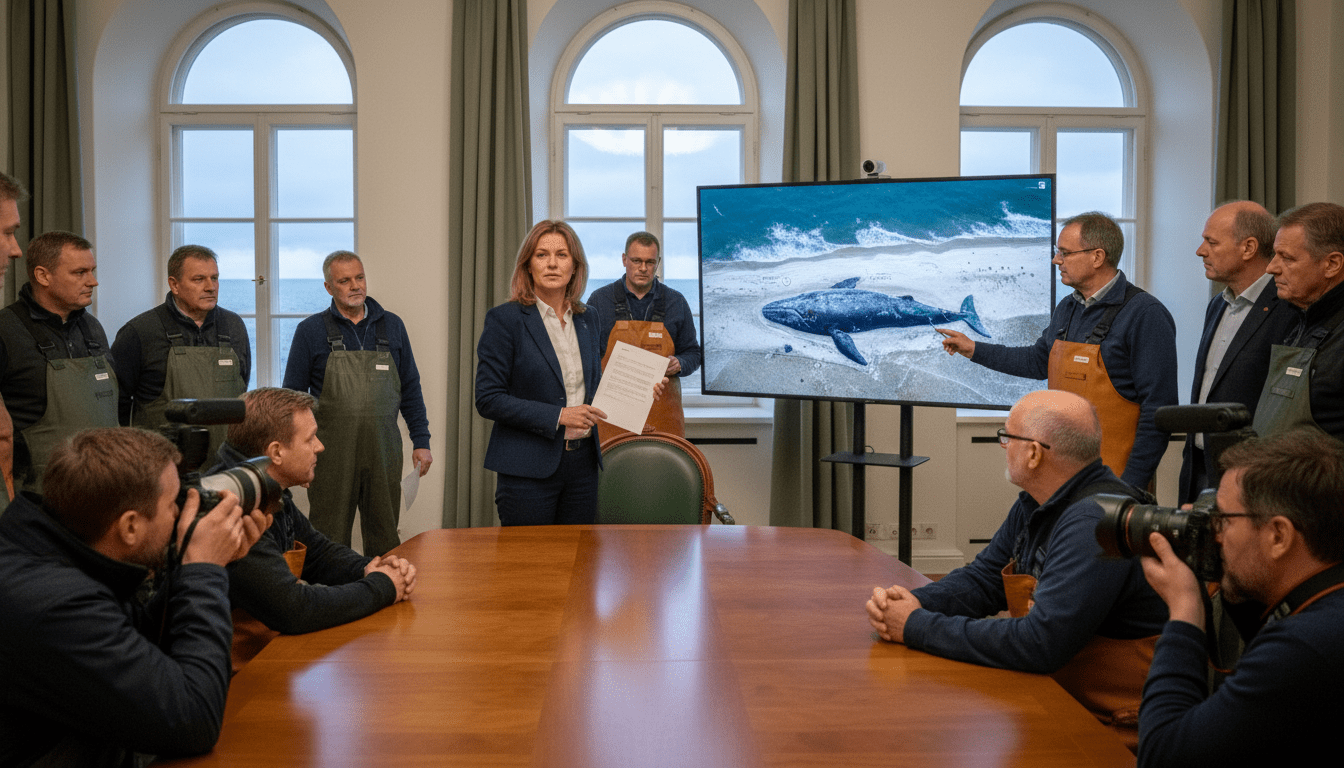
Wismar humpback whale ‘Timmy’ to be rescued after state approval for private operation
Mecklenburg-Vorpommern authorizes private rescue of the Wismar humpback whale ‘Timmy’, approving an air-cushion lift and pontoon transport to the North Sea.
The Wismar humpback whale known locally as “Timmy” will undergo a private rescue operation after Mecklenburg-Vorpommern’s environment minister signed off on a detailed recovery plan. The decision, announced at a press conference in Schwerin, authorizes a private initiative to attempt to raise the living animal, move it onto a transport platform and transfer it to the North Sea or beyond. The rescue concept was evaluated by authorities and granted conditional tolerance, with operational responsibility resting with the initiative’s organizers.
State minister grants permit for rescue
Environment Minister Till Backhaus said the government had reviewed the proposed method and would allow the private effort to proceed, provided safety and animal welfare conditions are observed. The minister framed the approval as tolerance of a privately led operation rather than direct state involvement, emphasizing that authorities had assessed the plan before consenting. Officials insisted the initiative must comply with any regulatory oversight and that final execution decisions remain with the rescue team.
Technical plan calls for air‑cushion lift and pontoon transport
The rescue concept envisages lifting the live humpback using inflatable air cushions, sliding the animal onto a reinforced tarp between two pontoons, and towing the assembly to deeper waters. Backhaus described a staged operation in which the whale would be supported to minimize pressure on its body while being moved, then transferred to open sea where rehabilitation or release would be attempted. Organizers say the method aims to reduce additional stress on the animal during handling, but experts caution such operations carry substantial logistical and welfare challenges.
Private backers to lead operation, state will tolerate action
Backhaus identified members of a private initiative as the proponents of the plan and said the state would “tolerate” their intervention. Among the organizers is Walter Gunz, a businessman known for founding a major electronics retail chain, who is reported to be involved in funding and coordinating resources. The minister made clear the initiative will bear responsibility for the operation’s planning, safety measures and any subsequent decisions about the animal’s fate, and that authorities will monitor compliance with legal and environmental standards.
Health history and location of the whale
The humpback, which has been observed stranded and weakened on several occasions, has been lying near the island of Poel in the Baltic Sea since March 31. Local observers and rescue teams have reported the animal in declining condition, prompting debate among marine veterinarians about the feasibility and ethical considerations of intervention. Until now, some experts advised that further handling could prolong suffering and that allowing a natural death might be the most humane option, while others argued that an attempted live rescue could give the animal a chance of recovery.
Immediate steps, timing and operational risk
Officials indicated the rescuers intend to begin preparatory work without delay, though exact timelines and operational details were not released at the press conference. Backhaus said the initiators would provide further information on equipment, personnel and contingency plans in the coming days, and that the state expects clear protocols for animal care, human safety and environmental protection. Marine rescues of large whales are complex, costly and risky; success depends on the animal’s health, sea and weather conditions, and the experience of the team conducting the operation.
Experts underline welfare and monitoring needs
Marine biologists and veterinarians stress that any intervention must prioritize the humpback’s welfare, including continuous veterinary assessment and clear criteria for aborting the attempt if the animal’s condition worsens. Transporting a live large whale involves physiological stresses such as muscle strain, dehydration and potential cardiovascular issues, which require on-site medical support and monitoring equipment. Authorities said they had reviewed the concept from a regulatory perspective but that clinical decisions would fall to the rescuers and any attending veterinarians.
The rescue plan also raises logistical questions about route, duration of towing and the receiving area in the North Sea or Atlantic, where deeper water and rehabilitation opportunities might exist. Organizers have suggested the Atlantic could be an option if the whale can be stabilized, but moving a large cetacean across long distances would multiply risks and require international coordination in open waters.
Public reaction in the region has been mixed, with community members and animal welfare supporters urging action on behalf of the whale, while some specialists continue to warn against interventions that lack clear prospects for success. Local authorities and environmental agencies say they will remain available to advise and to intervene if legal or safety thresholds are crossed during the operation.
Plans for salvage or recovery of the animal in the event of death were not detailed at the press event, and officials noted that previously proposed options had included leaving the animal to die with dignity or conducting necropsy work to learn more about the underlying cause. Backhaus said the state had accepted the private group’s proposal after reviewing its technical outline and risk mitigation measures, but that further information would be required before full operations commence.
The rescue initiative has pledged to release more specifics soon, including timelines, participating experts and the measures it will take to protect both the animal and responders. Meanwhile, monitoring of the stranded humpback near Poel will continue, and authorities have urged the public to give space to the animal and to avoid actions that could hinder professional efforts.
