
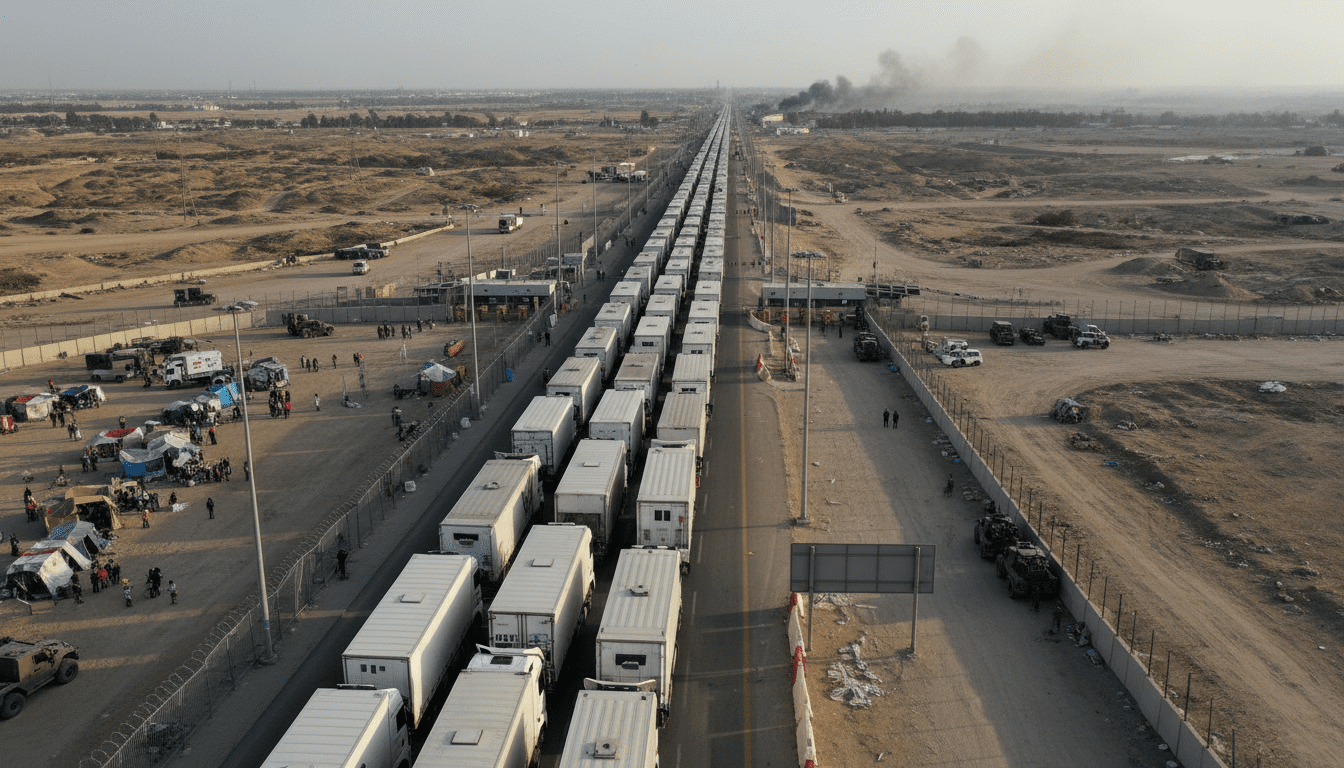
Experts warn of Gaza famine as aid flows fall far below ceasefire targets
Aid flows into Gaza are well below ceasefire targets, prompting experts to warn of a Gaza famine as crossings remain closed and medical evacuations are stalled.
Gaza is facing a deepening humanitarian crisis as aid deliveries and fuel imports fall far short of terms agreed under the October 2025 ceasefire, prompting economists and officials to warn that the enclave is being driven toward a deliberate famine. The main indicators — sharp reductions in truck crossings, collapsing bread production and soaring unemployment — have combined with renewed Israeli military action to produce what local experts call a compounded crisis. Gaza authorities report thousands of violations and mounting civilian deaths while international relief operations shrink under constrained access.
Aid deliveries fall far short of the ceasefire commitments
Gaza’s Government Media Office reports that just 41,714 aid and commercial trucks have entered the territory over the past six months, a fraction of the 110,400 stipulated by the ceasefire. Fuel deliveries are even more limited, with only 1,366 fuel trucks recorded against an expected 9,200, according to the same tally.
Daily entry logs underline the shortfall: on April 13 only 102 aid trucks and seven fuel trucks reached Gaza, alongside 216 commercial vehicles, while the following day saw similarly low totals. Key crossings such as Zikim and Kissufim have been closed at times, channeling all permitted traffic through Karem Abu Salem and creating severe bottlenecks for life‑saving supplies.
Counting practices mask the scale of shortages
Palestinian economic analysts say official truck counts can be misleading because of how cargo is logged and transferred at the crossings. Mohammed Abu Jayyab, an economic expert in Gaza, explained that large Israeli trucks are frequently offloaded into several smaller Palestinian vehicles on the Gaza side, a process that can inflate entry figures when each smaller vehicle is counted separately.
Officials also say restrictions on mixed loads and the absence of specific requirements for pallet counts allow trucks to be logged as full while carrying far less aid than expected. These logistical practices, critics argue, permit compliance on paper while limiting the actual volume of food, fuel and medical supplies reaching civilians.
Market collapse and rising food insecurity
The shortage of supplies has translated quickly into collapsing markets and rising prices, intensifying food insecurity across Gaza. Bread production has fallen to roughly 200 tonnes per day, well below the estimated 450 tonnes needed to meet basic consumption, Gaza officials said, and staples such as tomatoes have more than doubled in price in weeks.
Unemployment is reported at around 80 percent, and local authorities estimate the loss of more than 160,000 jobs across industrial, agricultural and commercial sectors. Economists warn that even when goods reach local markets, the vast majority of families lack the purchasing power to buy them, creating what one expert described as a “compounded famine” driven by both shortages and loss of income.
Medical evacuations and Rafah restrictions
The humanitarian squeeze extends to urgent medical cases. The ceasefire envisaged the opening of Rafah for medical evacuations, but access has been severely restricted in practice. Over the past six months, only 2,703 people were reported to have crossed through Rafah against an expected 36,800, a compliance rate of roughly 7 percent, officials say.
As a result, only a small fraction of those in need have been allowed to leave for life‑saving care; Gaza authorities put the permitted evacuees for severe and chronic cases at about 8 percent of those who applied. The World Health Organization has estimated that roughly 18,000 people remain in Gaza awaiting treatment abroad, straining hospitals already stretched by conflict and shortages.
Escalation of hostilities and toll on civilians
The restricted flow of aid has coincided with sustained military operations that Gaza officials say have violated the ceasefire thousands of times. Local authorities report some 2,400 military violations since the truce took effect, and they attribute hundreds of civilian deaths to renewed strikes. Gaza health and media offices cite more than 72,000 fatalities in the wider conflict period beginning October 7, 2023, figures that have been repeated by local sources.
In a recent uptick of violence, Israeli strikes killed at least 11 Palestinians, including two children, in separate incidents, and observers note that hostilities intensified during regional tensions earlier this year. The deaths of journalists and aid workers have also been reported amid the shrinking space for relief operations.
Appeals to guarantors and the international community
Gaza officials and economic ministers have issued urgent appeals to the guarantors of the ceasefire and the broader international community to pressure for immediate, sustained opening of crossings and clear, enforceable delivery standards. Local leaders warn that the withdrawal or scaling back of major relief agencies, including components of the World Food Programme, represents a grave risk to the remaining relief infrastructure.
Authorities have called for transparent monitoring of shipments, the reopening of additional entry points, and protection for civil regulatory bodies that oversee markets and distribution. They argue these steps are essential to prevent a full collapse of the humanitarian system and to halt the slide toward widespread hunger and disease.
The combination of restricted logistics, reduced purchasing power, and ongoing military pressure has transformed shortages into a systemic collapse that experts say requires urgent corrective action to avert a catastrophic deterioration in humanitarian conditions.
