
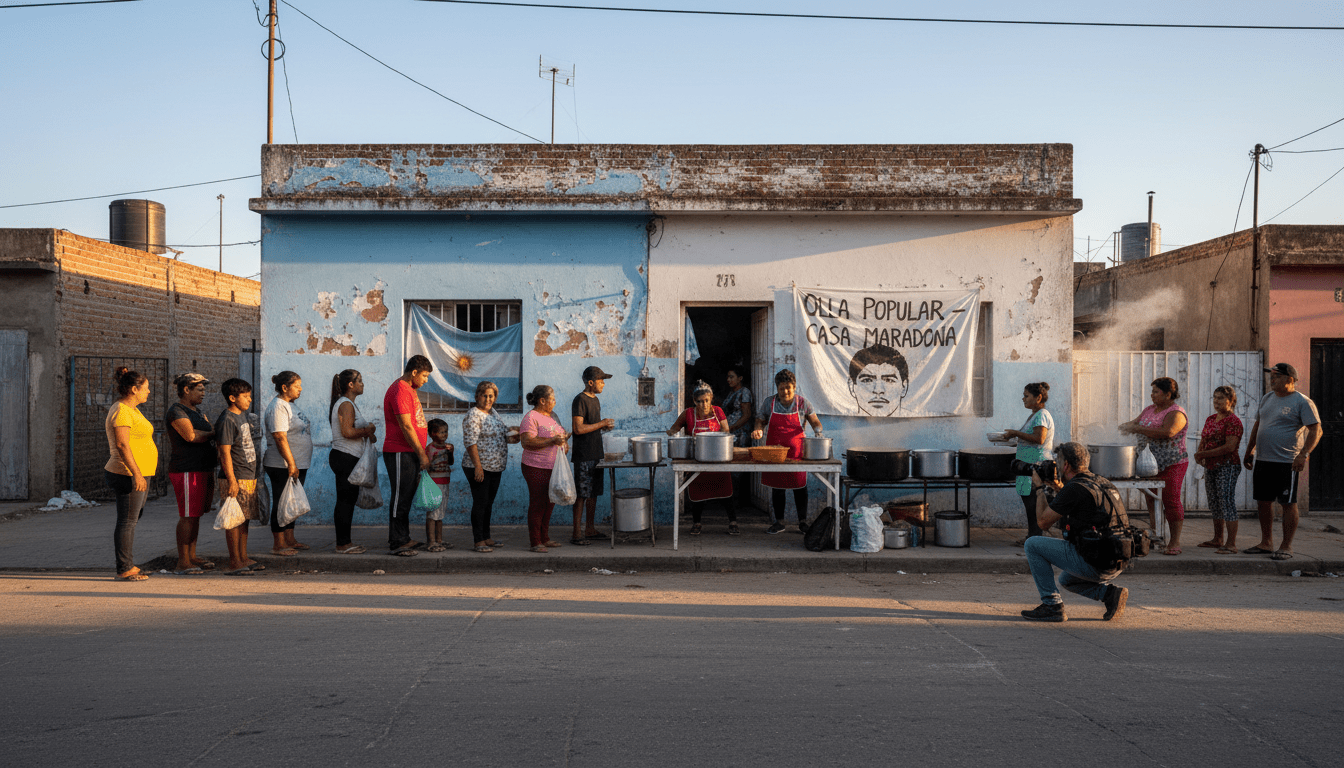
Maradona childhood home becomes soup kitchen in Fiorito as residents reel from Milei austerity
Maradona childhood home in Fiorito becomes a soup kitchen serving residents hit by President Javier Milei’s austerity, as a trial over his care opens.
The late Diego Maradona’s childhood home on 523 Amazor Street in Fiorito has been repurposed as a community soup kitchen, offering meals and clothing to neighbours affected by recent austerity measures. The Maradona childhood home now functions as a focal point for local relief as volunteers cook large pots of stew in the yard and distribute food to families waiting at the gate. The initiative has drawn residents who say the economic shifts under President Javier Milei have sharpened everyday hardships across the suburb.
Community Converts Home Where Maradona Grew Up
Volunteers in Fiorito began using the single-story brick house as an informal aid centre, filling containers carried by neighbours with chicken stew and other meals. The property, decorated with murals celebrating Maradona’s career, has been opened to anyone in need with no formal dining space inside. Organisers say the project is intended as a direct, practical response to mounting local need rather than as a long-term institutional solution.
Cooking Over Open Fires, Distributing at the Gate
Food is prepared in large cauldrons over open flames in the backyard and handed out in bags at the entrance to the house. Cumbia music, the late captain’s preferred soundtrack, plays in the background as volunteers work through the queues. The operation runs without seating or formal facilities, reflecting both the urgency of demand and limited resources available to organisers.
Residents Link Aid Demand to Economic Shifts
Recipients of the soup kitchen’s services describe a squeeze on household finances since Milei’s administration implemented rapid market reforms following his December 2023 election. One regular, who collects cardboard and scrap metal to make ends meet, said he only began seeking help after changes to prices and jobs made work less predictable. Neighbours describe falling consumption, shuttered local businesses, and growing lines for basic assistance across the area.
Local cooks and volunteers stress that need is widespread and visible day to day. A long-time volunteer noted that many people queue with containers and leave with essentials, underscoring the gaps in municipal services for lower-income families. Community organisers say the modest aid they provide is a stopgap while residents seek more stable solutions at municipal and national levels.
Central Bank Data and Local Business Closures
Economic indicators cited by residents and local commentators point to mixed outcomes since the reforms, with some statistics showing reduced inflation but others signaling broad financial strain at the family level. Organisers and small-business owners in the neighbourhood report a sharp downturn in local spending, and they link that shift to a notable number of closures among small firms. The combination of increased imports and reduced domestic consumption has compounded pressures on shelf-stable incomes in working-class districts like Fiorito.
Trial Over Maradona’s Final Medical Care Opens
As the soup kitchen operates, a criminal negligence trial has commenced against a seven-member medical team involved in Maradona’s care after brain surgery, bringing renewed national attention to the football legend’s final months. The proceedings revive debate about the circumstances surrounding his death in 2020 at age 60 and about medical responsibility in high-profile cases. For many in Fiorito, discussions about the trial run alongside practical questions about how best to honour the player’s memory through service to the needy.
Personal Stories Highlight Local Hardship
Neighbours say the repurposing of the house resonates because Maradona himself often recalled the extreme poverty of his youth in Fiorito, where running water and paved streets were once scarce. A regular beneficiary described the emotional weight of receiving a meal where Maradona once lived, calling it “special” because of the player’s own history of hunger. Cooks working at the site say they believe Maradona would have approved of the charity being done in his name and that the house’s new role keeps a connection to his past alive.
Murals and Memory Keep Community Ties Strong
Around 50,000 residents live in the dense patchwork of modest brick homes that make up the Fiorito neighbourhood, and many of the community’s walls are painted with images of the number 10. Those murals have become backdrops for the daily rhythm of aid distribution and for conversations about legacy and responsibility. Local organisers hope the visibility of the project will inspire similar grassroots efforts in nearby districts confronting comparable strains.
The conversion of Maradona’s childhood home into a soup kitchen has become both a practical relief measure and a symbolic gesture for Fiorito, where memories of the footballer’s difficult upbringing intersect with present-day economic worries. As the legal proceedings unfold in Buenos Aires, neighbours continue to queue at 523 Amazor Street for a hot meal, relying on volunteers who say they will keep serving until broader support reaches the community.
