
UN warns Strait of Hormuz closure is “strangling the global economy”
UN chief Antonio Guterres warns the Strait of Hormuz closure is strangling the global economy, prolonging supply-chain disruptions and lifting prices worldwide.
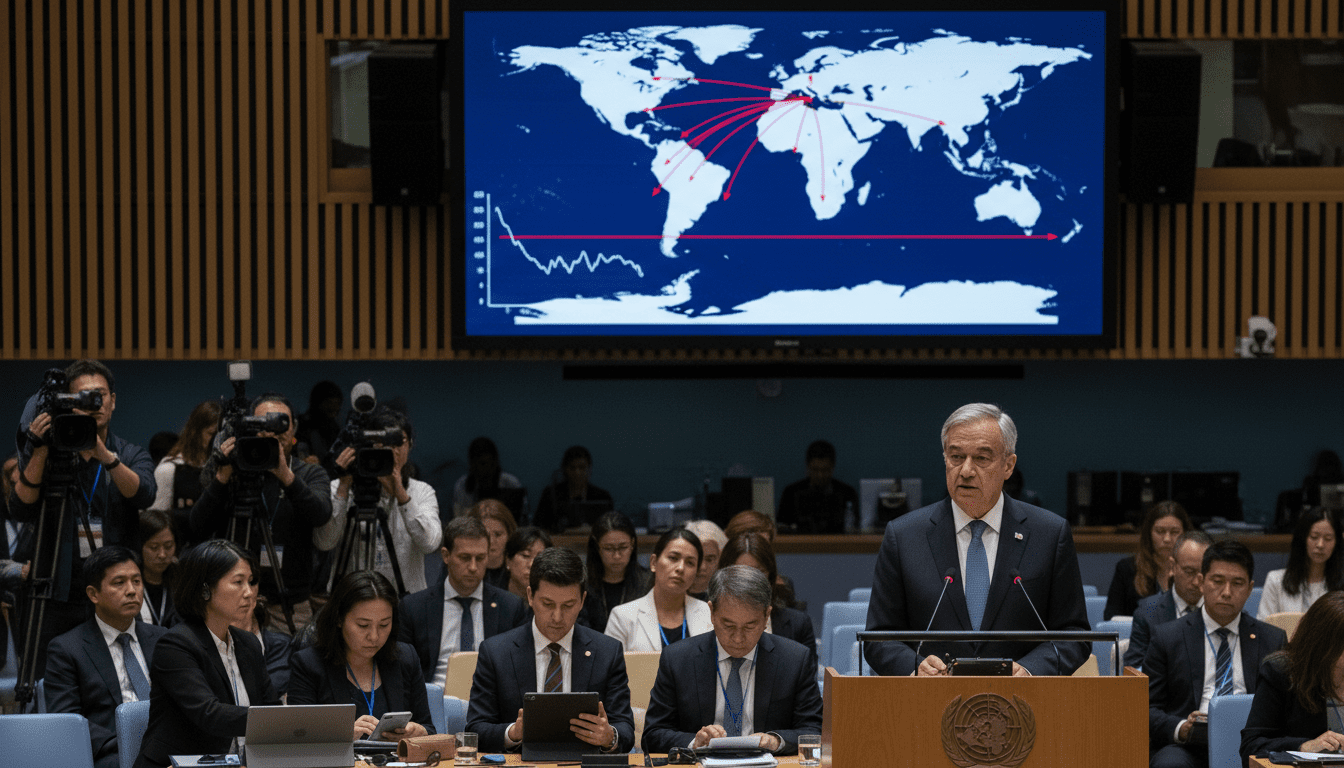
The United Nations secretary-general on Thursday, April 30, 2026, warned that the ongoing Strait of Hormuz closure is inflicting severe and widening damage on global trade and economic stability. He told reporters that even if the waterway were reopened immediately, international supply chains would require months to recover, extending reduced output and upward price pressure. The statement elevated concerns among governments and markets already grappling with rising costs and logistics bottlenecks.
Secretary-General issues urgent warning
On April 30, 2026, Antonio Guterres characterized the disruption of passage through the Strait of Hormuz as a major economic shock with global reach. He emphasized that the closure is not a localized maritime problem but a systemic disruption that reverberates through manufacturing, retail and energy markets.
Guterres warned that recovery would not be instantaneous, noting that inventories, production schedules and transit timetables have been significantly altered. He stressed the need for coordinated international measures to reduce immediate humanitarian and economic harm while working toward de-escalation.
Supply chains face protracted delays and higher costs
Shippers and manufacturers report cascading delays as vessels are rerouted or held back, increasing transit times and freight rates. Such changes amplify costs for importers and exporters, which pass through to consumers in the form of higher prices for goods ranging from electronics to basic household items.
Analysts say that inventory buffers built during the pandemic are already thin in many sectors, leaving little room to absorb additional shocks. Even with a swift reopening of the Strait of Hormuz, lead times for critical components and finished goods are expected to remain elevated for months.
Energy markets tighten as flows are constrained
The Strait of Hormuz is a critical chokepoint for global energy shipments, and its effective closure has tightened oil and gas markets worldwide. Traders and refiners are adjusting procurement plans, while end users face the prospect of higher fuel and heating costs.
Insurers and charterers have responded by raising premiums for vessels entering the region, increasing the overall cost of maritime energy transport. Those extra costs and risks are likely to be reflected in consumer fuel prices and broader inflation readings in the coming quarters.
Shipping routes and commercial traffic are being rerouted
With passage through the strait disrupted, many bulk and tanker operators are diverting around longer routes, adding days or weeks to voyages. This rerouting exacerbates port congestion at alternate hubs and increases demand for transshipment capacity, further straining already pressured logistics networks.
Longer journeys also raise operational expenses for shipowners, from fuel consumption to crew costs, and reduce the frequency of sailings on some trade lanes. The net effect is a tighter global shipping market that will trickle down to manufacturers and retailers.
Governments and maritime bodies call for coordinated action
International maritime organizations and coastal states have urged restraint and emphasized the need to maintain open sea lanes under international law. Several governments have signaled readiness to coordinate diplomatic initiatives and protective measures to ensure the safety of commercial navigation.
National responses vary, with some states intensifying naval patrols and others pursuing diplomatic pressure on the conflicting parties. The UN’s appeal underscores the urgency for a combined approach that addresses immediate security concerns while aiming to restore predictable commerce.
Economic outlook and policy options
Policymakers now face choices about how to mitigate the economic fallout from the Strait of Hormuz closure without escalating military tensions. Central banks and finance ministries are monitoring inflation and output indicators closely as trade disruptions feed into price dynamics and growth forecasts.
Short-term measures include targeted relief for sectors most exposed to higher shipping costs and temporary facilitation of alternative transport corridors. Longer-term responses will hinge on diplomatic progress that restores safe, reliable passage for maritime trade.
The secretary-general’s warning frames the closure as an economic emergency with broad social consequences, urging swift de-escalation and coordinated action to limit lasting damage to trade, prices and livelihoods.
