
Iran football delegation denied entry in Canada after Toronto immigration dispute
Iran football delegation denied entry in Canada after Toronto incident, missing FIFA Congress in Vancouver and raising concerns about World Cup travel and visas.
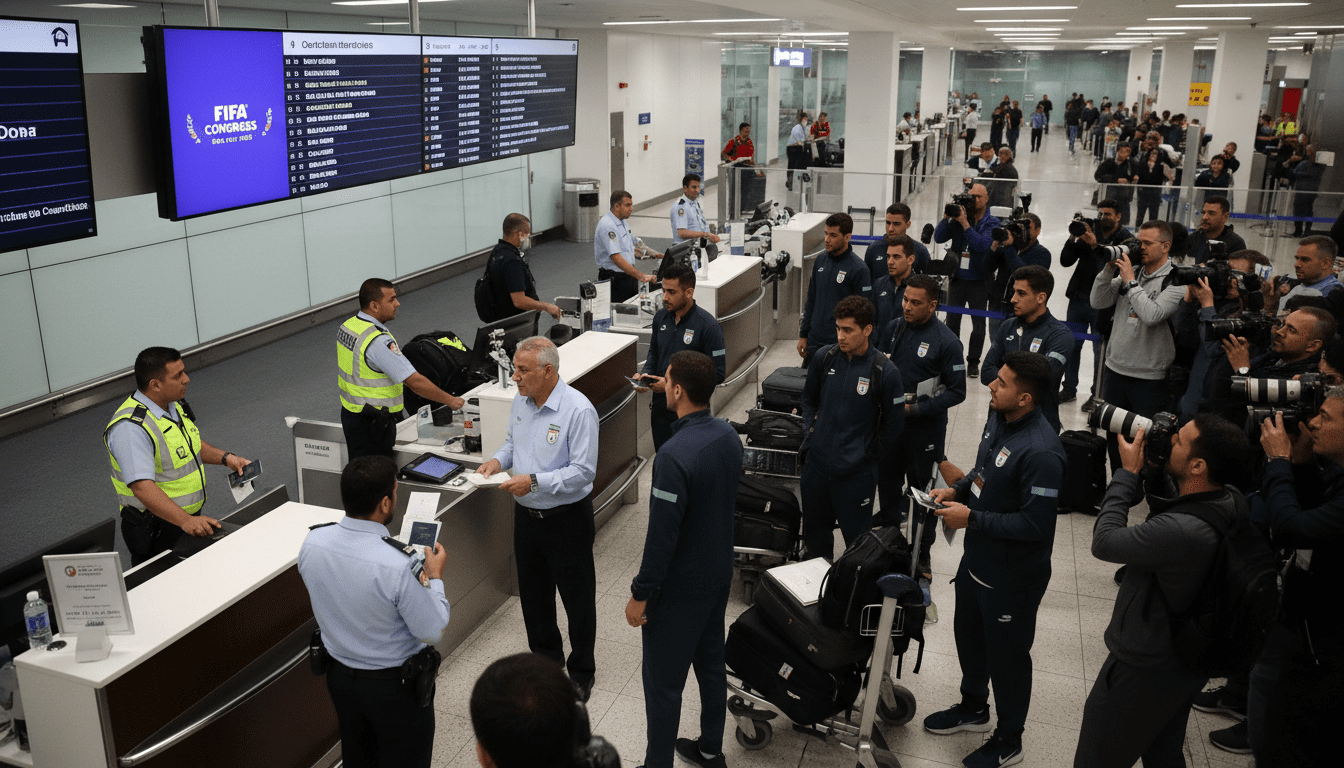
The Iran football delegation denied entry in Canada after being turned back at Toronto Pearson Airport, officials said, forcing key federation leaders to miss the FIFA Congress in Vancouver. The delegation’s abrupt return to Turkey came despite members holding visas, according to statements from Iranian authorities and local reporting. The incident raises immediate questions about whether Iranian teams, officials and supporters will face movement restrictions during the upcoming cohosted World Cup. FIFA has since contacted the delegation and expressed regret, signaling the dispute could escalate into a wider diplomatic and logistical issue.
Delegation Turned Back at Toronto Pearson
The Iranian delegation, which included federation President Mehdi Taj, Secretary-General Hedayat Mombeni and deputy Hamed Momeni, arrived at Toronto’s Pearson Airport earlier in the week and were denied entry, Iranian sources reported. Delegation members said they held official visas to travel to Vancouver for the FIFA Congress but chose to return on the next available flight citing the conduct of immigration officials. Iranian federation statements described the behaviour at the airport as unacceptable and said the delegation would not proceed to the scheduled meetings. The officials subsequently flew back to Turkey and did not attend the AFC assembly in Vancouver.
Officials Named and Federation Complaint
Iran’s football federation issued a brief statement naming Taj, Mombeni and Momeni and said the decision to leave Canada followed an affront to what it described as the honour of Iran’s armed forces. The federation portrayed the airport interactions as insulting and inconsistent with the delegation’s official status, and argued the action prevented them from fulfilling their duties at FIFA’s pre-World Cup gatherings. Tasnim News Agency and other Iranian outlets carried the federation’s account, which emphasized that the delegation had valid travel documentation. The federation asked FIFA and international bodies to take note of the incident and meet with the delegation to discuss next steps.
Canada Cites IRGC Policy and Government Statements
Canada’s government has said it cannot comment on individual immigration cases because of privacy rules but reiterated that members of the Islamic Revolutionary Guard Corps (IRGC) are inadmissible under Canadian law following Ottawa’s 2024 designation of the IRGC as a terrorist entity. Canadian official statements indicated that individuals with ties to the IRGC would be denied entry, and suggested the action toward the Iranian delegation was connected to that policy. Foreign Affairs Minister Anita Anand described the denial as “unintentional” and said there had been a revocation of permission, while referring further questions to the immigration minister. Public Safety Minister Gary Anandasangaree declined to discuss specifics for privacy reasons but affirmed the government’s stance on IRGC-affiliated individuals.
FIFA Response and Planned Meeting
FIFA representatives contacted the Iranian delegation after the incident, conveying regret and offering to arrange further discussions, Tasnim reported. The global governing body said FIFA President Gianni Infantino would meet with the delegation at FIFA’s headquarters to address concerns and try to de-escalate the situation. FIFA has emphasized that match schedules will remain unchanged and that tournament preparations are continuing, but the organization must now also manage diplomatic and logistic fallout ahead of the tournament. The skipped Congress and missed AFC assembly mean Iranian officials will be absent from key pre-tournament deliberations.
Cross‑Border Logistics Threaten World Cup Movement
The dispute spotlights practical challenges for a World Cup staged across three countries, where teams, officials and fans must navigate separate immigration regimes and security policies. Visa restrictions or ad hoc entry denials could complicate travel itineraries, team training plans and supporter movements during the tournament’s group and knockout phases. Organizers and national associations typically work months in advance to coordinate cross-border transfers, but the incident suggests political decisions may override those arrangements in specific cases. For Iran in particular, the pathway from qualification to on-the-ground participation now faces more uncertainty than usual.
Geopolitical Tensions Frame Sporting Uncertainty
The episode comes amid heightened regional tensions and an intensification of political friction in the months after military confrontations involving Iran, increasing the sensitivity of high-profile international sporting events. Organizers must balance the principles of inclusive competition with host-country security policies and foreign policy decisions that can constrain who may enter their territory. For FIFA, the timing — less than two months before the expanded 48-team World Cup begins — magnifies the stakes, as the governing body navigates between upholding sporting continuity and responding to governments’ legal and security frameworks. The broader diplomatic implications could affect not only officials but also athletes and traveling supporters.
The Toronto episode underscores how international sport can collide with national security measures and diplomatic tensions, creating last-minute obstacles to participation and planning. As officials from Iran, FIFA and Canadian ministries continue discussions, attention will focus on whether accommodations can be reached in time to ensure Iran’s full participation and to safeguard travel arrangements for teams and fans across the three host countries.
