
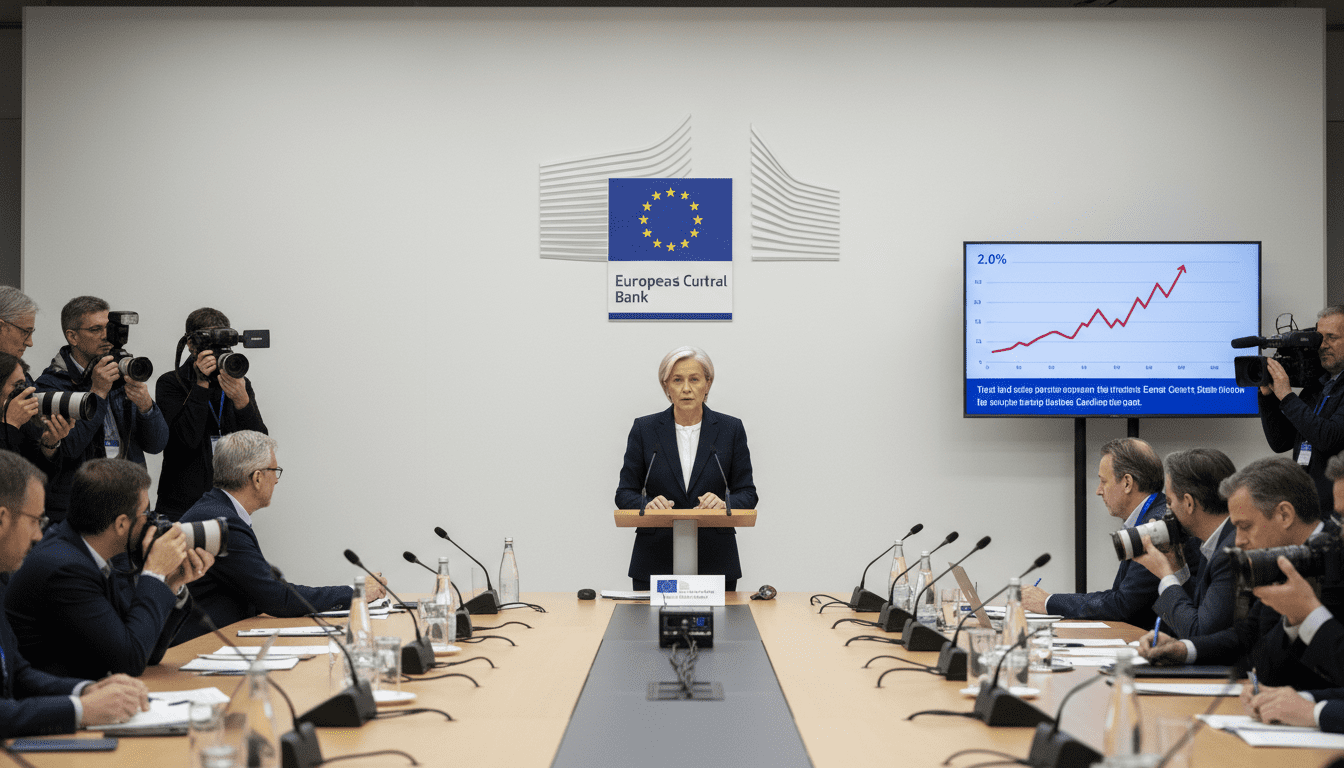
ECB keeps interest rate at 2.0% as inflation rises to 3.0%
The ECB held its key interest rate at 2.0% despite a recent rise in euro‑area inflation to 3.0%, citing energy‑price risks from the Iran conflict and promising close monitoring of developments.
ECB keeps policy rate unchanged at 2.0%
The European Central Bank’s Governing Council announced that the main refinancing rate will remain at 2.0%, marking the first decision since June 2024 in which the bank did not lower rates. The council said it would evaluate data from meeting to meeting and is committed to steering inflation back to its 2% medium‑term target.
Officials emphasised that the decision reflects current assessment of price pressures and economic conditions, not a definitive shift in the direction of policy. Markets had been split between expectations of a modest cut and a steady stance, leaving the decision within the range of analyst predictions.
Inflation rises to 3.0% as energy costs climb after Iran conflict
Euro‑area inflation climbed to 3.0% in the latest readings, driven in large part by a rebound in energy prices following supply disruptions and geopolitical tensions linked to the Iran conflict. The ECB highlighted the link between persistent high energy costs and upward pressure on headline inflation across several member states.
Central bank officials warned that if energy prices remain elevated, the pass‑through to broader price categories could keep inflation above target for longer than anticipated. That risk underpinned the council’s cautious approach and its pledge to act if second‑round effects emerge.
ECB cites risk of prolonged energy shock influencing future moves
The Governing Council underlined that the length and intensity of the Iran conflict will be a key determinant of future decisions on the ECB interest rate. In its statement the council noted that a sustained period of high energy prices would likely require a reassessment of the policy stance to ensure inflation returns to target.
Officials stressed they remain “well equipped” to respond to shocks, signalling that conventional rate adjustments and other monetary tools remain available. The bank’s language was designed to keep options open while avoiding surprises that could unsettle markets.
Growth remains fragile across the euro area
The euro‑area economy posted only marginal growth in the first quarter, with GDP expanding by 0.1% overall and Germany recording a slightly stronger 0.3% increase. Economists point out that the modest recovery reflects a mix of resilient household demand and headwinds from higher energy costs and geopolitical uncertainty.
Consensus forecasts from leading institutes foresee weak growth for 2026, with a projected rise of around 0.6% for the region as a whole. That combination of sluggish expansion and rising prices complicates policymakers’ task, since measures to tame inflation can also dampen growth further.
Markets and analysts weigh prospects for June decision
Financial markets are watching whether the ECB will raise the interest rate again at its June meeting if inflationary pressures persist. Many market participants now signal that future moves will hinge on incoming inflation data, energy‑price trajectories and the extent to which wage developments push core inflation higher.
Analysts say a return to rate increases would not be automatic but remains a credible option should the data confirm a durable shift in inflation dynamics. The ECB’s insistence on meeting‑by‑meeting assessment aims to keep the policy response calibrated and data dependent.
Borrowers, savers and public finances face mixed effects
Keeping the ECB interest rate at 2.0% preserves a degree of stability for borrowers who have recently faced higher financing costs, while savers continue to earn better returns than in the era of negative rates. At the same time, the combination of elevated energy prices and policy uncertainty may discourage investment and weigh on consumption in coming quarters.
For governments, the dynamics are equally nuanced: slower growth can increase fiscal strain, but higher short‑term rates reduce the incentive for additional borrowing. Policymakers across the euro area will need to balance support measures with medium‑term fiscal sustainability as risks unfold.
The ECB’s message was one of vigilance rather than finality: the council signalled readiness to adjust the ECB interest rate if inflation proves more persistent, but refrained from committing to a decisive path today amid a complex mix of geopolitical and economic risks.
