
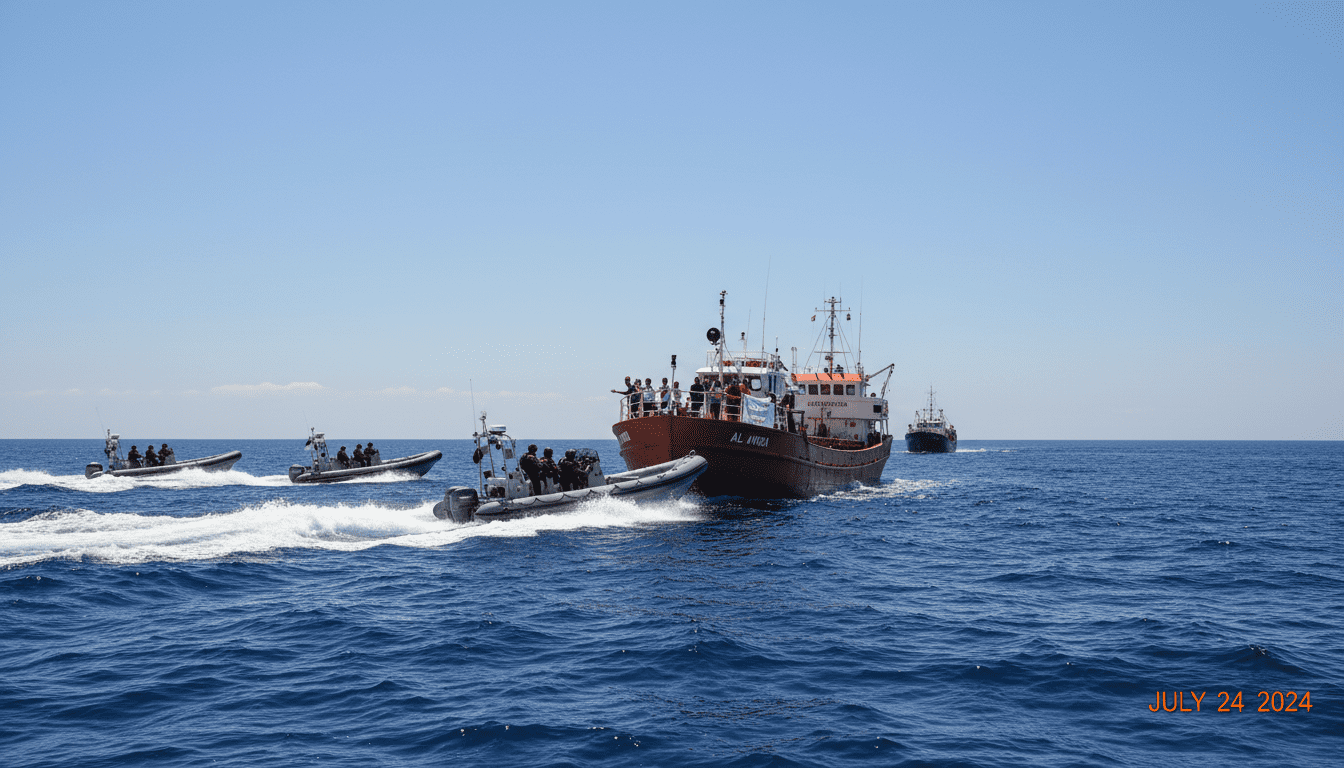
Gaza-bound aid mission intercepted by Israeli speedboats in Greek waters, organisers say
Organisers say Gaza-bound aid mission vessels were intercepted by Israeli military speedboats west of Crete on 29 April 2026; crew reported communications jamming and issued an SOS.
Summary of the reported incident
On 29 April 2026 organisers of the Global Sumud Flotilla said a Gaza-bound aid mission was confronted by Israeli military speedboats in Greek territorial waters west of Crete. The group, which describes itself as carrying humanitarian aid to Gaza, said the interception took place more than 1,000 kilometres from Israel and that crew members issued an SOS after what they described as deliberate jamming of ship communications.
The account comes from organisers and crew members aboard the flotilla and has not been independently verified at the time of publication. There are conflicting accounts in other recent flotilla incidents historically, and reporters have not yet received confirmation from Israeli or Greek authorities regarding the specific vessels or actions described by the organisers.
Organisers describe interception at sea
Representatives of the Global Sumud Flotilla said their vessels were approached and physically intercepted by several high-speed boats they identified as belonging to the Israeli military. Organisers reported that the manoeuvre included attempts to block movement and that crew members feared for safety as communications links deteriorated.
The flotilla group issued an SOS and said some onboard systems showed signs consistent with electronic interference. They called on international maritime authorities and humanitarian organisations to demand immediate clarification and protection for civilian vessels engaged in relief work.
Location and distance amplify concerns
Organisers emphasised that the reported interception occurred in Greek waters west of Crete, a location more than 1,000 kilometres from Israel and well within the Eastern Mediterranean basin. The distance cited by the flotilla has raised questions over jurisdiction, maritime law and the operational reach of military vessels in international and territorial seas.
Maritime experts note that operations far from a nation’s coastline can trigger complex legal and diplomatic issues, especially when actions are reported in another state’s territorial waters. The Greek government’s position and any formal communications from coastal authorities will be central to establishing the facts of where and how the events unfolded.
Communications jamming and safety claims
Crew members reported that radio and satellite communications were disrupted prior to the SOS being sent, an allegation that, if substantiated, would point to active electronic interference. Jamming at sea can endanger navigation and safety, particularly for vessels carrying humanitarian cargo and non-military personnel.
Verification of electronic interference typically requires technical assessments by independent experts or confirmation from agencies monitoring maritime communications. The flotilla’s statements called for neutral investigators to examine logs and satellite feeds to determine what happened to onboard communications during the encounter.
Humanitarian cargo and mission intent
The Global Sumud Flotilla has characterised the voyage as a humanitarian mission intended to deliver aid to Gaza, listing supplies and relief equipment among its cargo in prior statements. Organisers said the vessels did not carry weapons and that the mission’s purpose was strictly to provide civilian assistance amid an ongoing humanitarian situation in the Gaza Strip.
Humanitarian groups and legal analysts say the movement of aid by sea often involves coordination with port authorities and relief organisations on destination shores; any deviation from established channels can complicate delivery and increase scrutiny from maritime states and naval forces. The specific contents of the flotilla’s ships and the planned offloading arrangements were not independently confirmed by reporters.
Diplomatic and legal implications under scrutiny
The reported interception in Greek waters has immediate diplomatic implications for Athens, Tel Aviv and other regional actors. If the incident occurred within Greek territorial seas, it could prompt protests or demands for an explanation from Greece’s government and possibly involve consultations at the EU or NATO level, given Greece’s memberships and security ties.
Legal questions will focus on whether any use of force or maritime interdiction complied with international law, including the United Nations Convention on the Law of the Sea. States typically reserve the right to interdict vessels on suspicion of unlawful activity under specific conditions, but actions in another nation’s waters can be particularly sensitive and may require prior consent or coordination.
Calls for independent verification and next steps
Humanitarian organisations and international observers called for immediate, independent verification of the flotilla’s account and for all parties to exercise restraint. Organisers urged governments and international maritime bodies to demand unimpeded access for aid shipments and transparent investigations to establish what occurred during the reported encounter.
Officials from the Global Sumud Flotilla said their vessels would seek to document the incident using onboard recordings and navigation logs, and they appealed for media and diplomatic attention. Observers stressed the need for clear evidence — including vessel tracking data and communications logs — to corroborate claims of interception and jamming.
The flotilla’s account of an interception west of Crete on 29 April 2026 adds a new chapter to longstanding tensions over maritime relief efforts to Gaza, and it underscores the challenges of delivering aid in contested or closely monitored waters.
